
Last updated September 21, 2026
Free on-site gate assessment - hinges, posts, and your LiftMaster or Nice gate operator checked before anything is quoted
The assessment is free and the quote is the invoice.
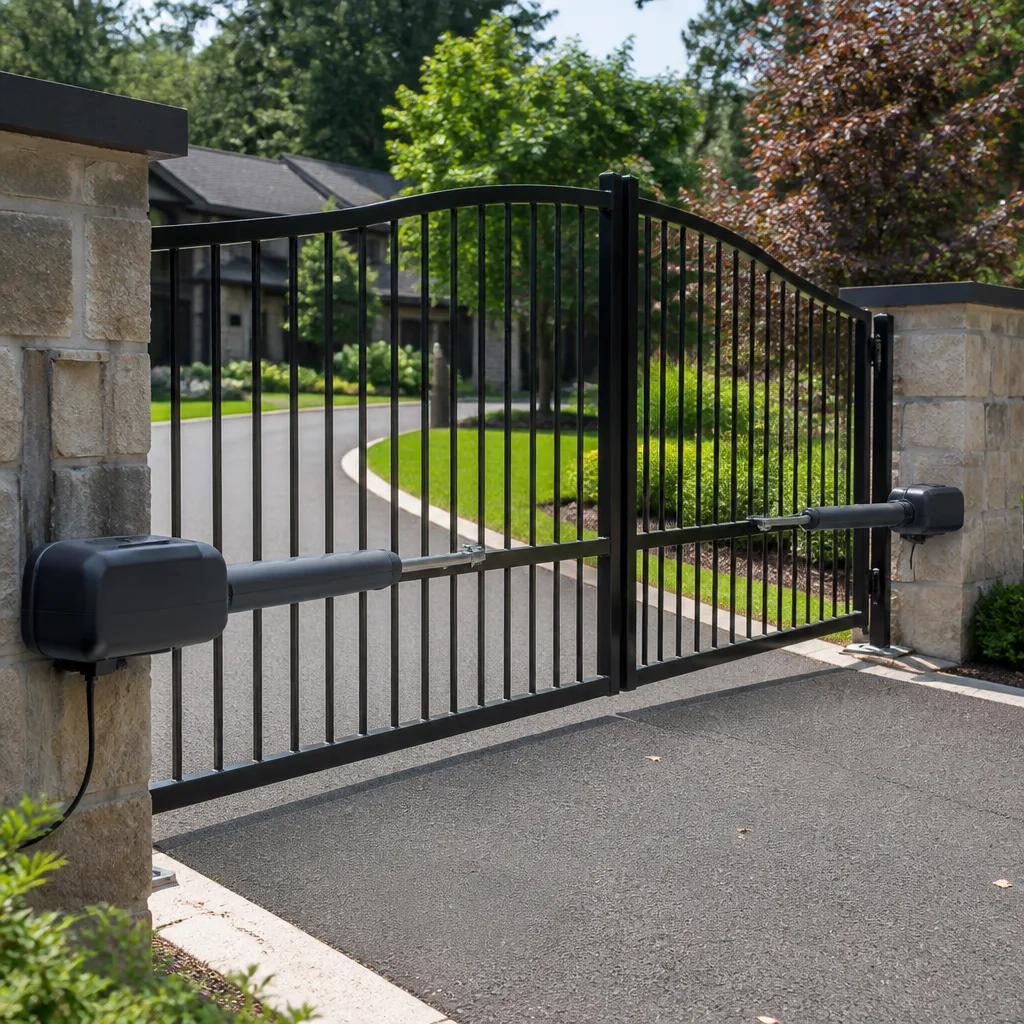
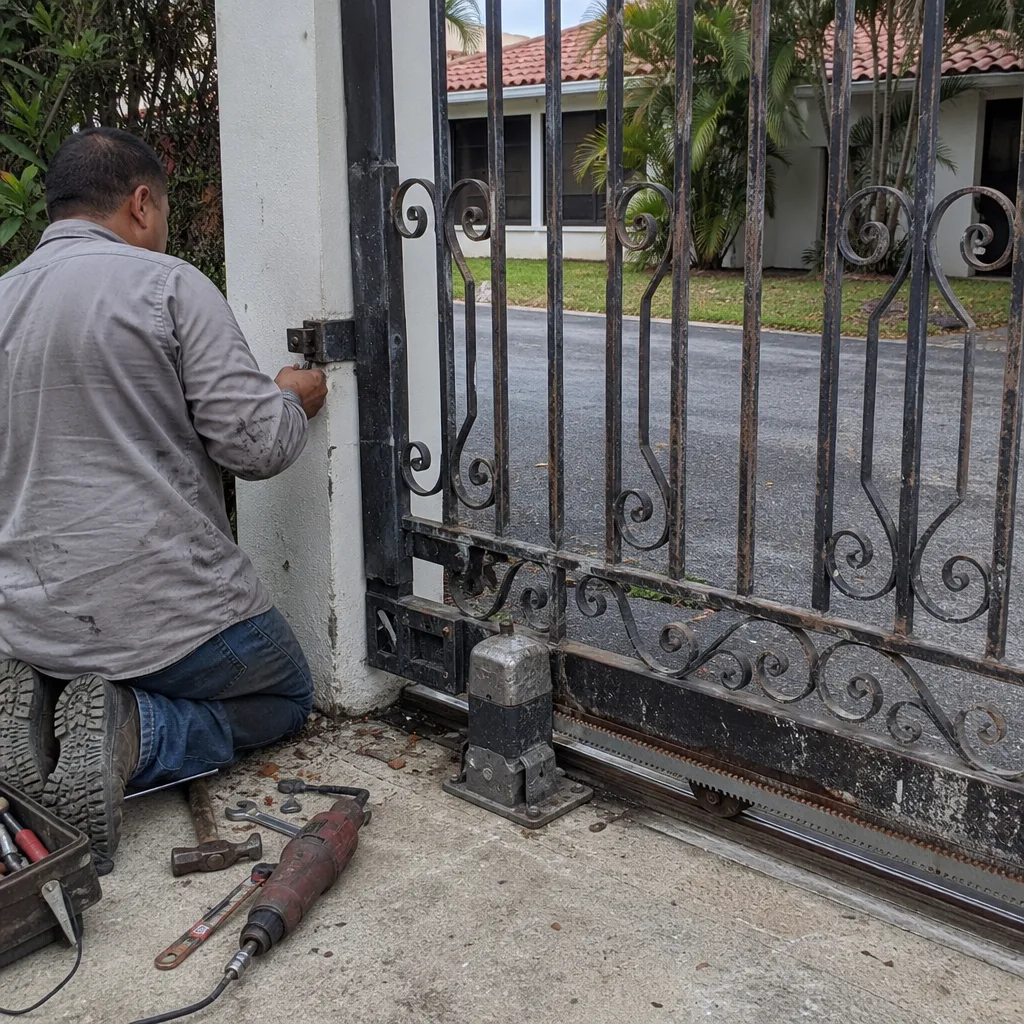 Before
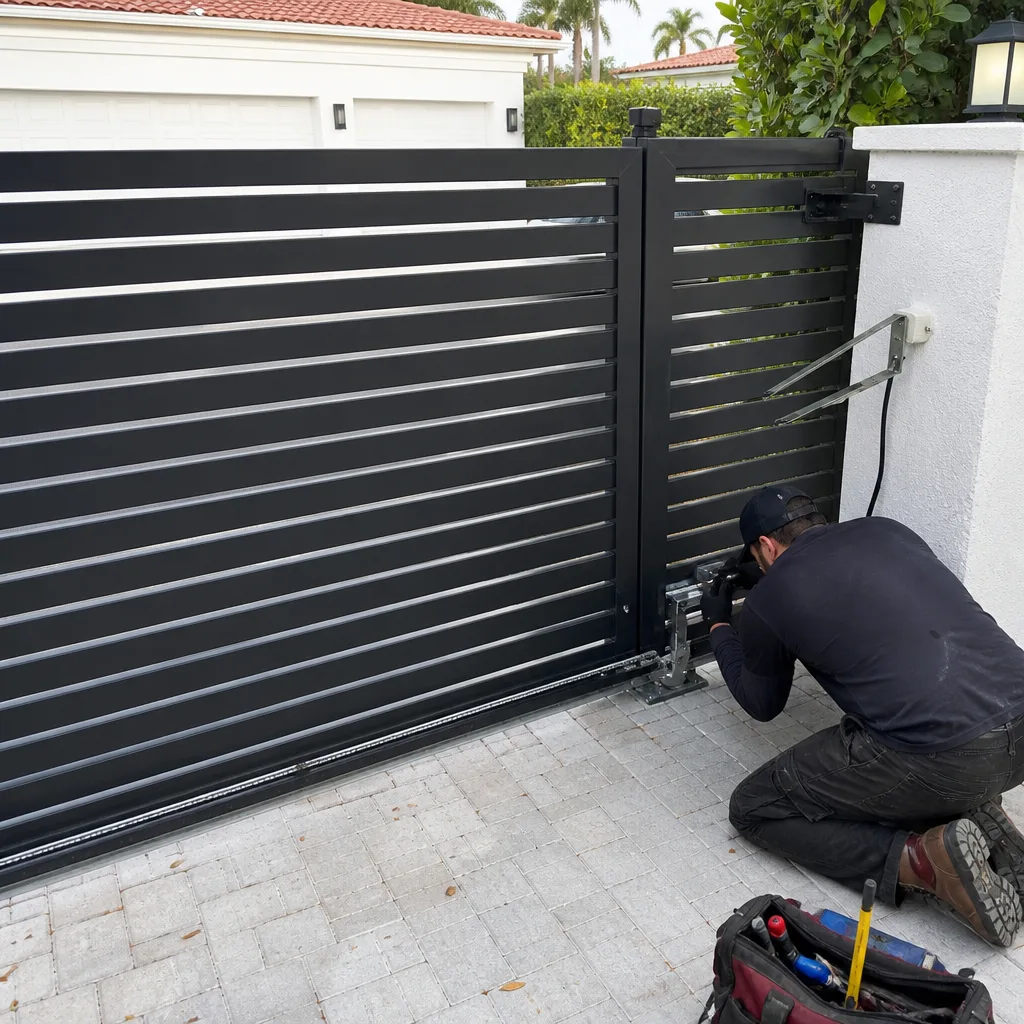 After
After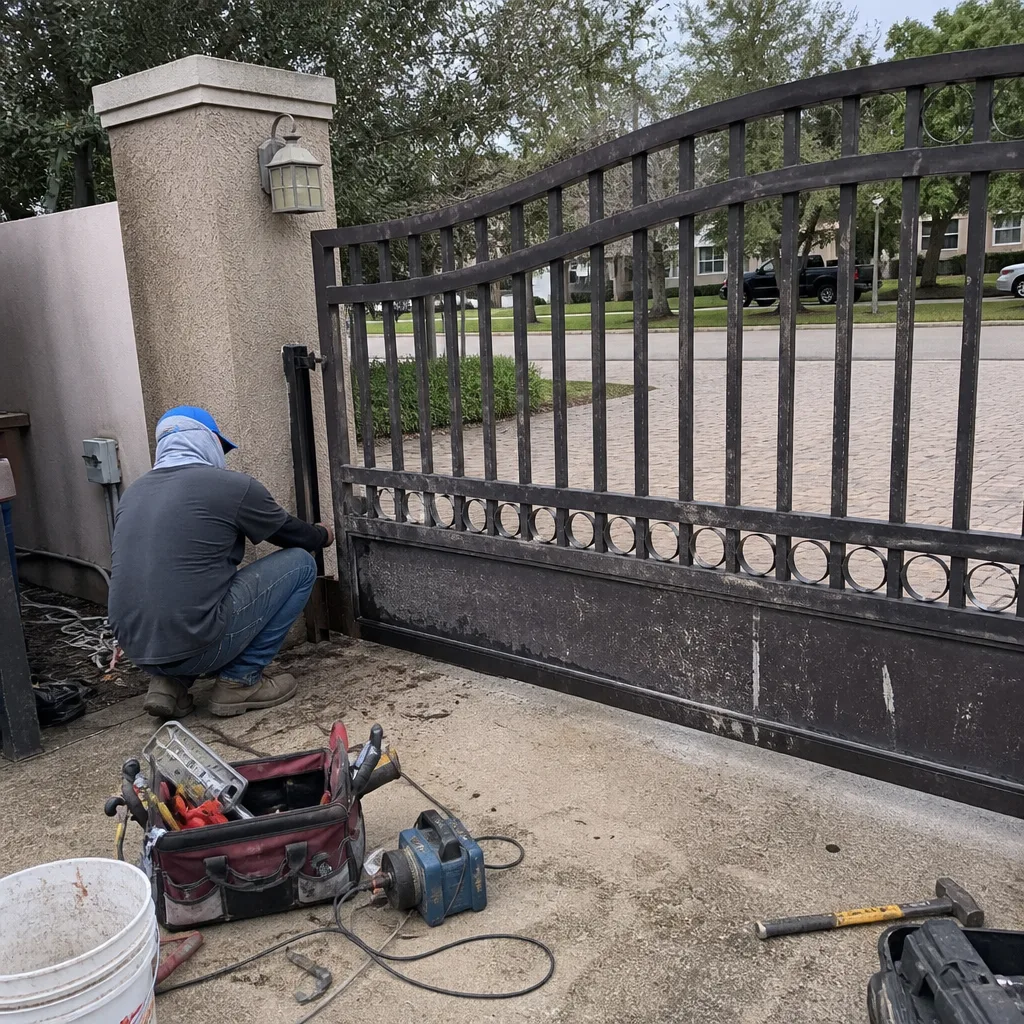 Before
 After
After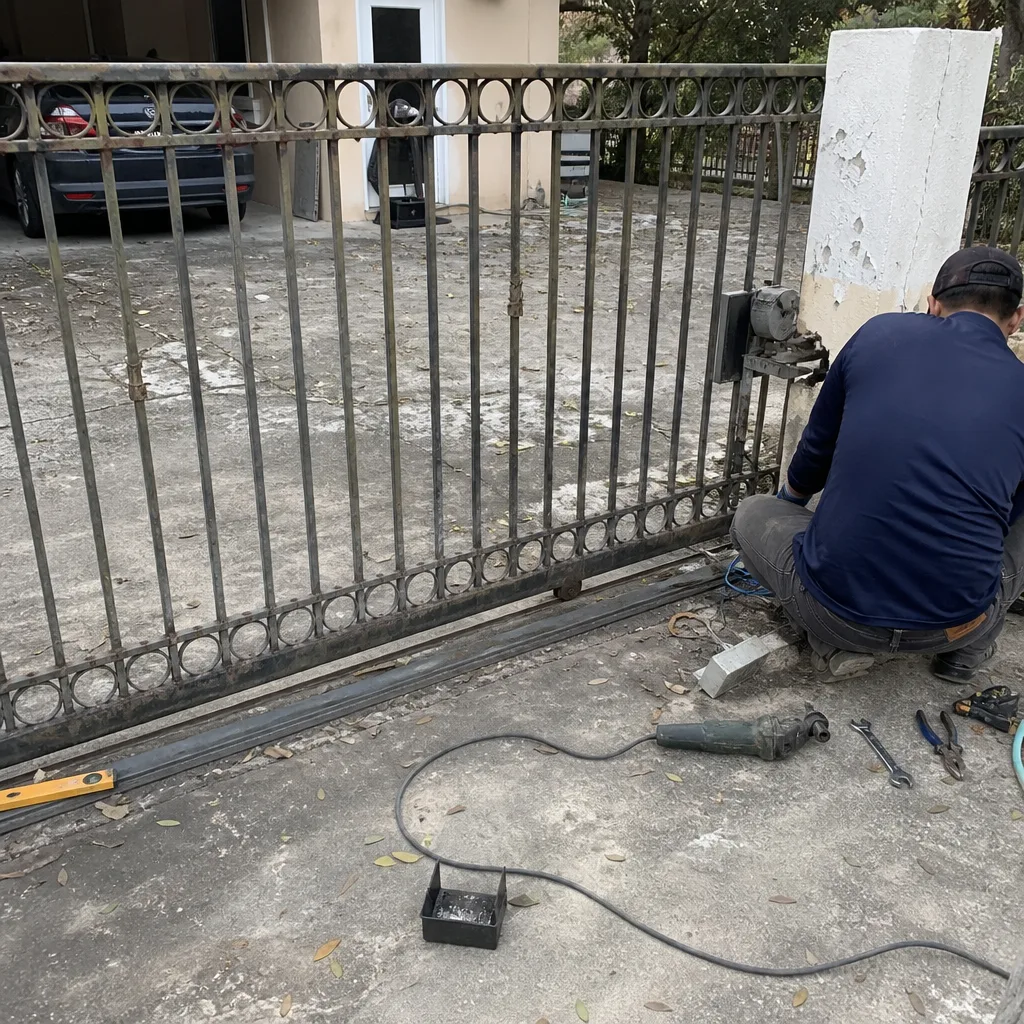 Before
 After
AfterGate Repair Maintenance Checklist for Hollywood Homeowners
The hinge you oiled last spring may be the one that cracks your gate post this fall. In Hollywood, the failure is rarely the hinge itself. It’s what the lubricant carried into the pin bore, trapped against the steel, and quietly oxidized through the dry season. This guide is built for the specific failure patterns we document on residential gates across Hollywood, where 60-plus inches of annual rain, persistent humidity, and salt moving inland from the Atlantic create a maintenance environment that differs from what most generic checklists assume. You’ll learn where to look, what a passing result actually looks like, and what number to write down so next year’s inspection has a baseline instead of a guess.
Quick Answer
A Hollywood gate repair and maintenance checklist must address corrosion behind control-board covers, inside conduit, and at hinge-post bases, not just visible rust. Inspect these every 90 days during wet season, lubricate with a dry-film product rated for salt-air exposure, record limit-switch positions as numeric baselines, and photograph everything so next year’s inspection compares evidence, not memory.
Table of Contents
- Lubrication Points That Actually Matter in Salt Air
- Recording Limit-Switch Baselines the Right Way
- Conduit and Junction Boxes Nobody Opens
- Post-Footer and Hinge-Post Inspection After Wet Season
- The Photo Record: What to Shoot and File
- Motor-Specific Checks for Common Hollywood Gate Motors
- Common Mistakes to Avoid
- When to Call a Professional
- Frequently Asked Questions
- The Bottom Line
 Before
 After
AfterLubrication Points That Actually Matter in Salt Air
Most homeowners oil every moving part and call it done. In Hollywood, that habit is the leading cause of the hinge-post fractures we repair in neighborhoods from Emerald Hills to Hollywood Lakes. A wet lubricant like WD-40 or a generic penetrating oil attracts atmospheric salt and holds it against the metal. The pin bore becomes a corrosion cell. The hinge appears fine from the outside while the pin loses material from the inside out.
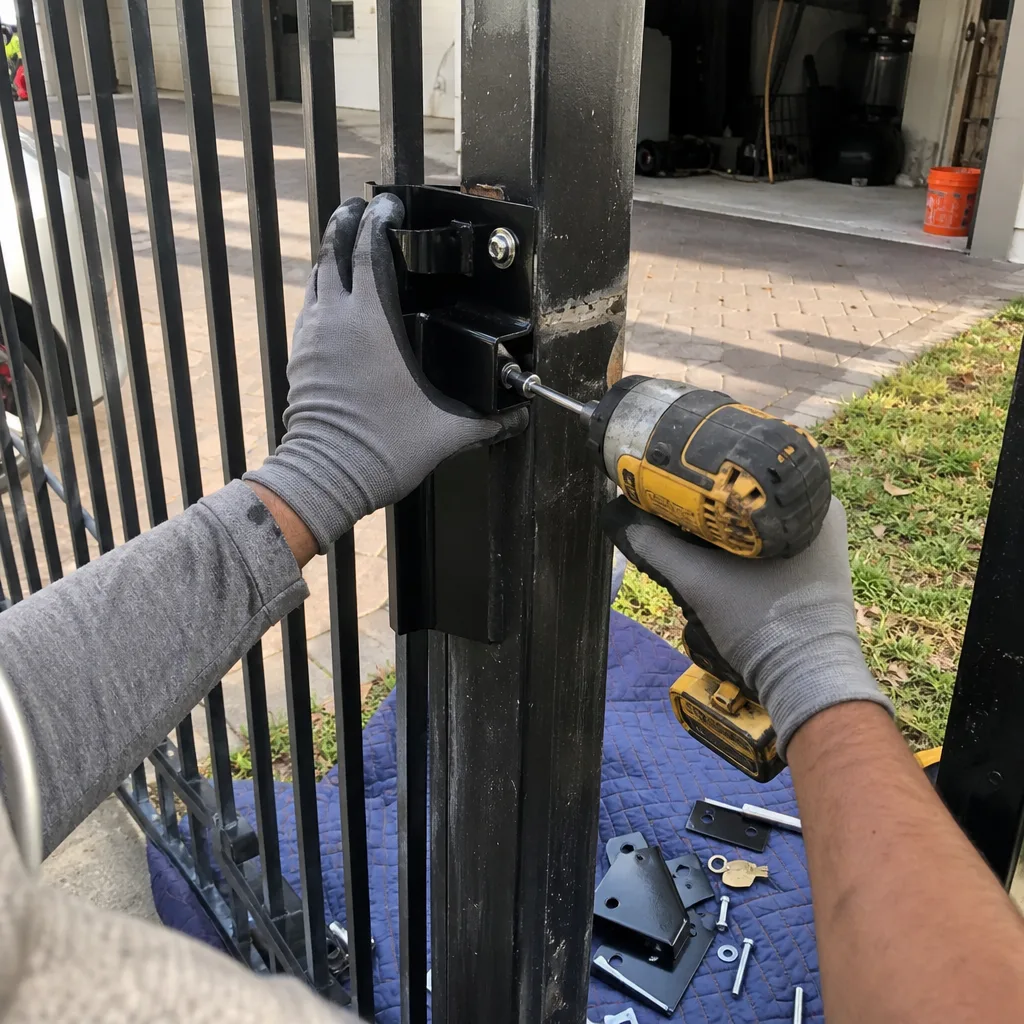
What to use instead: a dry-film lubricant with PTFE. It leaves a bonded layer that sheds moisture rather than trapping it. We use this on every hinge pin, gate wheel bearing, and latch mechanism we service, and the difference in six-month inspection results is measurable.
Application points, in order:
- Hinge pins (top and bottom, both posts). Two short bursts per pin. Wipe the excess.
- Cantilever roller bearings if you have a sliding gate. These sit inside the gate frame and are rarely seen until they seize.
- Latch and lock mechanism. Spray into the keyway and the bolt channel.
- Gate wheel axles at the bottom of a V-track gate. These run through standing water during Hollywood’s afternoon storms.
- Limit-switch cam surfaces inside the motor. A light wipe, not a spray.
Skip the springs. A torsion spring on a swing gate does not need lubrication, and oil on a tension spring accelerates grit collection. If a spring is noisy, the problem is usually a worn bushing, not a dry coil.
Recording Limit-Switch Baselines the Right Way
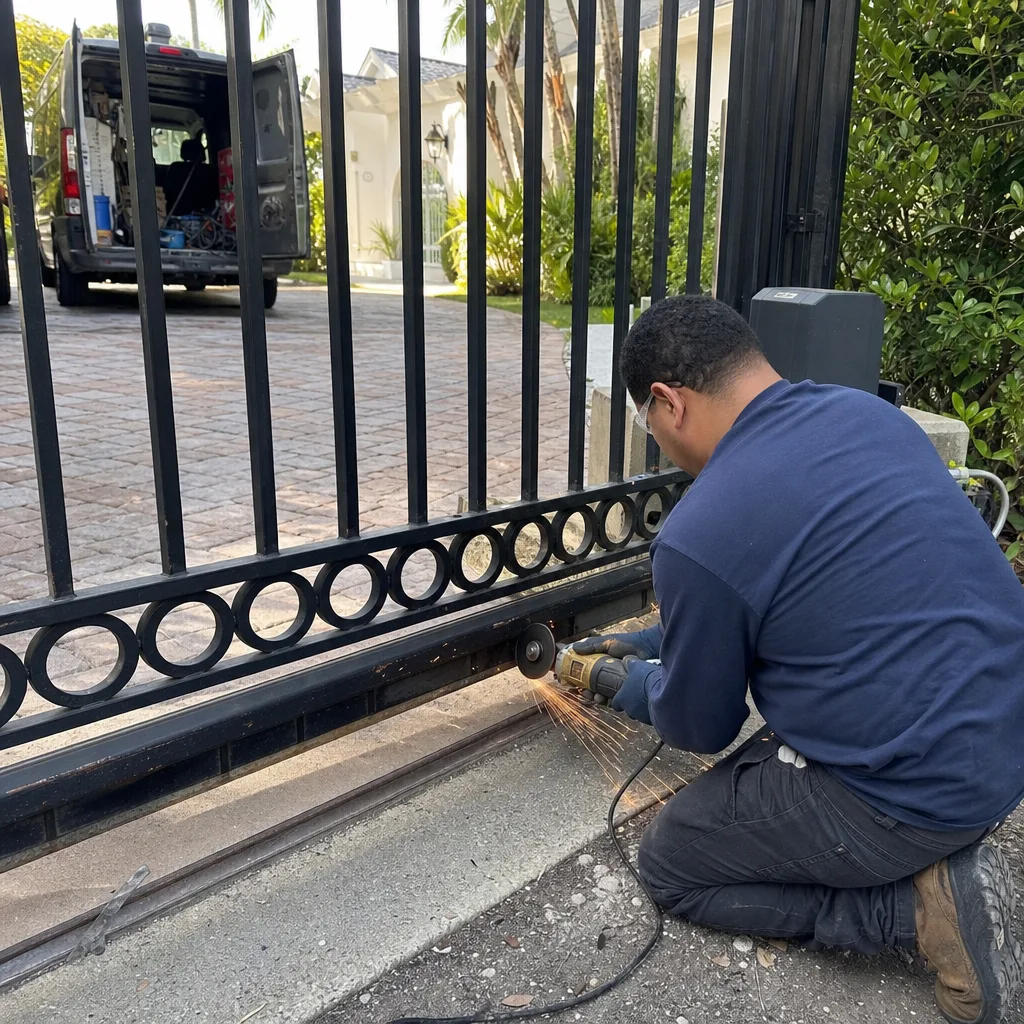
The limit switch tells your gate motor where “fully open” and “fully closed” are. When those settings drift, the motor over-travels. The gate slams into the stops. The chain stretches. The control board runs hotter. Most homeowners discover this when the gate starts bouncing off the close stop and reversing.
Here’s the part most checklists miss: write down the setting. Not “it works.” The actual number.
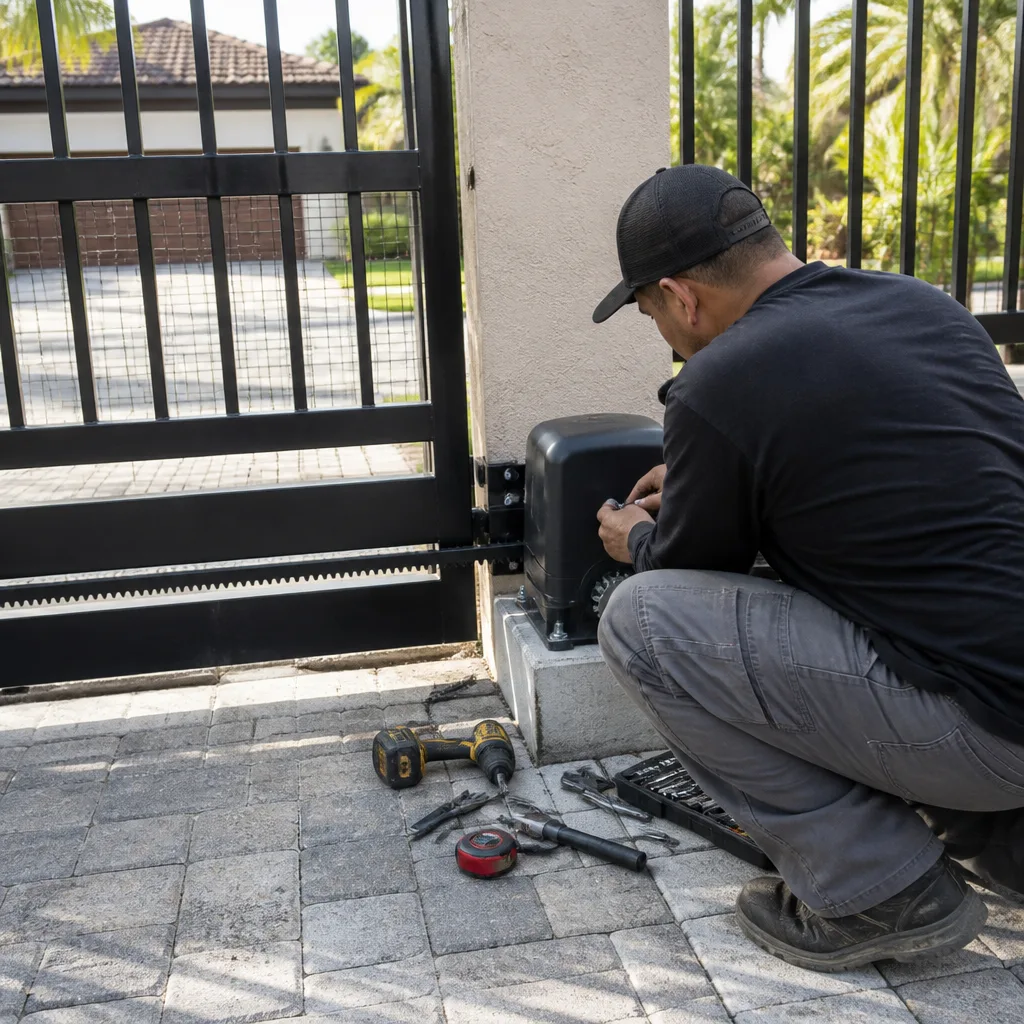
On a Linear or DoorKing control board, the limit settings are visible on the display or as physical cam positions. On a Viking or Ghost Controls model, you may need to open the motor housing to see the limit assembly. Either way, the procedure is the same:
- Run the gate to the fully closed position. Note the reading: motor RPM, cam angle, or display percentage. Write it down.
- Run the gate to fully open. Note that reading. Write it down.
- Compare both to the manufacturer’s recommended range, usually printed inside the cover or in the motor manual.
- If the gate slams or bounces at either end, adjust the limit by no more than one increment at a time and re-test.
Record this as a pair, like “Open: 87%, Close: 12% of travel.” For Gate Repair Permits, Codes & Inspections in FL: What You Need to Know, documented baselines matter. Next year’s inspection compares against last year’s numbers. If the close limit has shifted from 12% to 9%, you know something mechanical changed, even if the gate still appears to work. That’s the difference between maintenance and waiting for a breakdown.
Limit-switch adjustments involve moving mechanical parts under spring tension. If you’re uncertain about the motor’s internal layout, leave the adjustment to someone who has opened that housing before. A wrong move can over-travel the gate hard enough to damage the rack or throw the chain.
Conduit and Junction Boxes Nobody Opens
The wiring behind your gate motor lives in conduit. In Hollywood, that conduit is the first place salt corrosion shows up, and it’s the last place homeowners look. See Gate Repair Warning Signs: A Hollywood Homeowner’s Reference Guide for other hidden failure points. The symptoms are indirect: intermittent operation, a motor that runs fine for weeks then trips the breaker, or a control board that shows a fault with no obvious cause.
What to check:
- Conduit entry points at the motor housing. Look for cracks or separation where the conduit meets the fitting. Water follows the wire into the housing from here.
- Junction boxes along the fence line. Pop the cover. If you see green or white residue on the wire nuts or terminals, that’s corrosion. Document it.
- Low-voltage wire for photo-eyes and keypads. These are often UV-damaged long before the high-voltage lines show wear. Brittle insulation cracks, water gets in, and the system shorts intermittently.
- Ground wire connections. A loose ground can cause erratic limit behavior that mimics a bad control board. This is one of the most common false diagnoses we correct on gates installed more than five years ago.
A can of electrical contact cleaner and a small brass brush are the right tools for minor corrosion. If the corrosion has reached the wire strands themselves, that’s a replacement, not a cleaning. Document what you found with a photo before you reassemble anything.
Our approach to gate repair in Hollywood includes opening every accessible junction box on the property. That habit comes from commercial access-control work, where a sealed box is still inspected because the system has to work after a storm. Residential gates deserve the same treatment.
Post-Footer and Hinge-Post Inspection After Wet Season
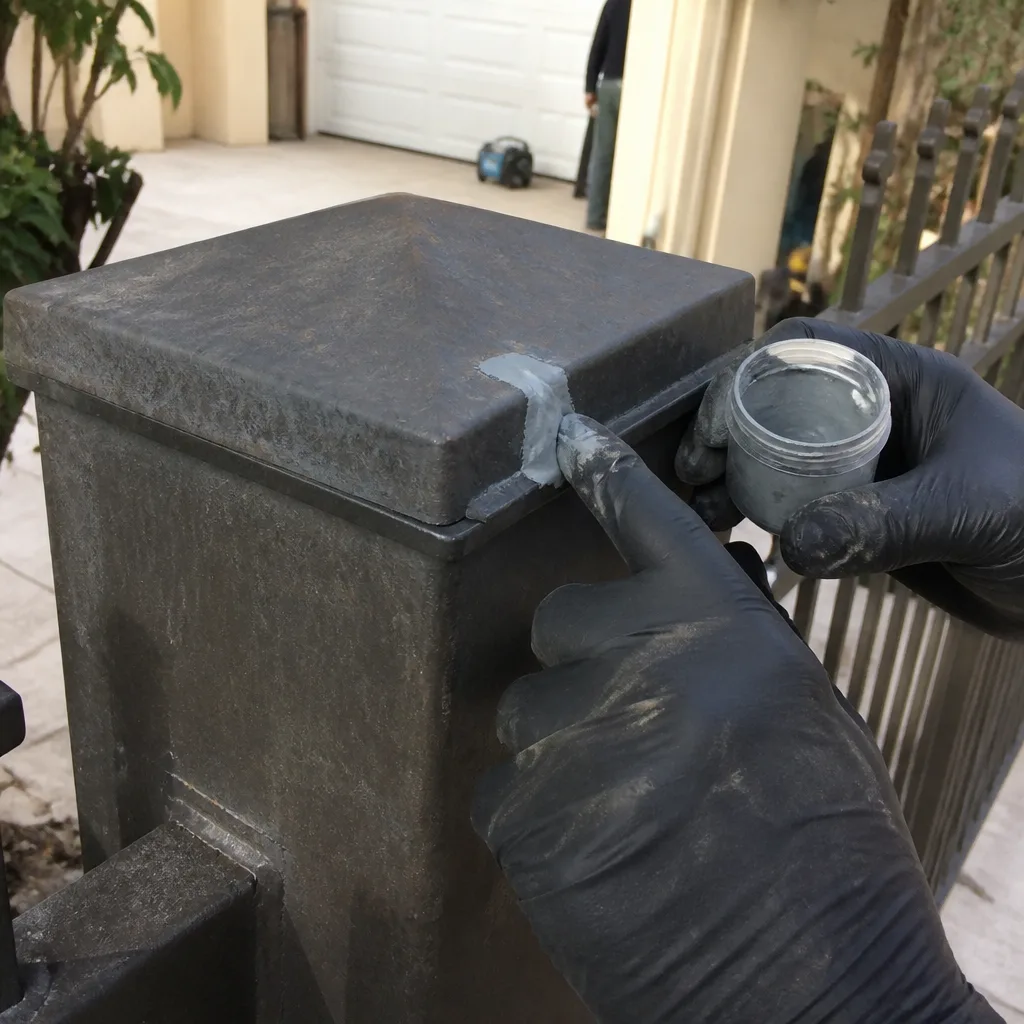
Hollywood’s wet season saturates the soil around your gate posts for weeks at a time. Concrete footers set in that soil don’t fail suddenly. They shift. The gate starts dragging on the latch side. The gap between gate and post closes at the top. You see cracking at the base of a brick column. None of these are cosmetic.
Inspect after the rainy season, which here means late October through November:
- Sight the post from the side. Is it plumb? A lean of more than half an inch over a four-foot post is a structural shift, not a finish issue.
- Check the soil line around the footer. Look for a visible gap between concrete and soil. Water channels through that gap during storms and erodes the bearing soil.
- Inspect the hinge-side post at the base. Rust staining that runs down from the hinge bolts tells you water is working into the bolt holes from inside the post.
- Open and close the gate slowly. If it binds or scrapes only at the far end of travel, the post has settled on one side.
- Check the gate-to-post gap at three heights. Bottom, middle, top. The three measurements should be within a quarter inch of each other. Write them down.
When a post has shifted, the repair is usually not an adjustment. It’s a foundation fix, and in Hollywood that means digging out, resetting, and re-pouring. We recommend addressing it before the dry season firms the soil back up, because by spring the shifted post is locked in place and the gate is grinding against its own geometry.
The Photo Record: What to Shoot and File
Under Clause 4 of the Haven Standard, every service visit includes a documented photo record: what was found, what was adjusted, what was installed. You can run the same discipline on your own maintenance. The habit pays for itself the first time a technician needs to know what a limit switch read last year.
What to photograph, every inspection:
- The control board before and after you touch anything. LED statuses, fault codes, DIP switch positions.
- Limit-switch readings at open and close. Crop tight enough to read the display.
- Hinge pins and post bases from three feet away, not close enough to lose context.
- Conduit entry points and junction boxes interior and exterior.
- The gate-to-post gap at bottom, middle, and top, with a tape measure in frame.
- Any corrosion, cracking, or wear you see, even if you don’t know what it means yet.
Store these in a folder with the date. Next year, when you compare, you’ll see trends: a hinge pin turning rust-colored, a gap shrinking from half an inch to three-eighths, a close limit drifting downward. Those trends are the maintenance signal. The photos are the evidence.
This is the same habit Adrian Vance developed on commercial access-control sites starting in 2014, and it’s embedded in every gate installation we complete in Hollywood. A documented starting condition is the only way to prove a change later.
Motor-Specific Checks for Common Hollywood Gate Motors
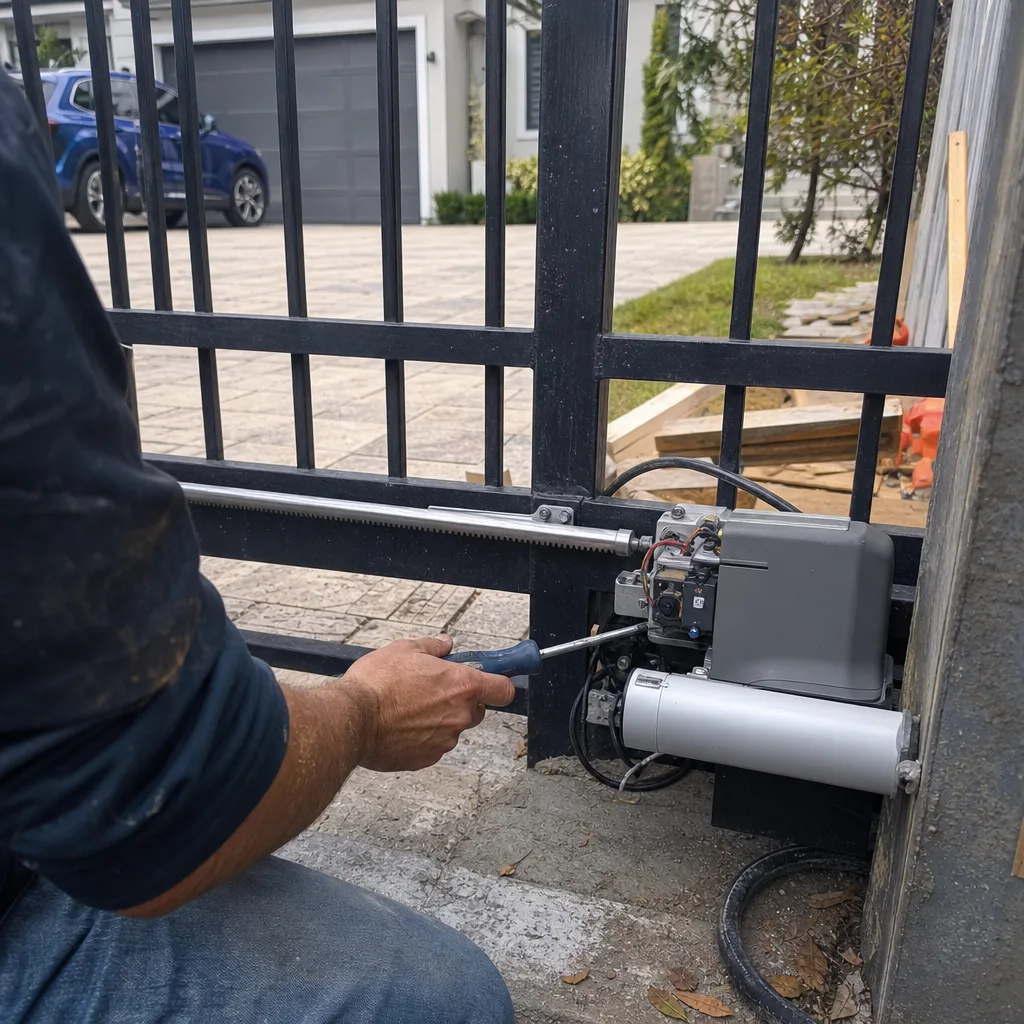
We service nine automation brands, and four of them dominate Hollywood driveways: Linear, Viking, Ghost Controls, and DoorKing. Each has a specific point we check first because failure patterns are consistent.
Linear: The capacitor. Linear swing-arm motors commonly fail at the start capacitor, and the early symptom is a gate that hums but won’t move on first command of the day. Check for bulging or discolored capacitor housing.
Viking: The clutch. Viking operators use an adjustable clutch that wears smooth over time. Test it by holding the gate mid-travel and applying light resistance. If the motor slips at less than the rated force, the clutch needs adjustment or replacement.
Ghost Controls: The battery. Ghost Controls systems are battery-reliant for their fail-safe operation, and in humid Hollywood air the battery terminals corrode inside the housing. Inspect terminals for green residue every inspection, even on a system that’s working.
DoorKing: The photo-eye alignment. DoorKing photo-eyes are sensitive to vibration, and what starts as a slight misalignment after a storm becomes intermittent obstruction faults. Clean the lens, check the LED indicator, and confirm the beam is hitting the reflector dead center.
We work on whatever motor is already on the property rather than steering you toward a replacement. A gate motor in Hollywood can run for fifteen years if the corrosion points are caught early and the baselines are recorded.
Common Mistakes to Avoid
- Using penetrating oil on hinges in Hollywood. It carries salt into the pin bore and accelerates internal corrosion. Use a dry-film PTFE lubricant instead.
- Adjusting limit switches without recording the previous setting. You’ve now created a new baseline with no reference. If the gate gets worse, nobody knows where you started.
- Ignoring the conduit. Homeowners check the motor and the gate itself, but the wiring path is where intermittent failures start. Open the junction boxes.
- Assuming a plumb post is a healthy post. The issue is usually at the footer below grade. Check for soil gaps and rust staining at the post base, not just the post angle.
- Skipping the wet-season inspection window. Hollywood’s soil settles most during October and November. Inspect then, not whenever it’s convenient in the dry season.
- Lubricating the springs. Torsion springs don’t need it, and wet lubricant collects grit that shortens the spring’s life.
- Fixing symptoms without a photo record. If you replace the same part twice in two years, you need a documented history to see the pattern. Memory won’t hold up that long.
When to Call a Professional
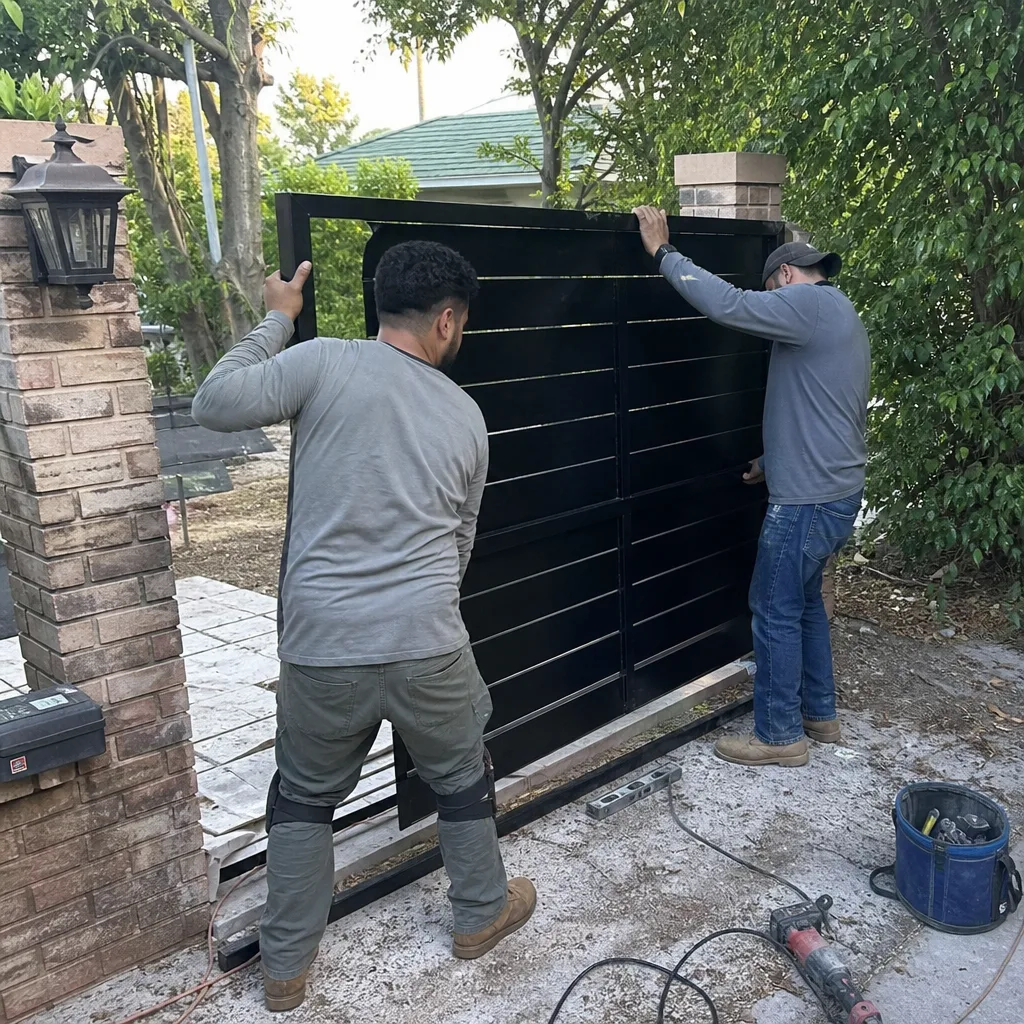
Call a gate company when the post has shifted, when the gate slams at either end of travel, when the motor trips a breaker, or when you see corrosion inside the control-board housing. These are structural and electrical issues where a wrong move makes the repair more expensive, not less. For more guides & resources on gate maintenance, visit our blog. If you or a loved one has been wrestling with an unreliable gate in Hollywood, Vance Gate Repair Hollywood offers free estimates in Hollywood - call (754) 714-5786. We’ll put the price in writing before any work starts, and the visit includes a documented photo record you keep.
Frequently Asked Questions
Every 90 days during the wet season, May through November, and once at the start of the dry season. The wet-season inspections catch the corrosion and soil-shifting problems; the January inspection resets your baselines for the year. Call (754) 714-5786 if you want a written maintenance schedule specific to your gate type.
Use a dry-film lubricant with PTFE, not a wet oil. Wet lubricants trap salt against the metal in Hollywood’s coastal air. Apply to hinge pins, roller bearings, latches, and gate wheel axles. Skip the springs entirely.
Measure the gap between the gate and the post at three heights: bottom, middle, and top. If those three measurements differ by more than a quarter inch, the post has shifted. Also look for a visible gap between the concrete footer and the surrounding soil. If you see either, call for an assessment before the dry season locks the post in place.
You can record the settings safely, but adjusting limit switches means working with mechanical parts under spring tension. If you’re comfortable with the motor’s internal layout and follow the manufacturer’s procedure, a one-increment adjustment is manageable. If you’re uncertain, don’t guess. A wrong limit setting can slam the gate hard enough to damage the rack or chain. Call (754) 714-5786 and we’ll set it correctly and document the new reading.
Photograph the control board before and after, the limit-switch readings at both ends of travel, the hinge pins, the conduit entry points, the gate-to-post gap with a tape measure in frame, and any corrosion or cracking you find. File the photos with the date. Next year’s inspection compares against those exact images.
We service nine major automation brands, including Linear, Viking, Ghost Controls, and DoorKing. We repair whatever motor is on the property, and we never steer you toward a replacement unless the existing motor is genuinely beyond economical repair. Estimates in Hollywood are free, and the written price is in your hand before any tool comes out.
The Bottom Line
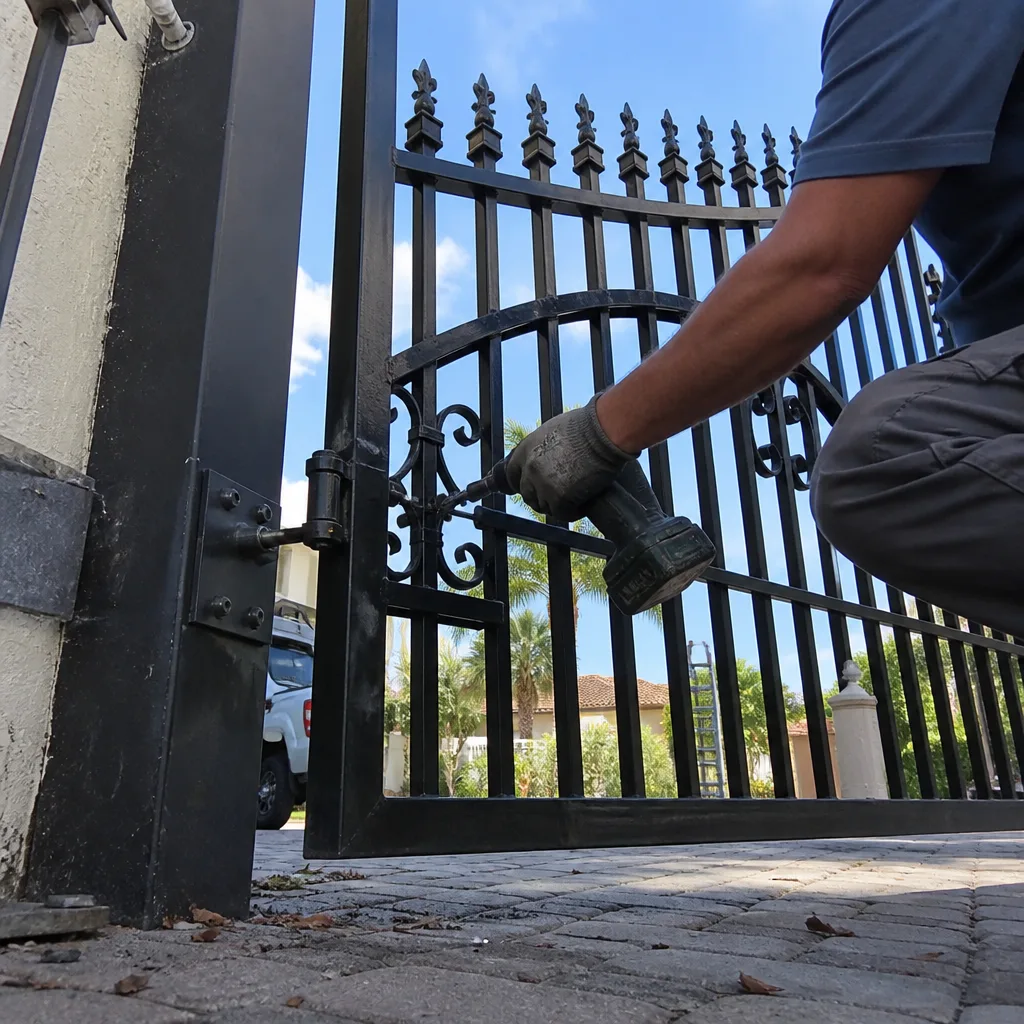
A maintenance checklist that works in Hollywood has to account for salt air, saturated soil, and the corrosion that hides behind covers. The right lubricant matters. The recorded limit-switch baseline matters. The photo file you keep from year to year matters. If a hinge post shifts, a close limit drifts, or a junction box shows green corrosion, act on it before it becomes a structural or electrical failure. For homeowners who want a professional set of eyes, Vance Gate Repair Hollywood has been working on gates in this city since 2014, and every visit starts with a written price. Call (754) 714-5786 for a free estimate, and see what Vance Gate Repair Hollywood can document for your gate this year.
Written by Adrian Vance, Owner at Vance Gate Repair Hollywood, serving Hollywood since 2014.