
Last updated September 21, 2026
Free on-site gate assessment - hinges, posts, and your LiftMaster or Nice gate operator checked before anything is quoted
The assessment is free and the quote is the invoice.
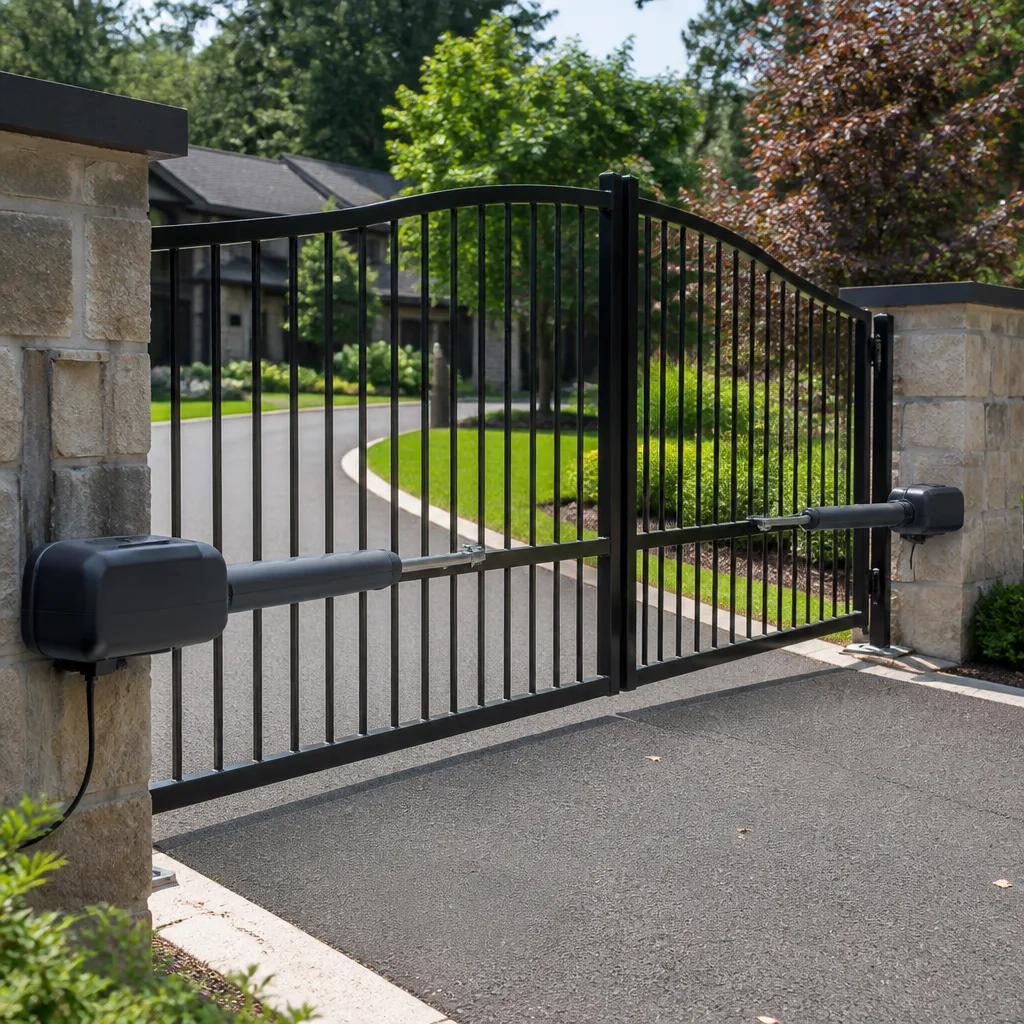
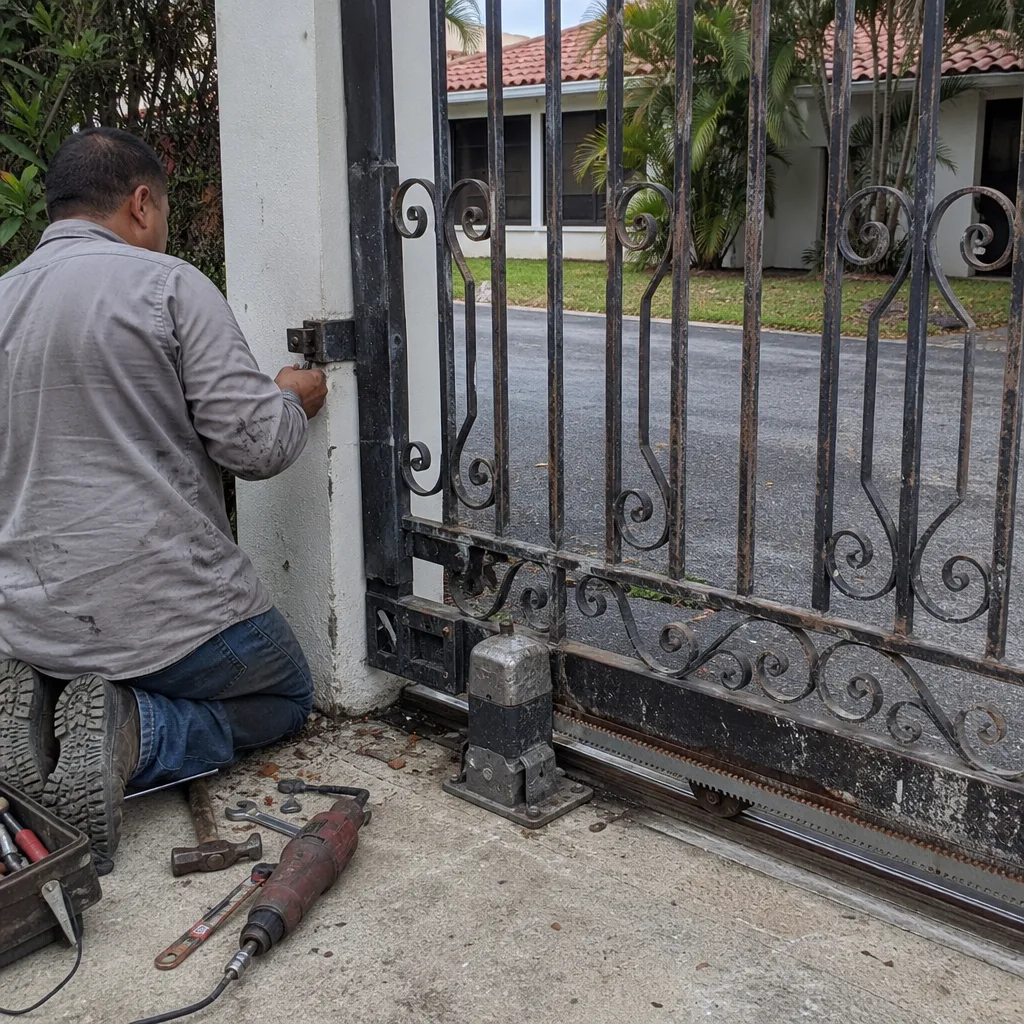 Before
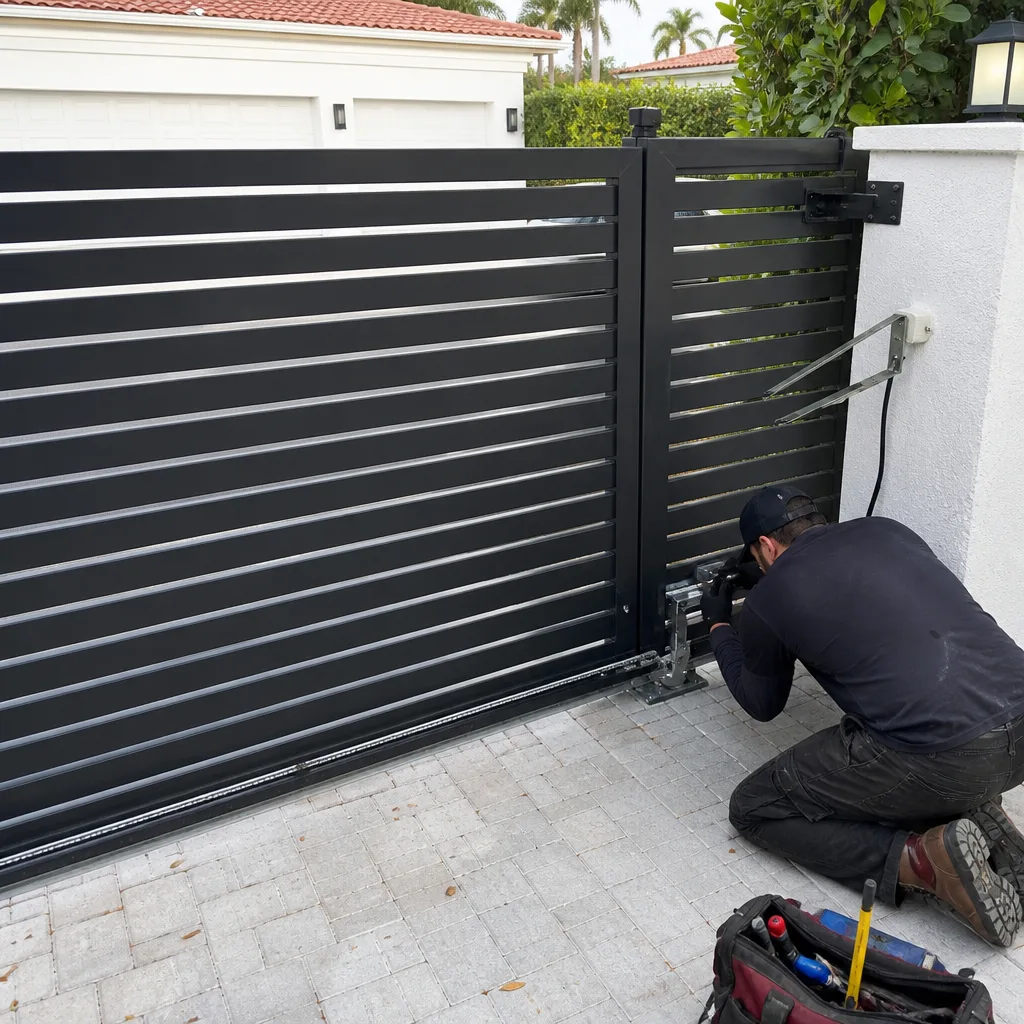 After
After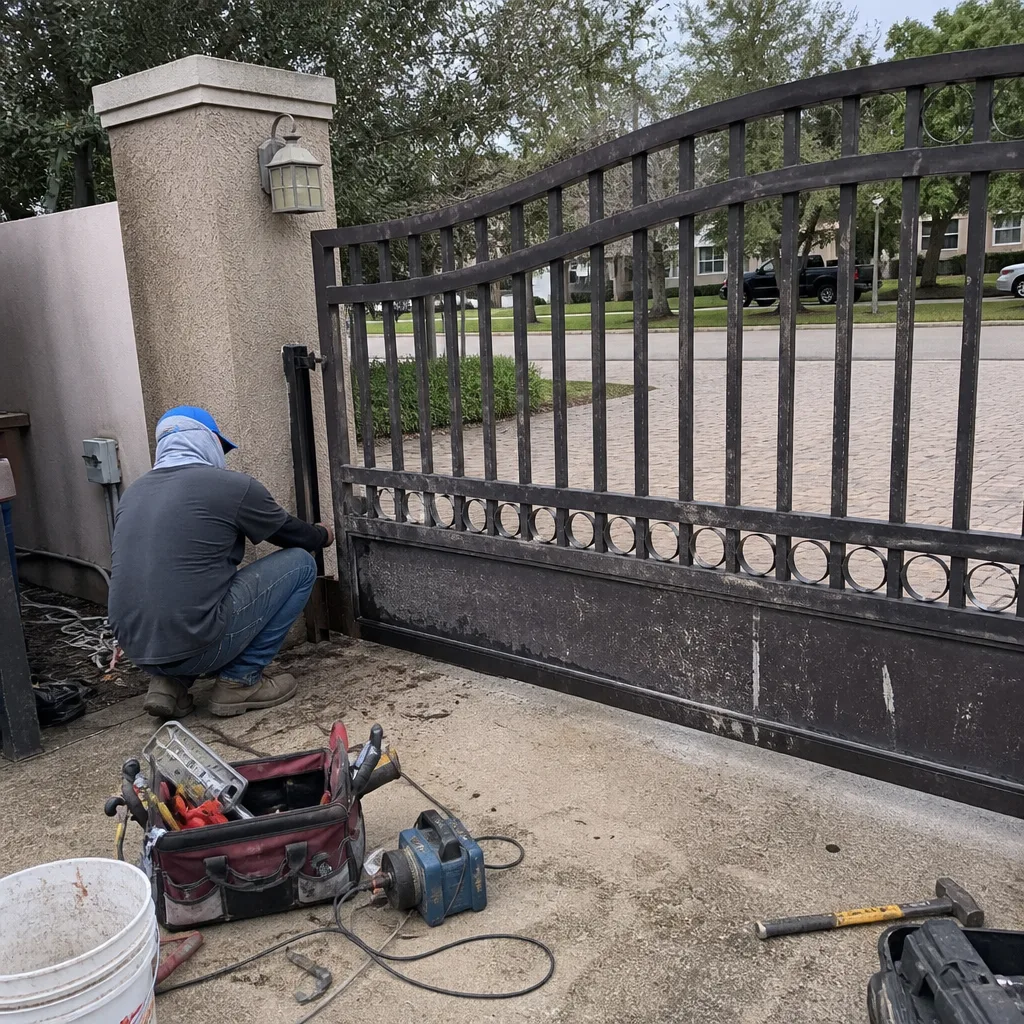 Before
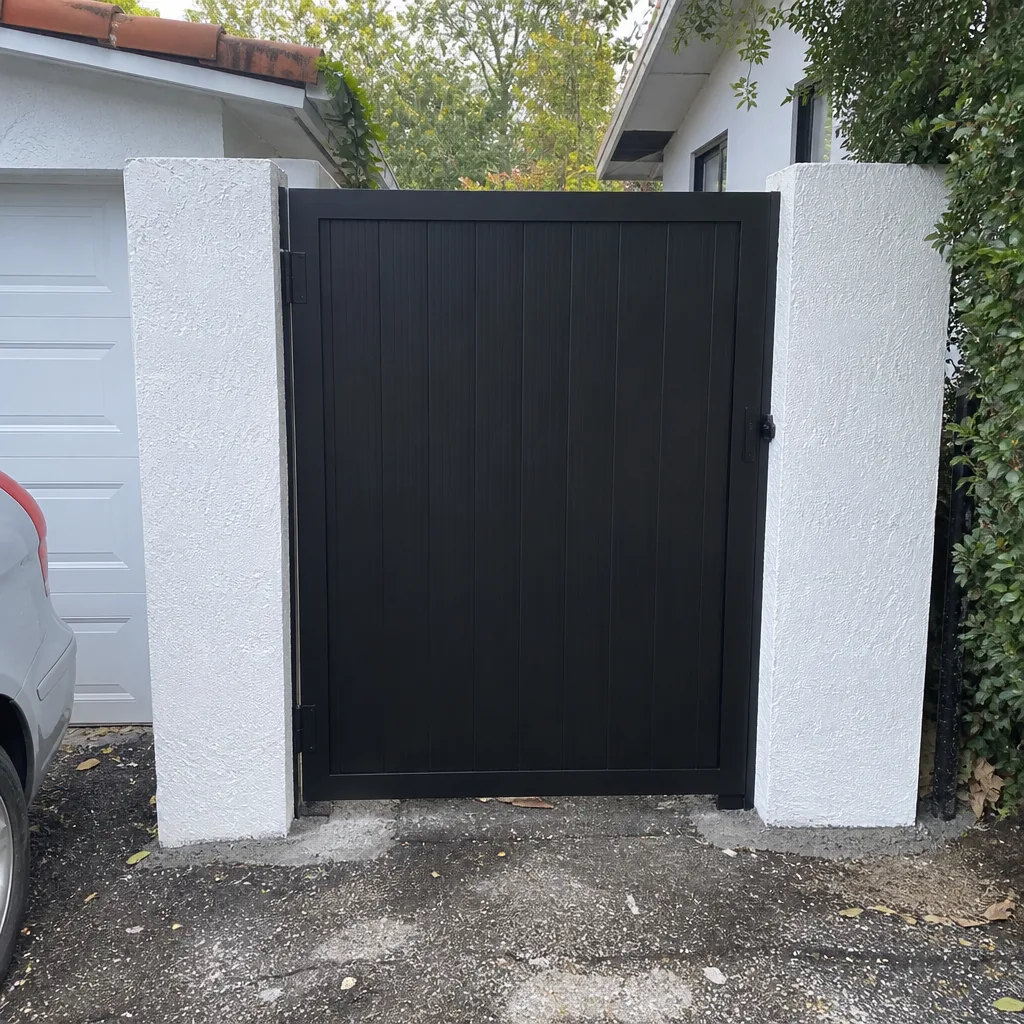 After
After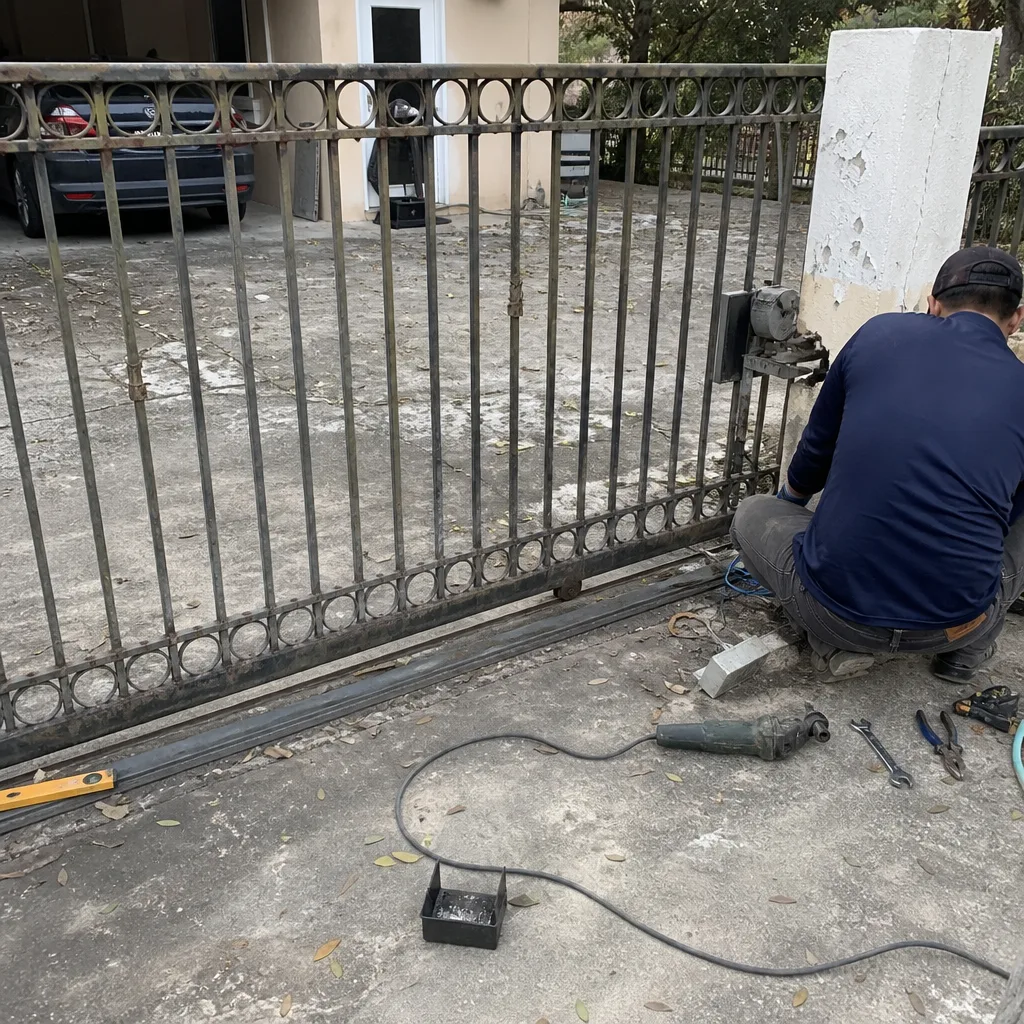 Before
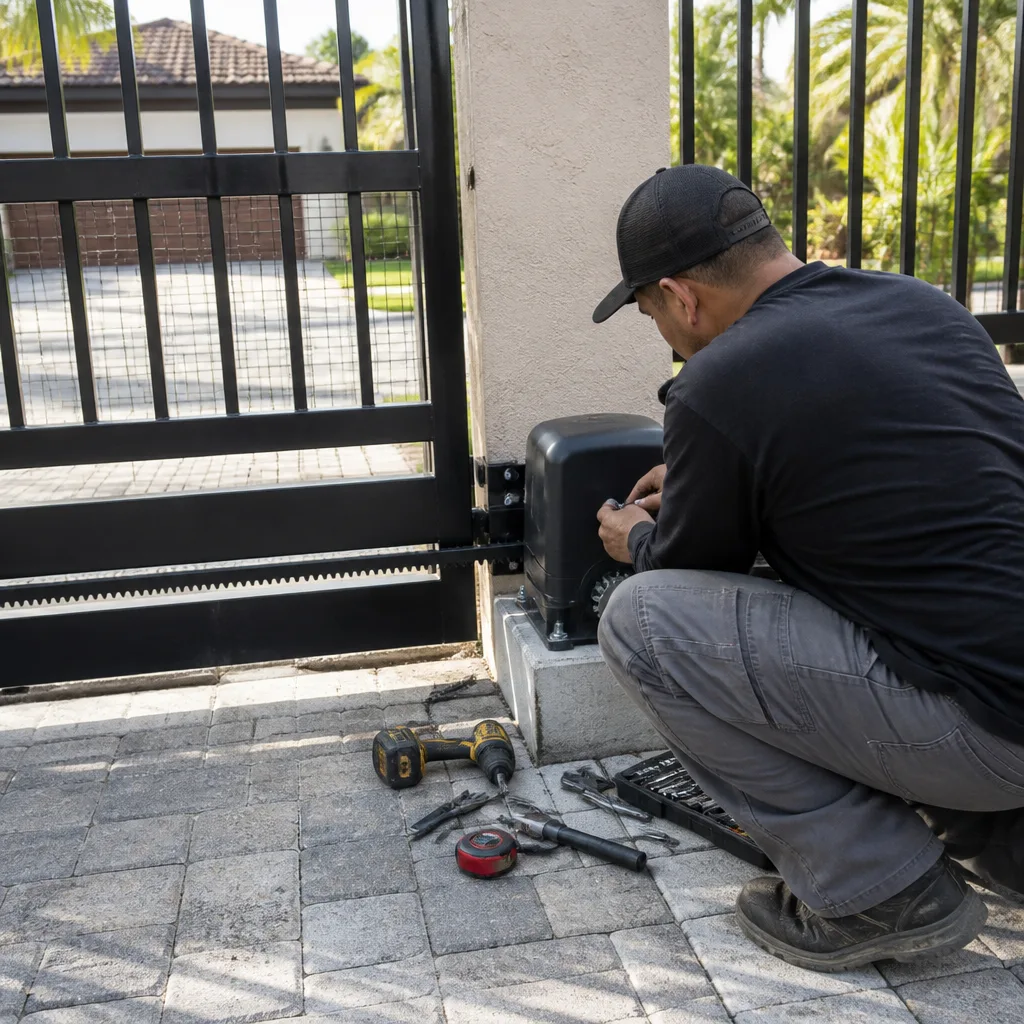 After
AfterGate Repair Permits, Codes & Inspections in FL: What You Need to Know
A $400 gate motor swap installed without a permit can become a $3,000 code-remediation problem at closing. Florida building departments treat unpermitted electrical work as a material defect, not a paperwork technicality, and the Broward County property-sale inspection process surfaces these defects with mechanical regularity. This guide explains the Florida Building Code trigger points for gate work, the permit process in Hollywood and Broward County, how to check your own permit history before hiring anyone, and what fixing an unpermitted gate actually involves. You’ll leave with a working knowledge of UL 325, the Florida amendments, and the documentation trail that protects you at sale and at claim time.
Quick Answer
In Florida, permits for gate work are required based on the work category: any new electrical connection to a gate operator triggers a permit, as does any structural alteration to a gate column, footing, or mounting surface. A straight motor-for-motor swap may not require a permit, but adding a new circuit, trenching new conduit, or modifying the gate’s structural frame almost always does. In Broward County, you can check your address’s permit history yourself in under ten minutes through the county’s online portal, and remediation for unpermitted work costs $300 to $3,000 depending on what was modified.
Table of Contents
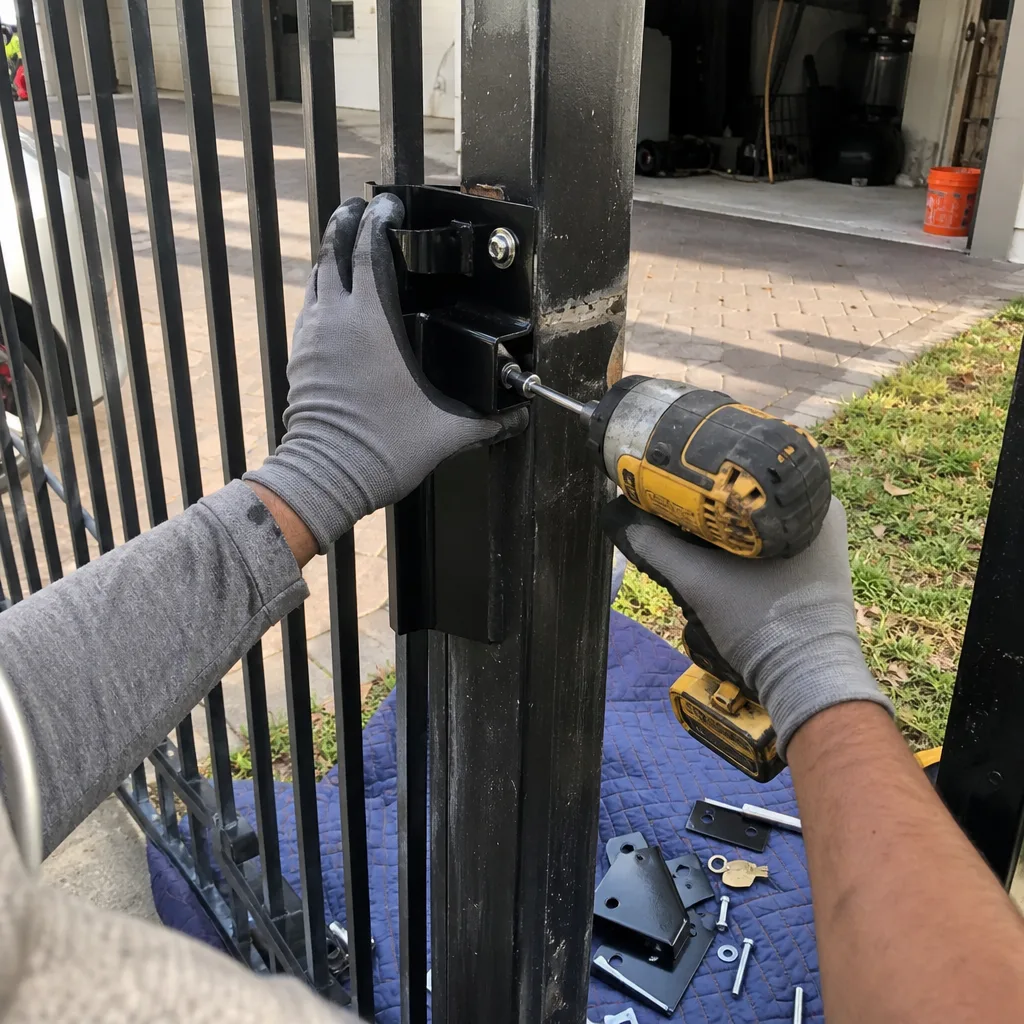
- What Actually Triggers a Gate Permit in Florida
- How to Pull Broward County Permit History on Your Own Address
- UL 325 and the Florida Amendments: The Code That Governs Gate Operators
- What an Unpermitted Gate Looks Like on a Title Search
- Remediation: Fixing an Unpermitted Gate Without Getting Fleeced
- Documentation That Survives a Sale: What to Keep and How
- Hollywood-Specific Permit Notes: Climate, Corrosion, and Code
 Before
 After
AfterWhat Actually Triggers a Gate Permit in Florida
The Florida Building Code does not have a single line that says “gates need permits.” Instead, permit requirements are triggered by building-code chapters that govern the work categories a gate project touches. This distinction matters because the work category, not the project cost, is what determines whether you need a permit. A $6,000 ornamental gate hung on existing posts may need no permit at all, while a $400 gate motor wired to a new circuit needs a full electrical and operator permit. Here is what triggers a permit in Broward County and across Florida:
- New electrical circuit or branch wiring for the operator. If the installer runs a new line from the panel to the gate motor, that is electrical work governed by the National Electrical Code as adopted in Florida (FBC Chapter 27). It requires an electrical permit. If the operator plugs into an existing outdoor receptacle, no electrical permit is required, though the operator installation itself may still need one.
- Structural modification to gate columns, footings, or mounting pads. Cutting into a concrete column to recess a motor, pouring a new pad, or welding structural brackets to a steel gate frame falls under FBC Chapter 16 (Structural Design) and Chapter 19 (Concrete). These trigger a building permit.
- New vehicular gate operator installation. Florida has adopted UL 325 (Standard for Safety for Door, Drapery, Gate, Louver, and Window Operators and Systems) into the building code through Chapter 30. Any new operator installation must meet UL 325 entrapment-protection requirements, and Broward County requires an inspection to verify compliance.
- New gate construction over 6 feet in height or covering a required egress path. Height and egress trigger planning and zoning review. A gate that blocks a fire access lane or a required pedestrian egress path is a code violation regardless of whether a permit was pulled.
In our experience at Vance Gate Repair in Hollywood, roughly half of the gates we inspect during Gate Repair services have an operator that was installed without a permit. The homeowner rarely knows. The installer knew, or should have known, and the consequence lands on the homeowner’s side of the table when the property changes hands or a claim is filed.
How to Pull Broward County Permit History on Your Own Address
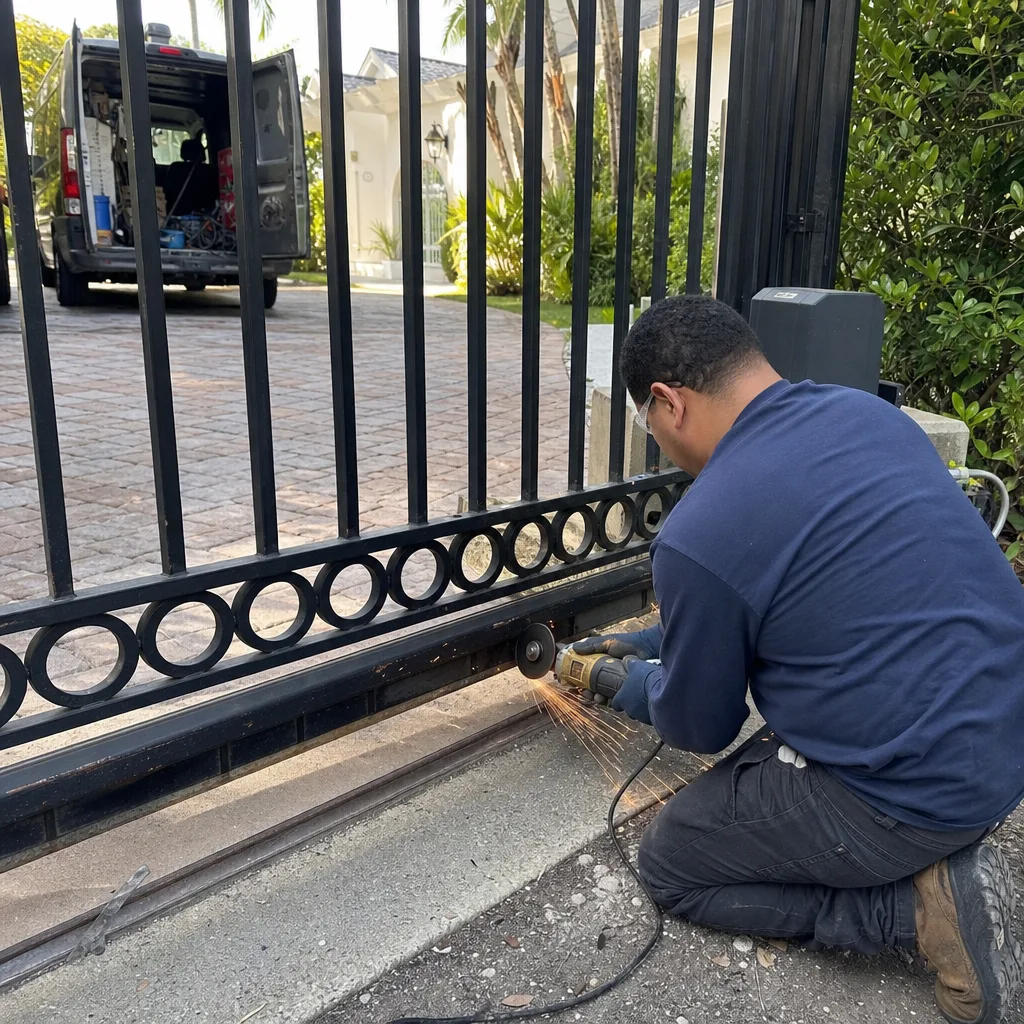
Before you hire anyone to touch your gate, spend ten minutes checking whether prior gate work at your address was permitted. Broward County maintains a searchable online permit database that covers Hollywood and most municipalities in the county. Here is the step-by-step process:
- Go to the Broward County ePermits portal. The county operates a public search tool at the Broward County Building Code Division website. Look for “Permit Search” or “ePermit Center.”
- Enter your property address. Use the standardized address format from your property appraiser record. The system will return every permit ever pulled on that parcel, including building, electrical, mechanical, and plumbing permits.
- Look for permits dated around the time of any gate work. If your gate operator was installed in 2019, look for a 2019 electrical permit or building permit referencing “gate operator,” “vehicular gate,” “access control,” or “el.” If you see nothing, the operator installation was likely unpermitted.
- Check for a Certificate of Occupancy or final inspection notation. An open permit with no final inspection is a problem. An expired permit with no final inspection is a bigger problem, because the work remains technically unapproved and any future claims involving that work can be denied.
- Call the Broward County Building Code Division if the online record is unclear. A phone call to the permit desk in Hollywood’s division will get you a human answer about what is on file. This is the same call a title company makes during a sale, so you want to know what they will find before they find it.
This check takes ten minutes and costs nothing. At Vance Gate Repair Hollywood, we tell every Hollywood homeowner to do this before any gate project, including repairs, and point them to our more guides & resources for additional help. If the prior work was unpermitted, we can factor remediation into the scope rather than letting it surface at closing.
UL 325 and the Florida Amendments: The Code That Governs Gate Operators
UL 325 is the national safety standard for automatic gate operators. Florida adopts UL 325 directly into the Florida Building Code, and the state adds amendments that address hurricane wind loads, corrosion in coastal environments, and specific entrapment-protection requirements. If your gate operator does not meet UL 325, it is not a “safety suggestion” violation. It is a code violation.
The key UL 325 requirements for vehicular gate operators are:
- Entrapment protection is mandatory, not optional. Every vehicular gate operator must have two independent means of entrapment protection. Typical combinations are a photo-eye (the infrared beam that stops the gate if something crosses the path) paired with a reversing edge or an inherent current-sensing system. If your operator has no photo-eye and no reversing edge, it fails UL 325.
- Gate operators must stop and reverse upon contact with a solid object. The reverse force threshold is specified in the standard and must be verified at installation and after any significant service. In Hollywood, we’ve found limit switches mis-set by 12 degrees past travel on operators that would never reverse in time to prevent injury.
- Manual release mechanisms must be accessible from outside the gate. A fail-safe mechanical release is required so firefighters and first responders can open the gate without damage during an emergency. If the release handle is locked inside the fence, the installation fails code.
- Warning signage placement is specified. UL 325 requires specific warning placards on both sides of the gate leaf and on the operator housing. Missing placards are a code violation that inspectors flag routinely in Hollywood.
Florida’s specific amendments matter because of the coastal environment. Galvanized steel components, stainless hardware, and sealed control boards are not just best practice here; they are the difference between an operator that lasts five years and one that fails in eighteen months. Hollywood’s salt air accelerates corrosion on exposed electrical connections, and the Florida amendment addressing corrosion resistance applies directly to gate operator installations within three miles of the coast, which covers nearly all of Hollywood.
What an Unpermitted Gate Looks Like on a Title Search
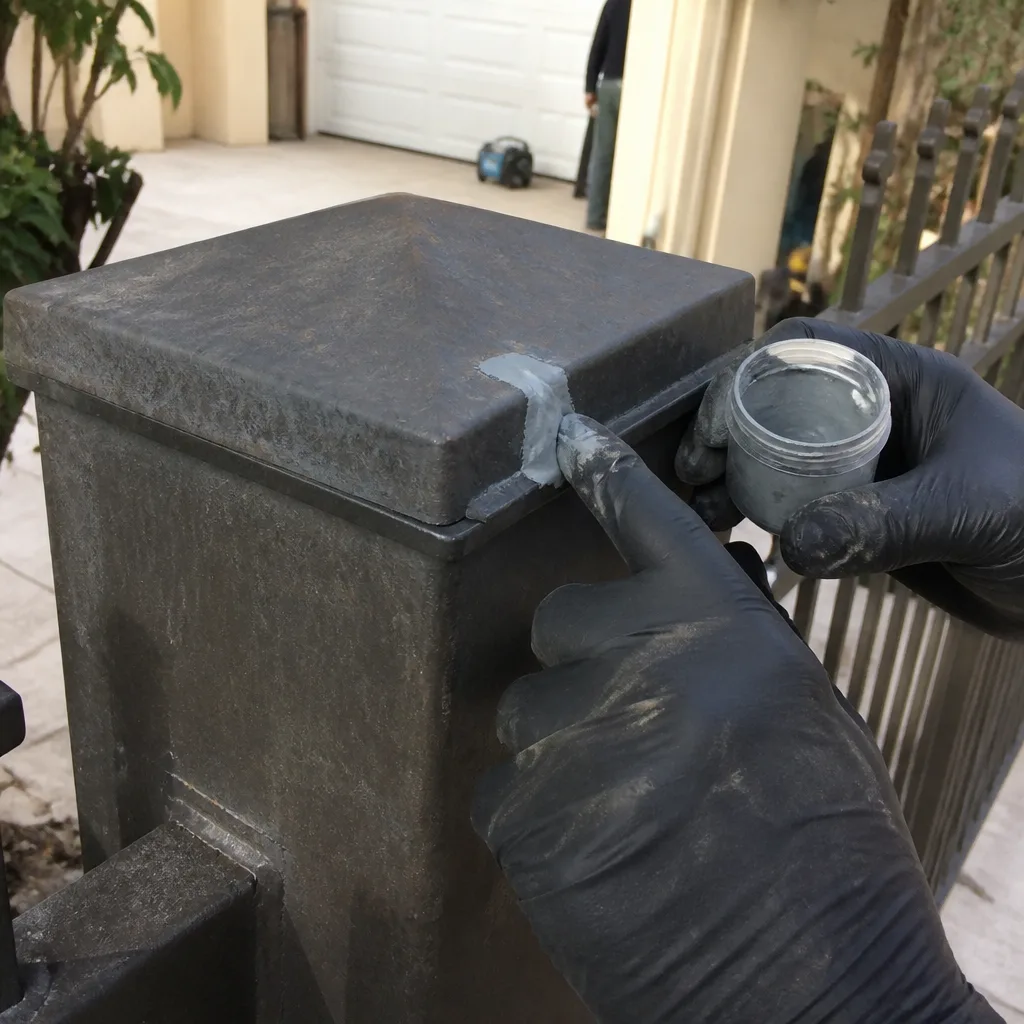
When a buyer’s attorney or title company runs a title search on a Hollywood property, they are not just looking for liens and encumbrances. They are cross-referencing the property record card against the county permit database. Any material modification that appears on the property but not in the permit history gets flagged as an “unpermitted improvement” or “unpermitted alteration.”
Here is what that flag actually does:
- The buyer’s attorney issues a written objection. The standard Florida real estate contract gives the buyer the right to object to unpermitted work discovered during the due-diligence period. The objection typically demands either a retroactive permit or a price reduction to cover the estimated remediation cost.
- The title insurer may exclude coverage. Title insurance policies routinely exclude claims arising from unpermitted work. If the gate later causes a problem, the buyer cannot claim against the policy.
- The lender may refuse to fund. FHA, VA, and conventional lenders have appraiser instructions that flag unpermitted modifications affecting safety systems like gate operators. A gate operator with no permit history can kill a loan approval.
- The property insurance carrier may deny a claim. If a gate operator causes a fire, an injury, or property damage, the insurer’s first question is whether the operator was permitted and inspected. Unpermitted work is a routine claim-denial basis, and Florida courts have consistently upheld these denials.
The cost to remediate varies. A simple unpermitted operator installation in Hollywood typically runs $400 to $900 in permit fees, inspection fees, and any required corrections like adding entrapment protection. Structural unpermitted work, like a gate column that was built without footings inspected, can run $2,000 to $3,000 or more. The official Vance Gate Repair Hollywood home guide to gate work covers the broader scope of what gate repair and installation involve, including permit considerations.
Remediation: Fixing an Unpermitted Gate Without Getting Fleeced
If you discover that your gate was installed without a permit, you have options, and none of them require tearing everything out and starting over. The pathway depends on what was done and whether the work currently meets code.
- Have a licensed contractor inspect the existing work. The first step is an honest assessment of whether the installation meets current Florida Building Code and UL 325 requirements. If it does, the permit path is relatively painless. If it does not, you need to know exactly what fails before spending money.
- Pull a retroactive permit for the electrical connection. For unpermitted gate operators, a licensed electrical contractor can apply for a permit to legalize the existing wiring. Broward County accepts retroactive permits, though some municipalities add a surcharge for work done without a permit.
- Correct any UL 325 failures. If the operator lacks entrapment protection, that must be fixed before an inspector will sign off. A photo-eye retrofit typically costs $150 to $400 installed, depending on the operator brand. In our experience with Ghost Controls and Mighty Mule operators in Hollywood, retrofitting entrapment protection is straightforward on most models.
- Schedule the inspection. Broward County requires a final inspection to close the permit. The inspector will verify the operator’s entrapment protection, the electrical connection, and the warning signage. The inspection fee is typically $100 to $150.
- Keep the closed permit and the inspection record. This paperwork is your proof that the work is now legal. File it with your property records. It will be required at sale and may be required at claim time.
We have walked Hollywood homeowners through this process dozens of times. The most common mistake is hiring a contractor who says they can “make the problem go away” by pulling a permit for different work and then quietly including the gate. That does not work. Inspectors are not fooled by a permit that describes a kitchen remodel but shows gate operator wiring on the inspection. The permit has to describe the actual work.
Documentation That Survives a Sale: What to Keep and How
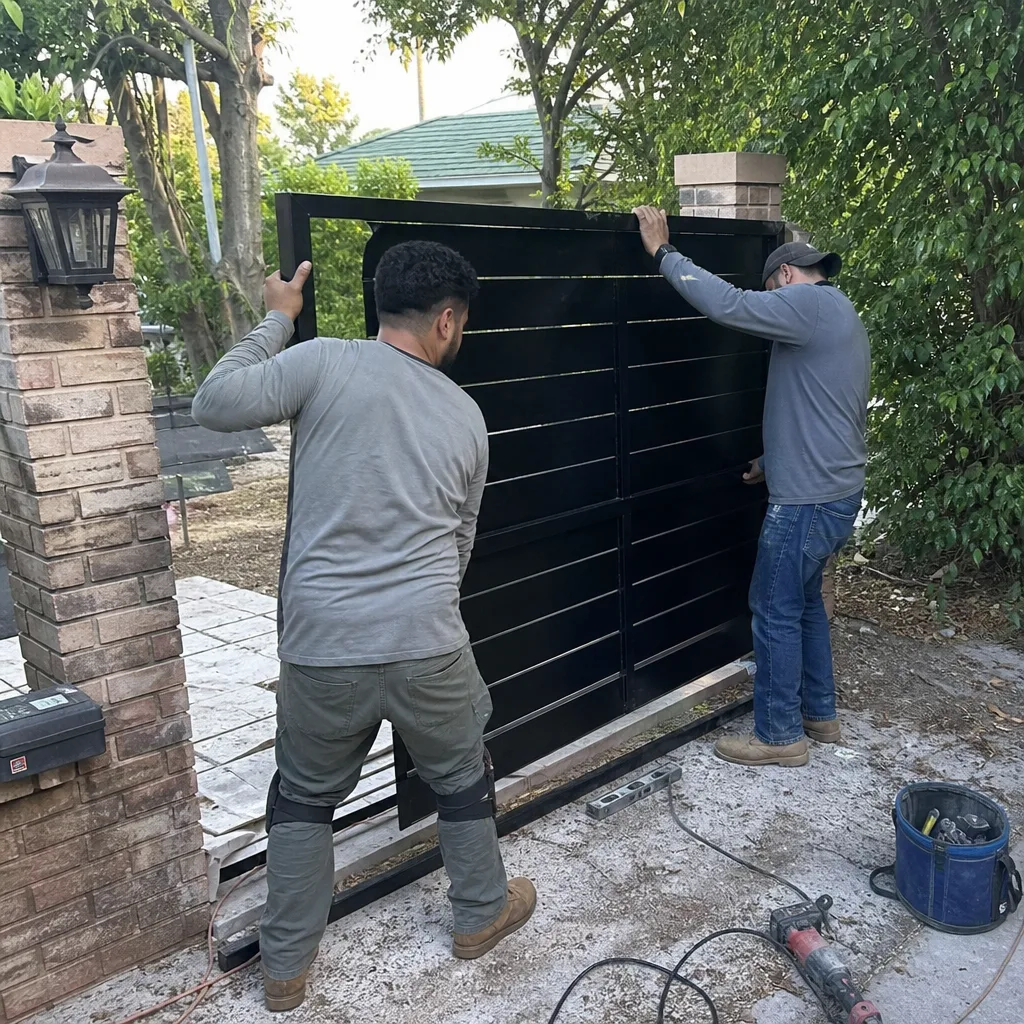
A permit is necessary but not sufficient. What actually protects you at sale and at claim time is the documentation that accompanies the permit: the inspection records, the wiring diagram, the photo evidence, and the materials list. Here is what to keep on file for any gate work on a Hollywood property:
- The closed permit with final inspection notation. This is the legal document that says the work was reviewed and approved. Without the final inspection sign-off, a permit is just an open file.
- The installer’s wiring diagram or schematic. A hand-drawn sketch with wire routing, voltage, and component locations costs nothing to create and saves hours of troubleshooting later. If the installer cannot or will not provide one, find a different installer.
- Photo documentation of the finished work. Photos of the operator, the control board, the limit switch positions, and the photo-eye alignment are evidence you can hand to any future technician or insurance adjuster. This is the documentation habit we follow on every single gate we touch in Hollywood: photographed before, after, and at every adjustment point.
- The make, model, and serial number of every installed component. Gate operators fail. When one fails, a future technician needs to know exactly what is on the property. A written record of the model number saves the homeowner money because the technician is not spending billable time identifying parts.
- Any UL 325 compliance certificate or safety equipment documentation. Some operators come with a compliance certificate. Keep it. Florida inspectors and insurance adjusters ask for it.
This is the practical difference between a gate repair that creates a problem and one that creates a record. At Vance Gate Repair Hollywood, every job leaves a written price before work starts and a photo log when the technician leaves. That documentation habit is the same discipline that carries through to permit and inspection records.
Hollywood-Specific Permit Notes: Climate, Corrosion, and Code
Hollywood, Florida, sits in a windborne debris region under the Florida Building Code. That designation affects gate work in ways that do not apply in, say, Orlando or Tampa. Specifically:
- Wind load requirements apply to gate leaves and posts. FBC Chapter 16 design wind speeds for Broward County mean that a gate leaf over a certain size must be designed and attached to withstand hurricane-force gusts. A homeowner who swaps a lightweight aluminum gate for a heavy solid-panel steel gate may be making a structural change to the posts and footings that the original engineering did not anticipate.
- Corrosion resistance is a code issue, not a preference. The Florida amendment to FBC Chapter 30 addresses corrosion protection for components exposed to salt air. Hollywood is within three miles of the Atlantic. Galvanized steel, stainless hardware, and UV-stabilized enclosures are the minimum for a gate operator that will survive a Hollywood summer.
- Elevation and floodplain considerations apply in some Hollywood neighborhoods. Portions of eastern Hollywood lie in FEMA flood zones. Extreme flood zone properties may have elevation certificates that include gate operators and control panels in the “lowest adjacent grade” assessment. Electrical panels and control boards mounted below the base flood elevation can trigger floodplain management review.
- Historical district overrides. Some Hollywood neighborhoods, including portions of the Lakes section and downtown Hollywood, have design review boards. A gate that is visible from the street may require design review approval before a permit is issued. The review adds time and cost, often $200 to $500, but failing to get it creates a violation that follows the property.
In practice, this means a gate project in Hollywood requires more upfront investigation than a gate project in a landlocked Florida county. The permit is not a formality. It is the mechanism that verifies the work meets the wind, corrosion, and structural standards that exist because Hollywood is where it is. If you are planning Gate Installation in Hollywood, the permit and inspection layer should be part of the scope from day one, not an afterthought.
What a Gate Motor or Opener Permit Actually Covers
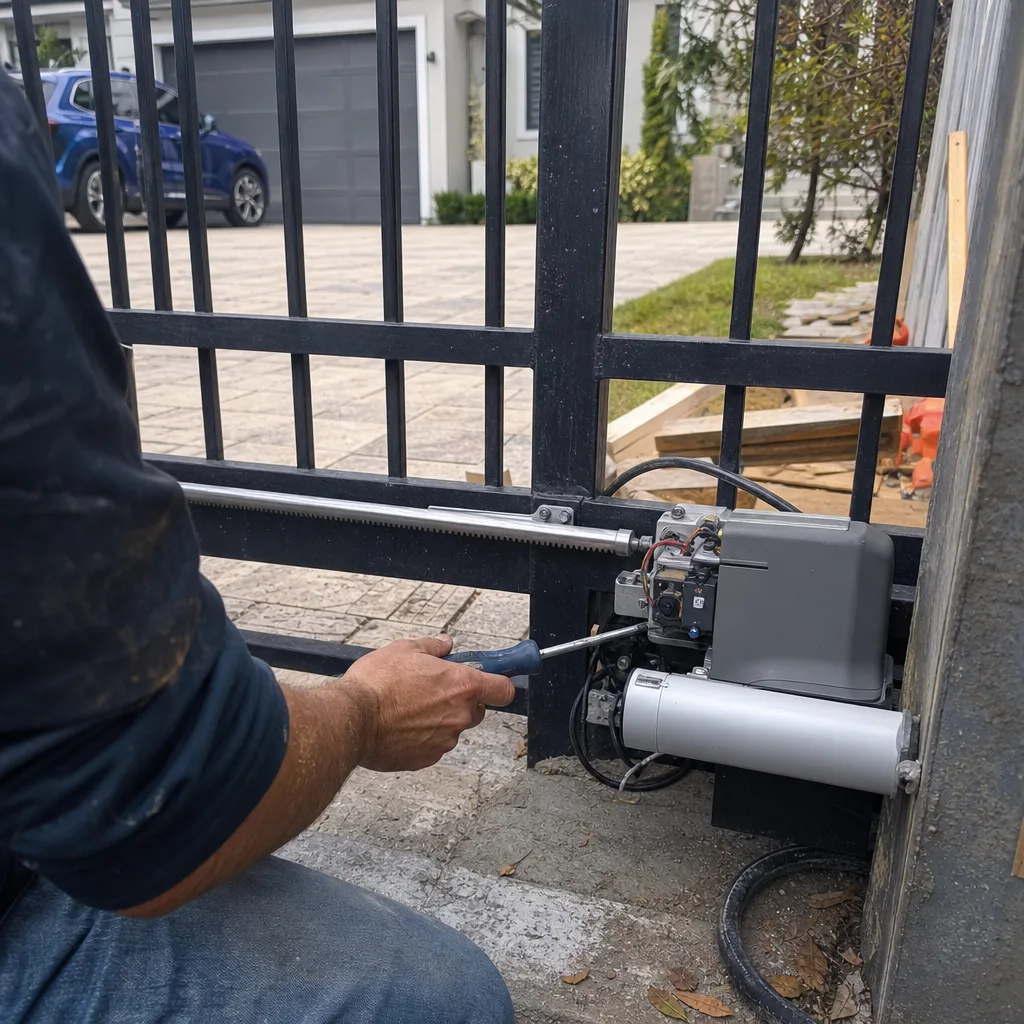
When you pull a permit for a gate motor or opener in Broward County, the permit document describes the electrical connection, the operator installation, and the UL 325 safety equipment. It does not cover the gate structure itself unless the structural scope is included. This matters because a permit for the opener does not legalize unpermitted structural work on the gate leaf or posts, and vice versa.
The specific items a gate opener permit covers:
- Electrical branch circuit from the panel to the operator location. Wire gauge, conduit type, grounding, and circuit protection must meet NEC requirements as adopted in Florida. Underground conduit must be buried to the correct depth, typically 18 inches for rigid conduit and 24 inches for direct burial cable.
- Operator mounting and mechanical attachment. The operator must be mounted so that the force applied to the gate leaf is within the manufacturer’s specified range. An improperly mounted operator tears itself apart within months, and the inspector checks mounting bolts, bracket placement, and drive arm angles.
- Entrapment protection devices. The photo-eye alignment, the reversing edge sensitivity, and the force settings are all inspection items. The inspector will place an object in the gate path and verify that the gate stops and reverses.
- Warning signage and placards. UL 325 placards on both gate faces and on the operator housing are mandatory. Missing placards are a failed inspection item, not a note in the margin.
- Grounding and bonding. The operator frame and the gate leaf must be bonded to the electrical ground. In Hollywood’s salt-air environment, a corroded ground connection is a routine failure point that inspectors look for closely.
For Hollywood homeowners replacing an existing operator with a new one from DoorKing, Elite, or another brand, the permit path is typically shorter because the electrical circuit already exists. The work is classified as a “like-for-like replacement,” which in Broward County means the electrical permit may be waived, but the operator installation still requires a safety inspection. If you are uncertain whether your specific replacement qualifies, the permit desk can answer it over the phone in five minutes.
Common Mistakes to Avoid
- Assuming a small job means no permit. A gate motor swap that involves a new electrical connection triggers a permit regardless of project cost. Cost is not the trigger. Work category is.
- Letting the installer handle the permit without verifying. In Hollywood, we have seen unlicensed installers tell homeowners “the permit is included” and then never pull anything. Always ask for the permit number before work starts, and verify it on the Broward County portal.
- Skipping the final inspection. A permit without a final inspection is an open violation. The inspector’s signature on the final inspection is what closes the file and protects the homeowner at sale.
- Not documenting the installed components. If your gate operator fails two years from now, a future technician needs the make, model, and wiring diagram. If that information was never captured, you pay for the technician’s time to reverse-engineer it.
- Buying a house with an unpermitted gate and not negotiating the remediation. If the buyer’s attorney flags the unpermitted gate, the standard response is to ask the seller to remediate or reduce the price. Sellers who ignore the flag often end up covering the remediation cost at closing anyway, usually with less favorable terms.
- Assuming UL 325 is a manufacturer issue, not a homeowner issue. The manufacturer designs the operator to meet UL 325. The installer is responsible for installing it in a code-compliant manner. The homeowner is responsible for maintaining it. All three layers matter, and the homeowner’s layer is the one that surfaces at claim time.
When to Call a Professional
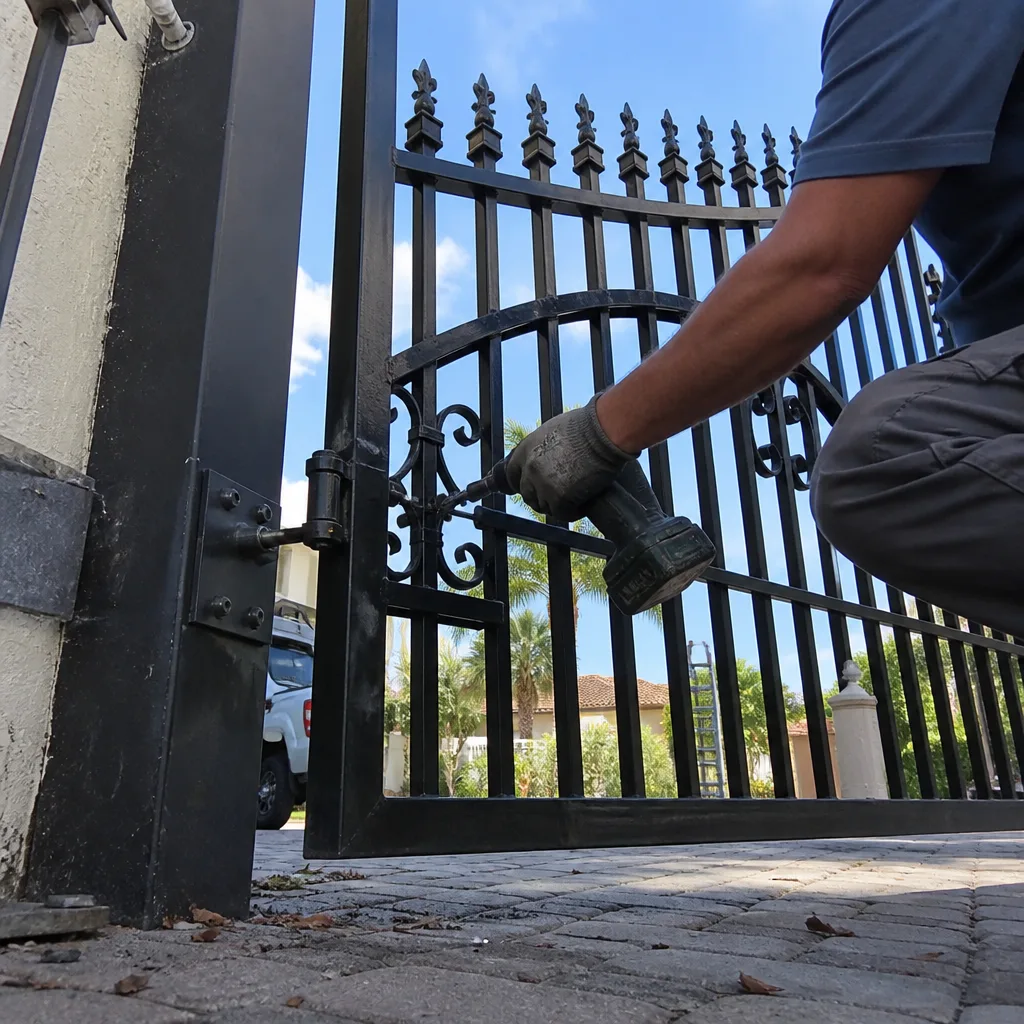
Permit work on gate operators is not a DIY category. If you are adding a new electrical circuit, modifying structural components, or bringing an unpermitted installation up to code, a licensed contractor who knows the Florida Building Code and UL 325 requirements is the difference between a closed permit and a failed inspection. If you have discovered an unpermitted gate operator in Hollywood or are planning a gate project and want the permit layer handled correctly, Vance Gate Repair Hollywood offers free estimates in Hollywood. Call (754) 714-5786 and we’ll walk through the scope, the permit requirements, and a written price before any work starts.
Frequently Asked Questions
Replacing a gate motor with an identical or equivalent model that uses the existing electrical connection typically does not require an electrical permit, because no new wiring is being added. However, if the replacement involves a new circuit, new conduit, or changes to the operator mounting, a permit is required. In Broward County, a like-for-like motor swap may still require a safety inspection to verify UL 325 compliance.
Search your address in the Broward County ePermits portal and look for permits dated around the time of the gate installation. If you find no electrical or building permit referencing a gate operator, gate construction, or access control, the work was likely unpermitted. You can also call the Broward County Building Code Division and ask a permit clerk to check the parcel history for you.
The buyer’s attorney will likely flag the unpermitted gate during the due-diligence period and demand either retroactive permitting or a price reduction to cover remediation. The title insurer may exclude the gate from coverage, and the lender may refuse to fund the loan until the permit is resolved. In practice, the seller typically ends up paying for remediation at closing, often under time pressure that increases the cost.
A retroactive permit for an unpermitted gate operator in Hollywood typically costs $150 to $350 in permit fees, plus $100 to $150 for the inspection, plus any corrections the inspector requires. If the operator lacks UL 325 entrapment protection, expect an additional $150 to $400 for a photo-eye retrofit or reversing edge. Total remediation typically runs $400 to $900 for a simple case and $2,000 to $3,000 for structural work that was never inspected.
Yes. Florida adopts UL 325 into the Florida Building Code, and it applies to residential vehicular gate operators as well as commercial installations. The standard requires two independent means of entrapment protection, accessible manual release mechanisms, and specific warning signage. A residential gate operator that lacks these features is a code violation, regardless of whether a permit was pulled.
Keep the closed permit with final inspection notation, the installer’s wiring diagram or schematic, photos of the finished installation including limit switch positions and photo-eye alignment, and a written record of every component’s make and model. This documentation protects you at sale and at insurance claim time, and it saves a future technician from reverse-engineering the installation at your expense. Call (754) 714-5786 if you need a Hollywood gate professional to help you assemble this record.
The Bottom Line
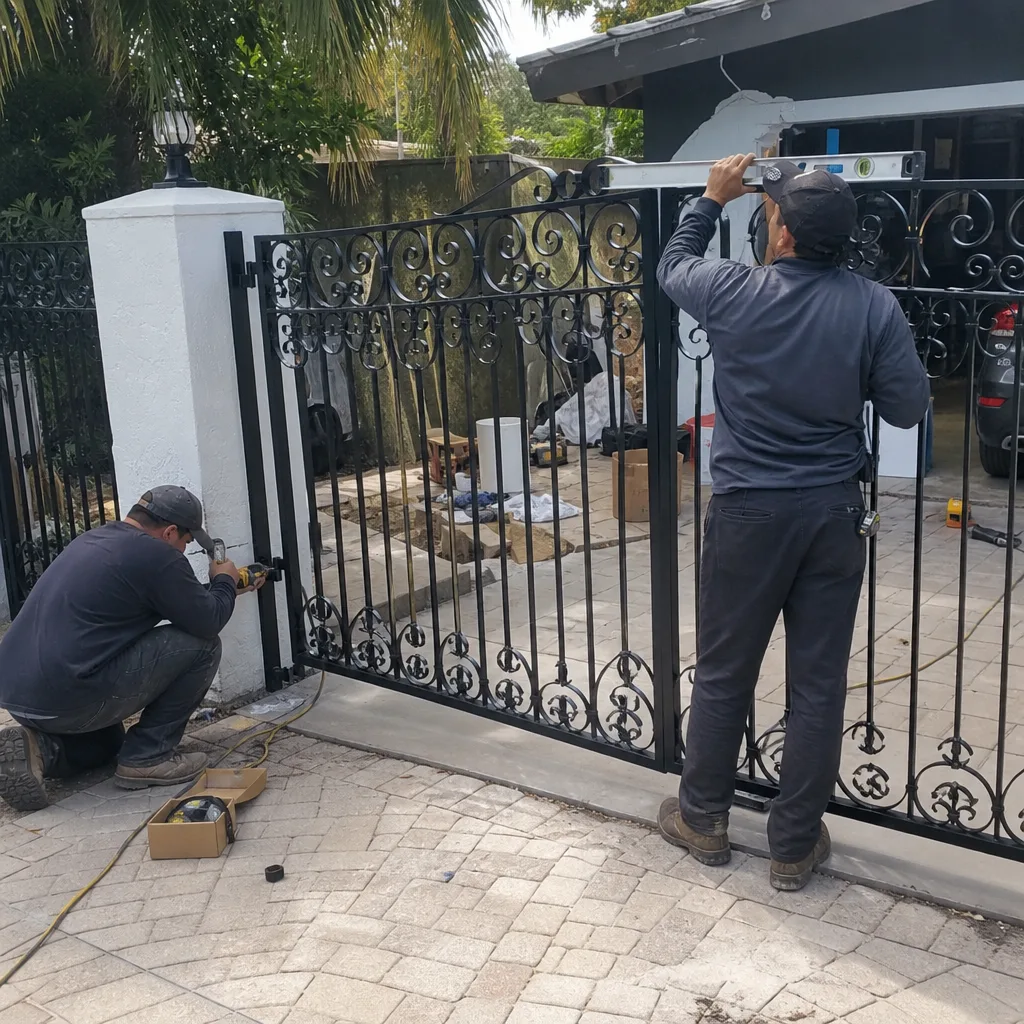
Florida permit requirements for gate work turn on the work category, not the project cost. New electrical connections, structural modifications, and new operator installations trigger permits; like-for-like motor swaps may not. The consequence for skipping a permit surfaces at sale and at claim time, when unpermitted gate work is treated as a material defect rather than a paperwork oversight. Hollywood homeowners should check their own permit history before any gate project, verify that any installer actually pulled the permit, and keep the closed permit plus the wiring diagram and photo record in the property file, as outlined in our How to Hire a Gate Repair Contractor in Hollywood: A Step-by-Step Guide. Ten minutes of research before the work starts saves thousands of dollars when the property changes hands.
Written by Adrian Vance, Owner at Vance Gate Repair Hollywood, serving Hollywood since 2014.