
Last updated September 21, 2026
Free on-site gate assessment - hinges, posts, and your LiftMaster or Nice gate operator checked before anything is quoted
The assessment is free and the quote is the invoice.
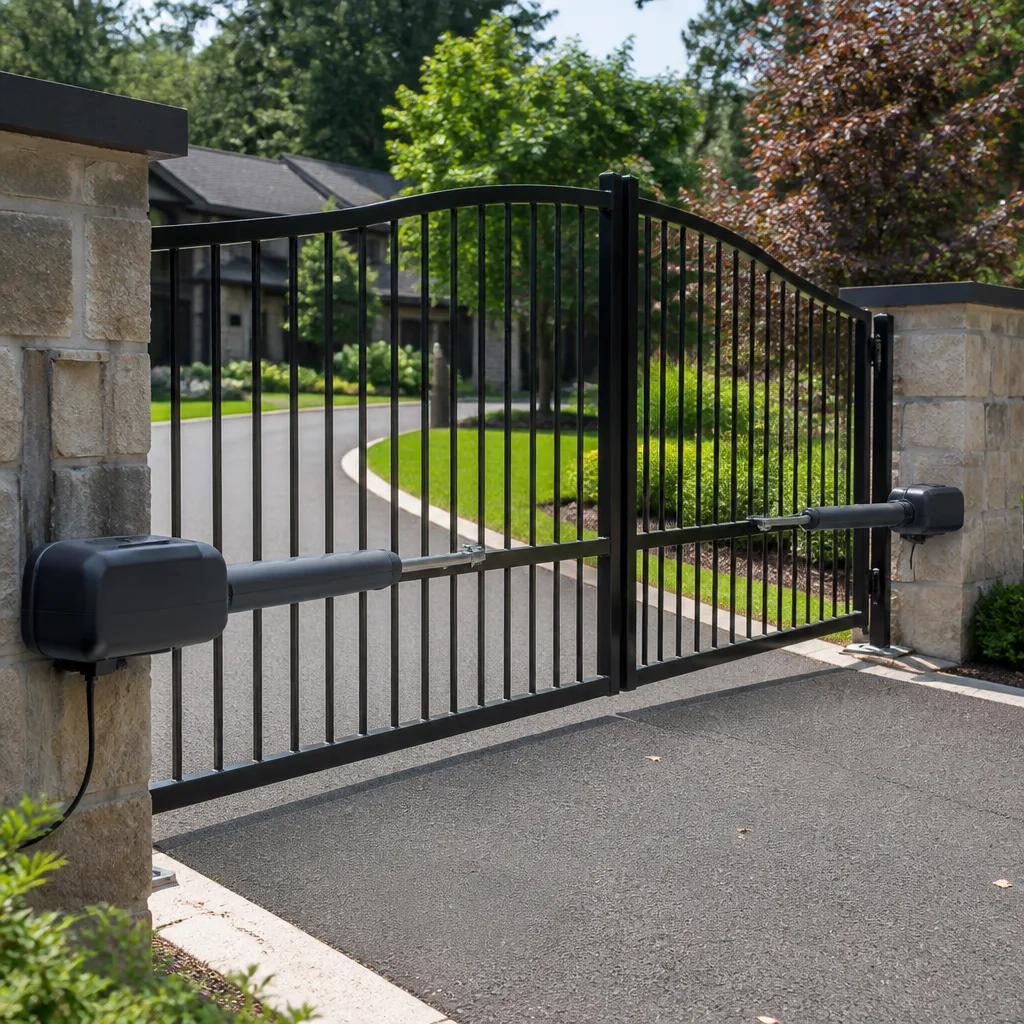
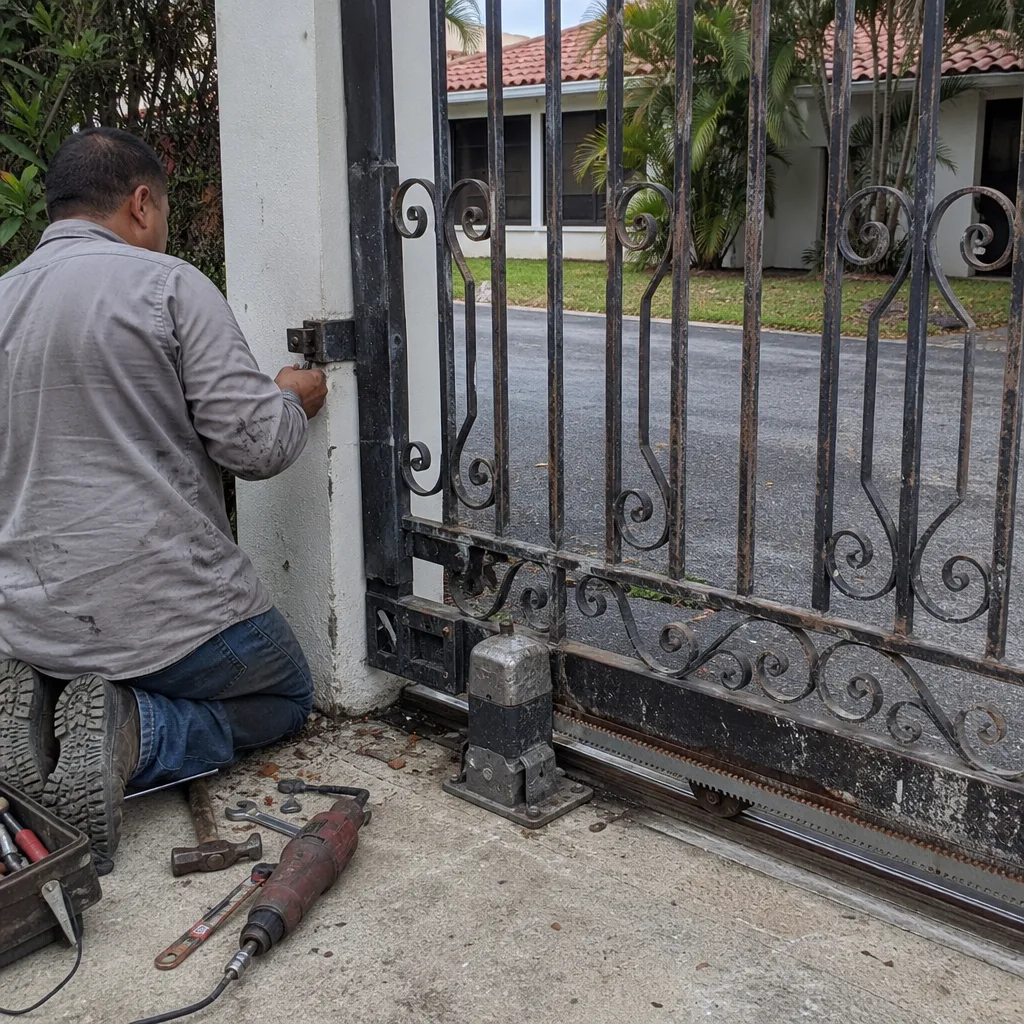 Before
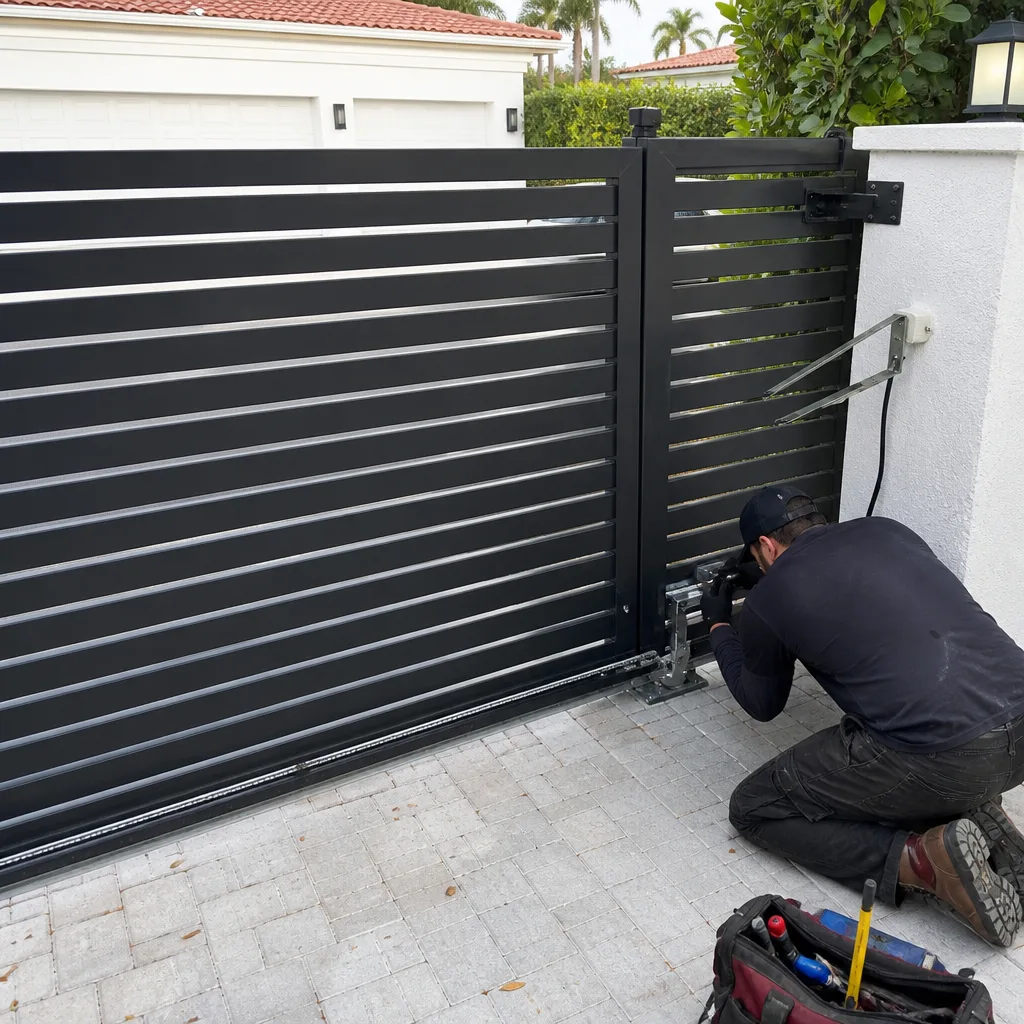 After
After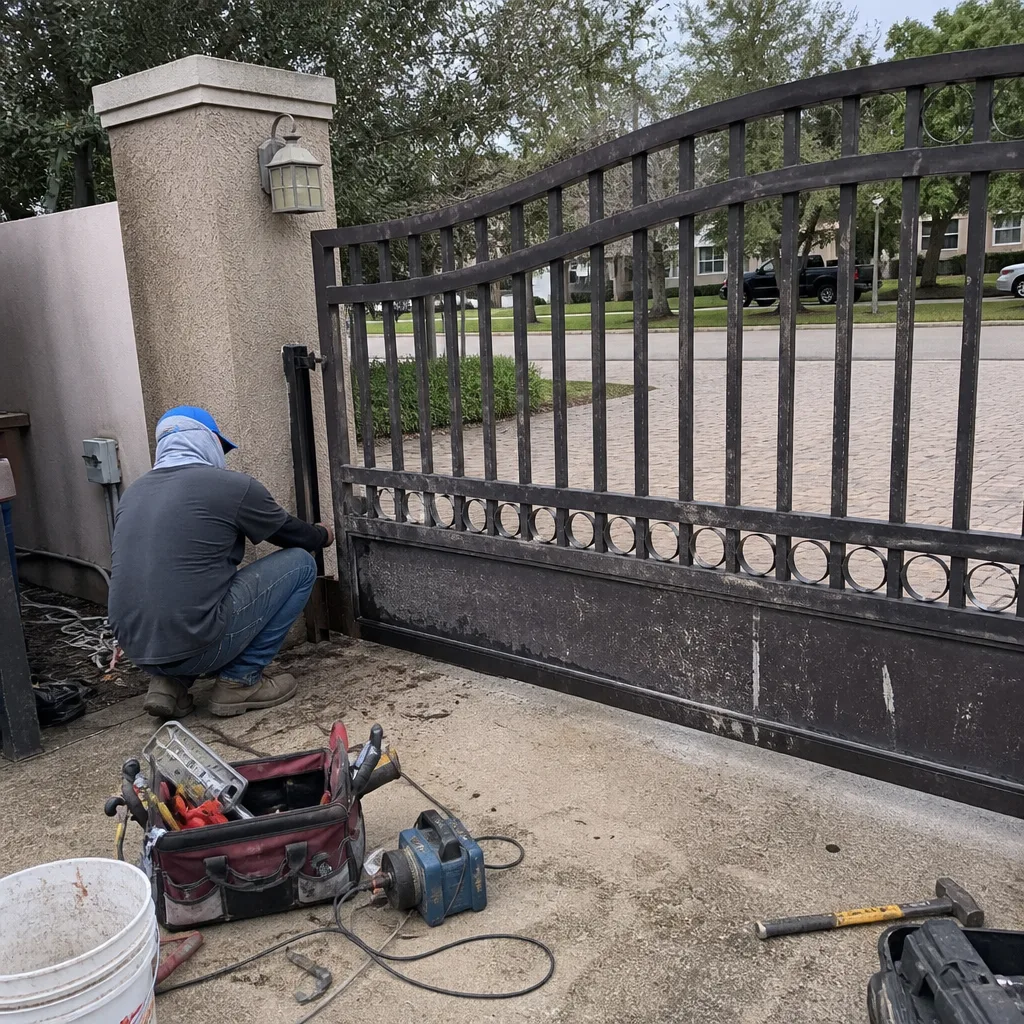 Before
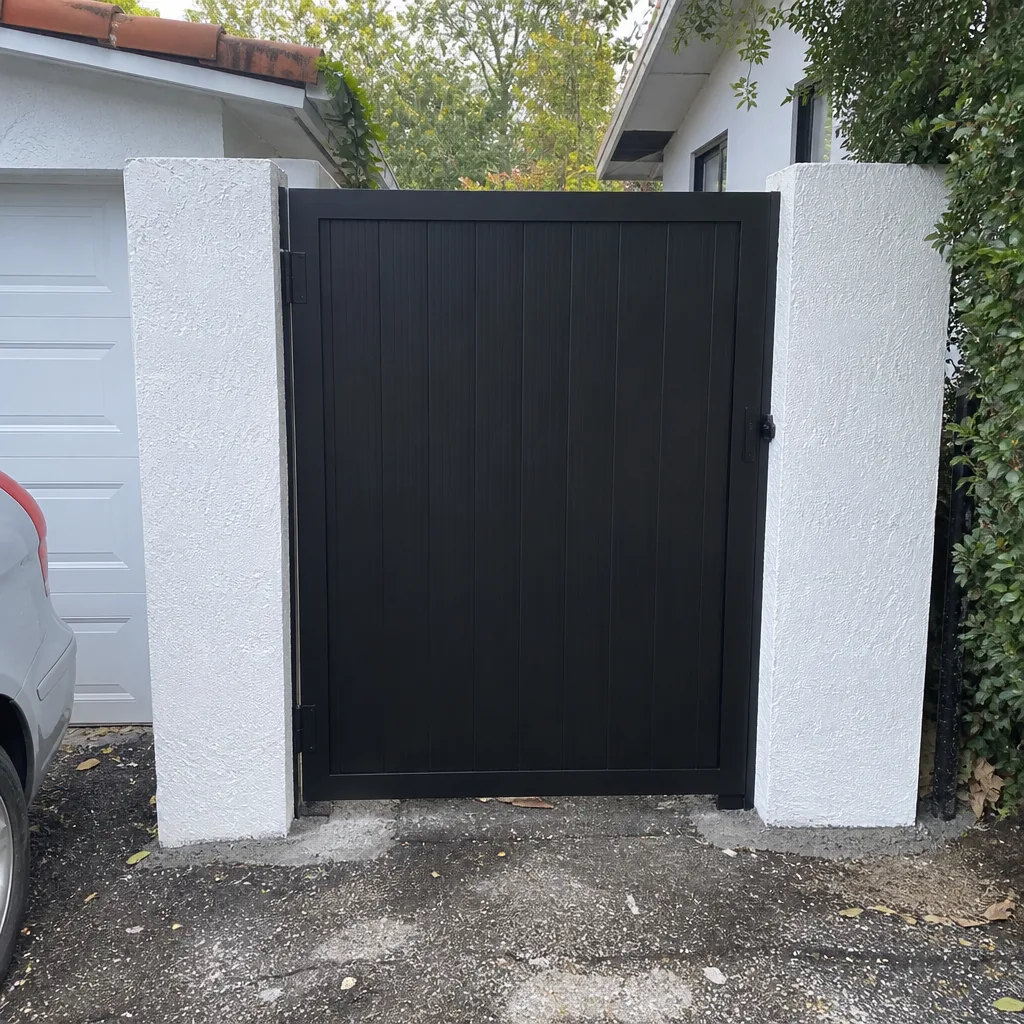 After
After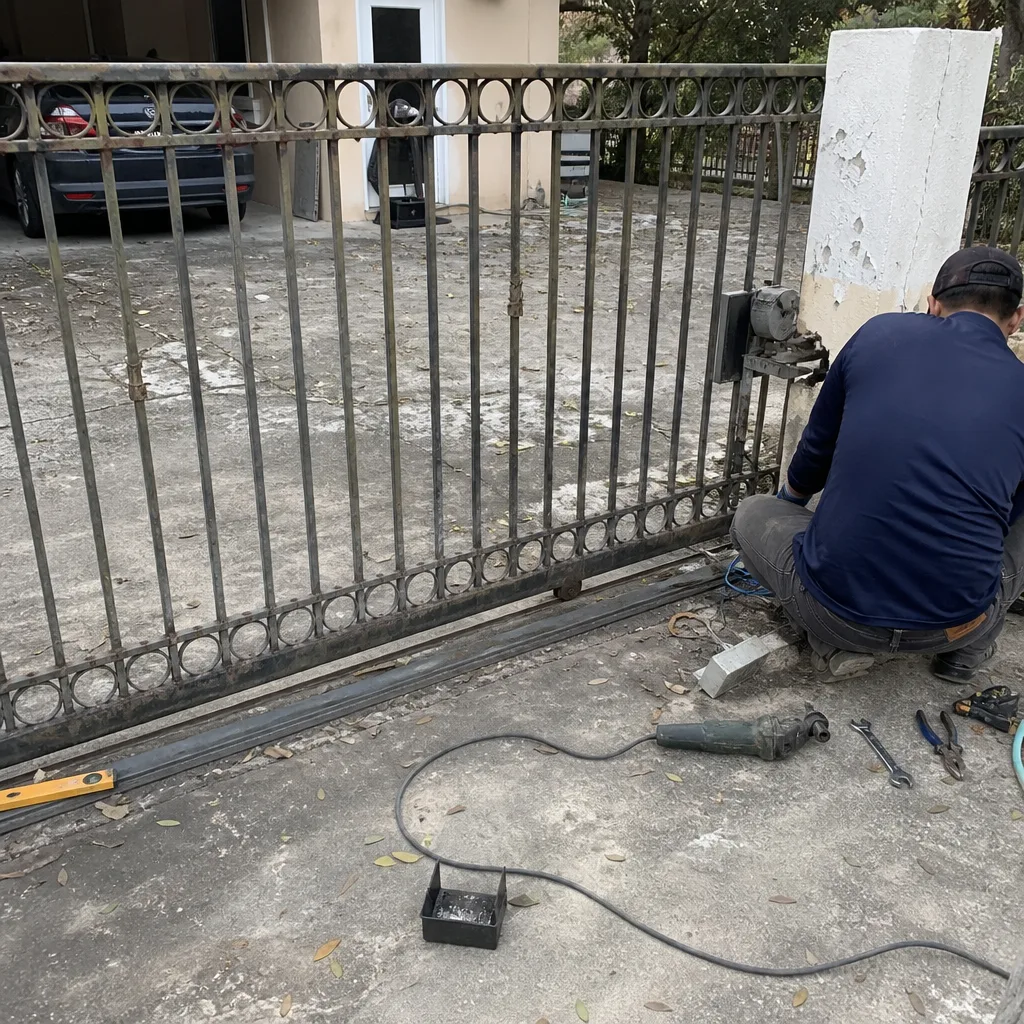 Before
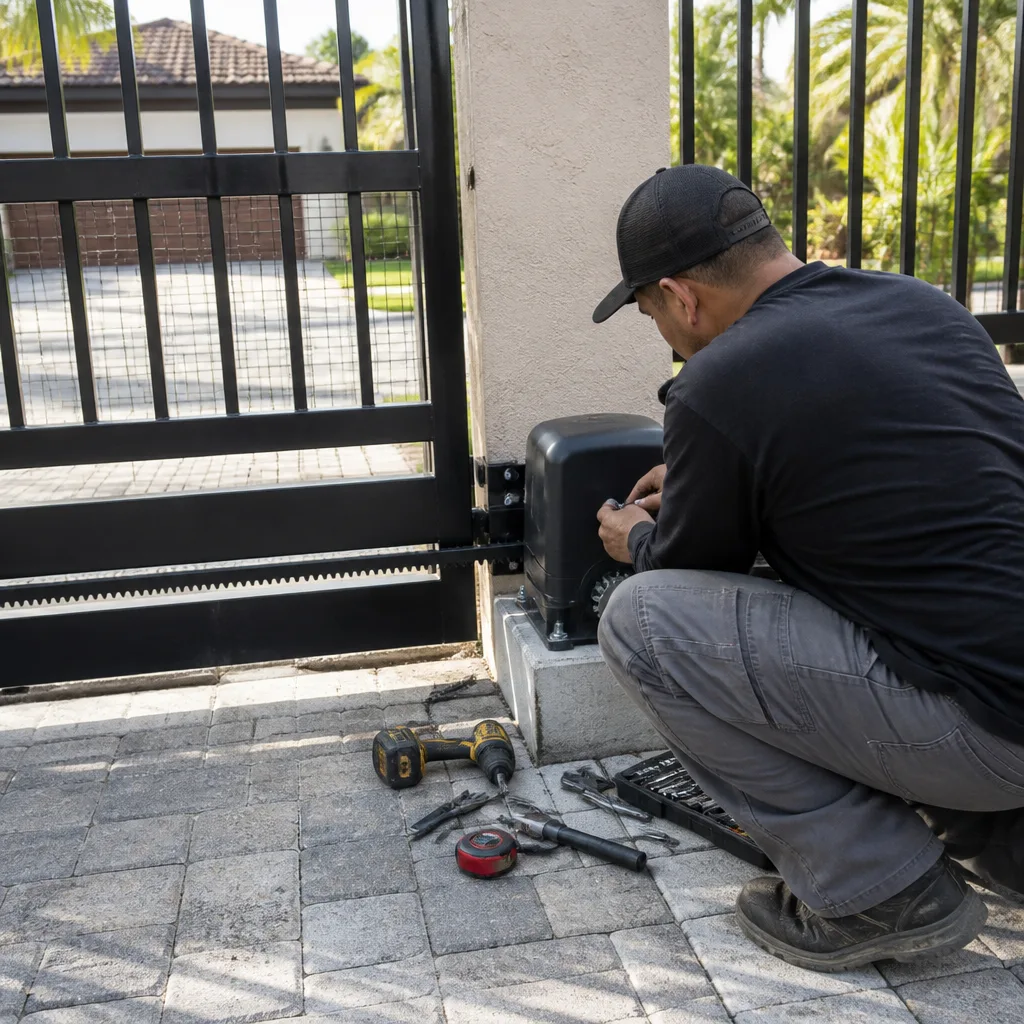 After
AfterSeasonal Gate Repair Care for Hollywood: Year-Round Homeowner’s Guide
June is not when you oil your hinges. June is when you check your conduit seals, because the first heavy rain of wet season will wick water into your control board through any gap you didn’t seal in May. Hollywood doesn’t operate on a four-season calendar the way a homeowner in Ohio or Vermont might imagine it. We have two seasons: a wet season that saturates footers and drives corrosion into every unsealed junction, and a dry season that desiccates rubber seals and causes limit-switch drift from thermal cycling. This guide is written for the Hollywood homeowner who wants a gate that opens every time, in every month, without paying twice to fix the same problem-or who wants to understand when to call our Gate Repair services instead. You’ll learn what to inspect before the first storm, what to audit after the last one, and what to photograph at every interval so you have a year-over-year record of how your gate is aging.
Quick Answer
Seasonal gate care in Hollywood, FL means two maintenance cycles per year, not four. Before wet season (late April through May), seal conduit gaps, elevate exposed wiring, and test your battery backup. Before dry season (October through November), audit for corrosion, replace degraded rubber seals, and recalibrate limit switches that drifted during the summer heat. A written log with photos at each interval gives you a degradation record that prevents surprise failures, and you can find more guides & resources on our blog to help you build that habit.
Table of Contents
- Why Hollywood’s Climate Breaks Gates Differently
- Pre-Wet-Season Tasks (Late April Through May)
- Mid-Wet-Season Check (August)
- Post-Wet-Season Tasks (October Through November)
- Dry-Season Thermal Cycling and Limit-Switch Drift
- What to Document at Each Seasonal Interval
- What Seasonal Gate Maintenance Costs in Hollywood
- Tools and Supplies Worth Keeping on Hand
 Before
 After
AfterWhy Hollywood’s Climate Breaks Gates Differently
Hollywood sits just north of the Miami-Dade line in Broward County, a few miles inland from the Atlantic. The climate here has two dominant forces, and both of them work against a driveway gate in specific, predictable ways. From roughly May through October, afternoon thunderstorms and occasional tropical systems push humidity to saturation levels for weeks at a time. From November through April, the dry season brings low humidity, intense UV, and daily temperature swings that can exceed 20 degrees between pre-dawn and mid-afternoon.
The wet season is a corrosion engine. Every unsealed wire nut, every cracked conduit fitting, every bare copper connection becomes an electrolytic cell when moisture and salt air combine. We regularly open control boards in Hollywood neighborhoods like Emerald Hills or Driftwood and find green oxidation across terminal strips that were clean six months earlier. The water doesn’t need to flood the box. Condensation alone, repeated daily for four months, is enough to bridge connections and cause phantom faults: a gate that opens but won’t close, a keypad that works intermittently, a motor that hums and stalls.
The dry season is a mechanical stressor. Rubber and neoprene seals lose plasticizer in low humidity and UV exposure. They shrink, crack, and pull away from the surfaces they’re meant to protect. At the same time, the daily temperature swing causes every metal component, from the gate frame itself to the limit-switch cams inside the operator, to expand and contract. Over a full dry season, that thermal cycling can shift a limit switch far enough that the gate no longer closes fully against the post, or over-travels and strains the motor. Neither of these failures announces itself. They accumulate quietly until the gate simply stops working one morning.
This is why treating gate care as a month-by-month calendar in Hollywood means doing the wrong tasks at the wrong time. Oiling hinges in June, when the air is saturated, does little. Checking conduit seals in December, when the rain has already stopped, is months too late to prevent the board damage that started in July. The right approach is a two-cycle plan built around the wet-dry boundary.
Pre-Wet-Season Tasks (Late April Through May)
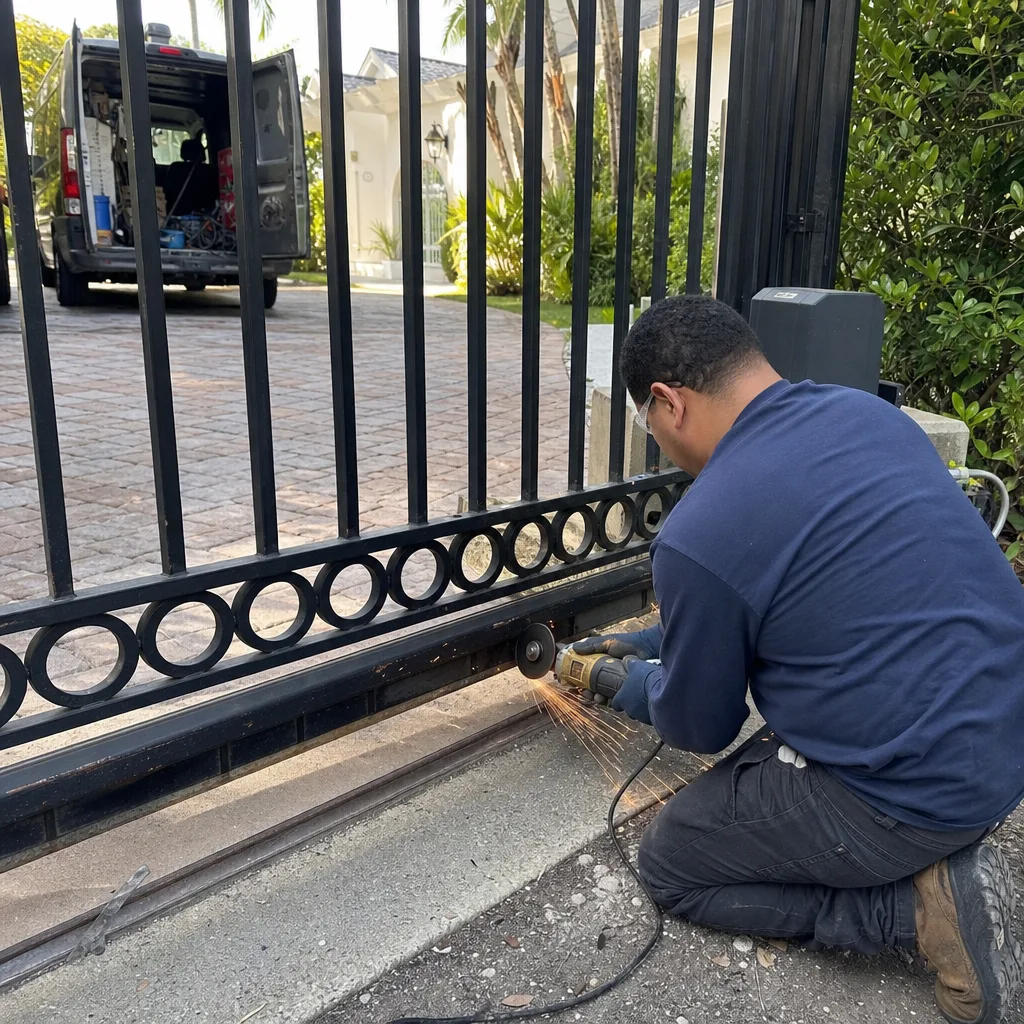
The goal of pre-wet-season work is simple: make water unable to reach anything electrical, and make anything that does get wet able to drain and dry. Start in late April. Hollywood’s first significant rains typically arrive by mid-May, and you want every task complete before the first soak.
1. Inspect Every Conduit Fitting and Junction Box
Walk the full path of the low-voltage wiring from the motor to the control board, the keypad, the photo-eyes, and any vehicle loop detectors. Look for conduit that has pulled out of a fitting, cracked PVC, missing junction box covers, or wire nuts that have been wrapped in electrical tape and left exposed. Tape is not a seal. In Hollywood’s wet season, a taped connection inside a junction box that lacks a gasket will wick moisture directly into the copper. We’ve opened boxes in August that had standing water inside, and the only entry path was a conduit gap the homeowner couldn’t see from the driveway.
2. Seal With Silicone, Not Caulk
Use a neutral-cure silicone sealant for any gap where conduit enters a box, where the motor housing meets its mounting plate, or where the keypad meets the wall. Avoid acrylic latex caulk, which breaks down under UV and constant moisture within a single season in South Florida. A tube of GE Silicone II or similar costs around $12 and will seal every junction on a typical residential gate with material to spare.
3. Elevate Low-Voltage Connections
Any splice that sits at ground level, even inside a box, is a wet-season liability. If you have a splice at grade, the correct fix is to re-pull the wire so the splice sits at least 12 inches above grade, inside a properly sealed enclosure. If re-pulling isn’t practical in a single afternoon, at minimum open the box, dry the connections, apply dielectric grease to the wire nuts, and seal the box lid with silicone. This is a temporary measure. A permanent above-grade splice is the only fix that survives multiple wet seasons.
4. Test the Battery Backup
Most automated gates in Hollywood have a battery backup mounted inside or beside the operator. The battery exists so the gate operates during a power outage, which is common during summer storms. What most homeowners don’t realize is that the battery is also being charged by the board constantly, and a failing battery can drag down voltage and cause erratic gate behavior long before it fails completely. Disconnect from line power and operate the gate on battery alone. If the gate moves slowly, stops mid-travel, or the battery can’t complete three full open-close cycles, replace it before the storm season makes it critical.
5. Photograph Everything
Before you close any panel, take photos. Every adjustment you make, every seal you apply, every reading you observe on the board’s diagnostic LEDs. These photos are your baseline for the mid-season check in August and your evidence if a problem develops. This is the same practice we use at Vance Gate Repair Hollywood home on every service call: a written record and a photo log, so nothing has to be diagnosed twice.
Mid-Wet-Season Check (August)
By August, Hollywood has typically accumulated two to three months of daily saturation. The ground around the gate posts is at its softest, the humidity in the air has been near 90% for weeks, and the inside of every enclosure has experienced repeated condensation cycles. This is the check where you look for evidence of what the wet season has done, not what it might do.
Footer and Post Inspection
Wet season rains can soften soil enough that a gate post, especially a heavy swing-gate post, shifts slightly. Walk to each post and look for a visible gap between the post base and the surrounding concrete or soil. A post that has moved even a quarter inch changes the gate’s swing geometry, which loads the hinge bearings unevenly and can eventually cause the gate to drag or the motor to strain. If you see a gap, mark the post position with a pencil line on the adjacent surface and photograph it. Re-check in two weeks. If the gap is growing, the footer is failing and the post needs to be re-set before dry season stress compounds the problem.
Control Board Moisture Assessment
Open the control board enclosure and inspect for condensation, corrosion, or insect intrusion. Look at the terminal strips. Green or white powdery deposits on the screw terminals are early-stage corrosion. A water line inside the enclosure, even a faint one, means water has been pooling at some point. Use a dry cloth to remove surface moisture, then check the board’s diagnostic LEDs against the manufacturer’s chart. A board that shows a fault code related to the photo-eye circuit, when the photo-eyes themselves are aligned and clean, often has moisture inside the photo-eye housing rather than a true misalignment. Open the photo-eye housings, dry them, and apply a thin bead of silicone around the lens gasket before reassembly.
Conduit Re-Check
Re-inspect the seals you applied in May. Look for silicone that has separated from the surface, conduit that has settled, or new gaps that appeared because the ground shifted. A seal that survives the first six weeks of wet season unfailed will usually survive the remainder. The ones that fail fail early. Fix any gap immediately, while the weather is still wet enough to reveal it.
If any of this turns up board corrosion, footer movement, or recurring faults, this is the point where a professional assessment saves money-see DIY vs Professional Gate Repair: The Hollywood Homeowner’s Decision Guide to decide if the job is within your scope. The cost to dry and reseal a board in August is a fraction of what it costs to replace a fully corroded board in October.
Post-Wet-Season Tasks (October Through November)
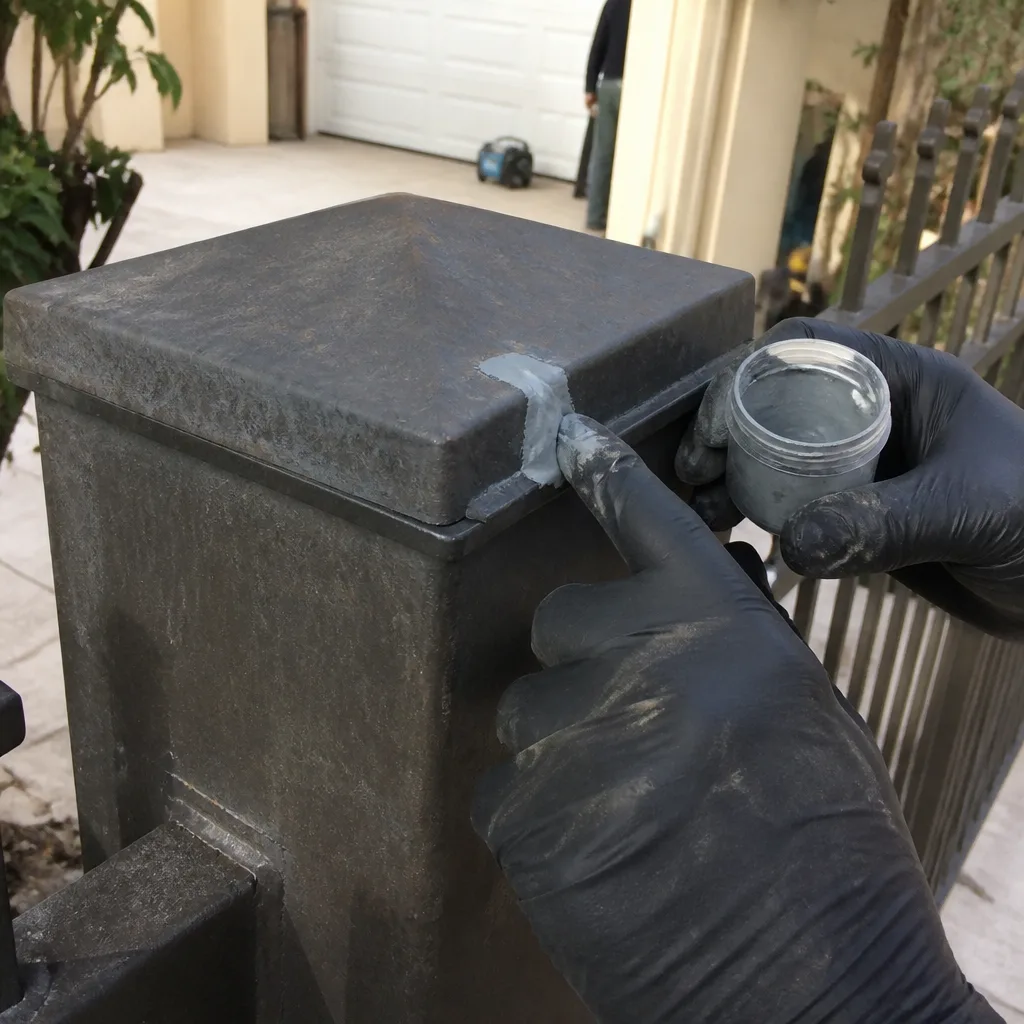
The dry season in Hollywood begins reliably around mid-to-late October. The first week of sustained low humidity is your signal to start the post-wet-season audit. This is the most important maintenance window of the year, because it’s when the accumulated wet-season damage becomes visible and correctable before the dry season adds a new set of stresses.
Corrosion Audit
Open every enclosure: the control board, the motor housing, the keypad, both photo-eyes, and any junction boxes. Look at every terminal, every wire nut, every exposed copper surface. Green oxidation is the enemy. Mild surface corrosion on screw heads can be cleaned with a small brass brush and a contact cleaner like DeoxIT, which runs around $18 a can. Heavy corrosion across a terminal strip, where multiple terminals show bubbling green or white crust, is a board replacement in most cases. The board may work today, but the corrosion is consuming the copper traces inside the board itself, and the failure is coming. Better to replace it in November, on your schedule, than in July, during a storm.
Lubricant Refresh
Wet season strips lubricant from hinge pins, wheel bearings, and chain drives. Dry season will seize them if they run dry. Apply a heavy-duty waterproof lithium grease to hinge pins and wheel bearings. For chain-drive operators, use a chain-specific lubricant that won’t fling or attract grit. For screw-drive and belt-drive operators, check the manufacturer’s recommendation before applying anything. Some operators are designed to run dry, and adding grease to a component that doesn’t need it will collect dust and accelerate wear.
Seal Replacement
Inspect every rubber or neoprene seal: the photo-eye gaskets, the control board enclosure gasket, the motor housing seals, and any weatherstripping on the gate itself. Dry season hasn’t done its damage yet in November, but the seals have already absorbed four months of wet-season UV and moisture. If a seal is cracked, stiff, or deformed, replace it now. Waiting until March, when the dry season has already desiccated it further, is asking for a leak during the following May. Replacement gaskets and seals for most operators are inexpensive, typically $10 to $40 depending on the brand, and available from the manufacturer.
Sensor and Photo-Eye Alignment
After a full wet season, photo-eyes have often drifted slightly from their mounting brackets due to repeated thermal expansion and contraction. Check alignment by observing the indicator LED on each photo-eye. Most units show a solid light when aligned and a blinking light when not. Adjust each eye until both lights are solid, then test the gate’s reversal function with a physical object in the path. If the gate doesn’t reverse promptly, call a technician. The photo-eyes are a safety device, not a convenience feature. A gate that closes through an obstruction is a serious hazard, and the fix is not something to postpone.
Dry-Season Thermal Cycling and Limit-Switch Drift
The dry season in Hollywood is not gentle on gate operators. The daily temperature swing, from the low 60s at dawn to the low 80s by mid-afternoon, repeated for five straight months, causes every metal component in the operator to expand and contract thousands of times. The components most sensitive to this are the limit switches: the mechanical or magnetic sensors inside the operator that tell the motor when the gate has reached the fully open or fully closed position.
Limit switches drift because the cam that touches them rotates slightly with each thermal cycle, or because the bracket that holds them flexes. The drift is small, maybe half a degree per week, but it accumulates. By March of a dry season that started in November, a gate that closed perfectly against the post in December may stop an inch short, or over-travel and grind against the post, or reverse unexpectedly when it hits the close limit too early.
Recalibrating a limit switch is a precise procedure. The steps, in broad terms, involve opening the operator cover, releasing the gate from the operator so it can be moved by hand, identifying the limit switch adjustment, and setting it so the gate stops in the correct position. But this is a job where the details matter enormously. A limit switch set too aggressively can cause the gate to slam into the end of travel, which damages the motor over time. Set too softly, the gate never fully closes, which is a security problem for any Hollywood homeowner.
If you’re comfortable with the procedure for your specific operator, recalibrating after the hottest stretch of the dry season is a legitimate homeowner task. If you’re not, this is a service call. At Gate Motor & Opener in Hollywood, we set limit switches, photograph the new position, and include the photo and the reading in your file, so the next adjustment doesn’t start from scratch. That documentation practice comes straight from commercial access-control work, where a limit-switch reading that isn’t written down doesn’t exist.
What to Document at Each Seasonal Interval
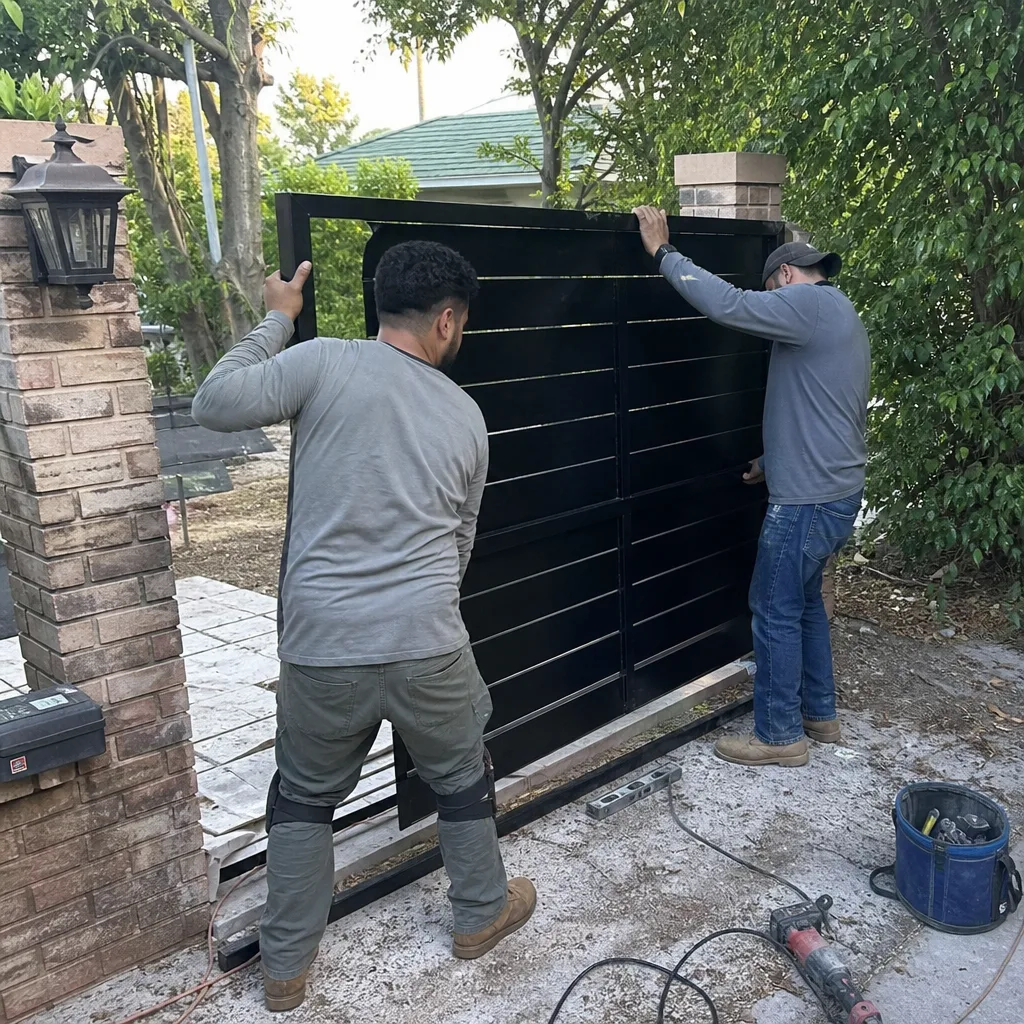
The single highest-value habit a Hollywood homeowner can develop is keeping a written and photographic record of gate maintenance. A gate is a mechanical system with a predictable failure curve. Without a record, every failure looks sudden and random. With a record, you can see the degradation coming.
At each seasonal interval, create a simple entry with the following:
- Date and weather conditions: Note the temperature, humidity, and recent rainfall. This gives context to every observation.
- What you inspected: List the specific components you opened or examined: control board, motor housing, keypad, photo-eyes, junction boxes, hinges, wheels, battery.
- What you found: State the facts, not impressions. “Green corrosion on terminal 3 and 4 of the limit switch strip” is useful. “Board looked kind of rough” is not.
- What you did: List the specific actions taken: cleaned terminals, replaced seal, recalibrated limit switch, applied grease.
- Photos: Take at least one photo of every enclosure you opened and every adjustment you made. Store the photos in the same folder as the written record.
- What you didn’t do: Note anything you observed but chose not to address, and why. “Noticed slight wear on the drive belt. Will monitor at next interval.” This is the information that prevents future surprises.
Over two or three years, this record becomes an actual degradation history. You’ll see that the battery needed replacement at 26 months, that the photo-eye seal failed twice in four years, that the hinge grease requires refresh every seven months rather than twelve. Every one of those data points helps you act before a failure, not after it. This is the same principle behind our Gate Installation in Hollywood practice: every job leaves a documented record of what was installed and how it was set, so no future work requires rediscovery.
What Seasonal Gate Maintenance Costs in Hollywood
Seasonal gate maintenance costs fall into two categories: what you can do yourself with supplies from a hardware store, and what requires a professional service call. Understanding the ranges for both helps you budget the year correctly.
DIY Seasonal Maintenance Costs
- Silicone sealant: $12 to $18 per tube. One tube typically covers every junction on a residential gate.
- Dielectric grease: $8 to $12 for a small tube. Enough for a full year of connection treatments.
- Contact cleaner (DeoxIT or similar): $15 to $20 per can. One can lasts multiple seasons.
- Lithium grease: $10 to $15 per tube. One application covers all hinge pins and bearings.
- Replacement photo-eye gasket or seal: $10 to $40 depending on brand. LiftMaster, FAAC, BFT, and Linear all sell individual seal kits.
- Battery backup replacement: $35 to $90 depending on the battery type and amp-hour rating.
Professional Seasonal Service Costs in Hollywood
A professional seasonal gate inspection and maintenance visit in Hollywood typically runs between $150 and $300, depending on the gate type, the number of operators, and the level of documentation provided. This includes the full inspection, lubrication, limit-switch verification, photo-eye alignment, and an adjustment of anything that’s out of spec. More involved repairs discovered during the inspection, like a corroded control board or a failing battery, are quoted separately, in writing, before any work proceeds. At Gate Repair in Hollywood, the written price is delivered before any tool is picked up, and the photo record is part of the visit, not an upcharge.
Replacement Costs to Plan For
- Control board replacement: $300 to $800 installed, depending on brand. LiftMaster and FAAC boards sit at the higher end of that range. BFT and Linear are typically mid-range.
- Limit switch assembly: $80 to $200 installed for most residential operators.
- Photo-eye pair replacement: $120 to $300 installed, including alignment and safety testing.
- Full operator replacement: $900 to $1,800 installed for a residential swing or slide gate operator, depending on brand, gate weight, and whether the arm bracket and wiring are in good condition.
These are the numbers we tell homeowners over the phone when they call. The price is always confirmed in writing before any work starts. Free second opinions are available on any written estimate from another company, which means bringing the paperwork in and letting us review it line by line. No charge.
Tools and Supplies Worth Keeping on Hand
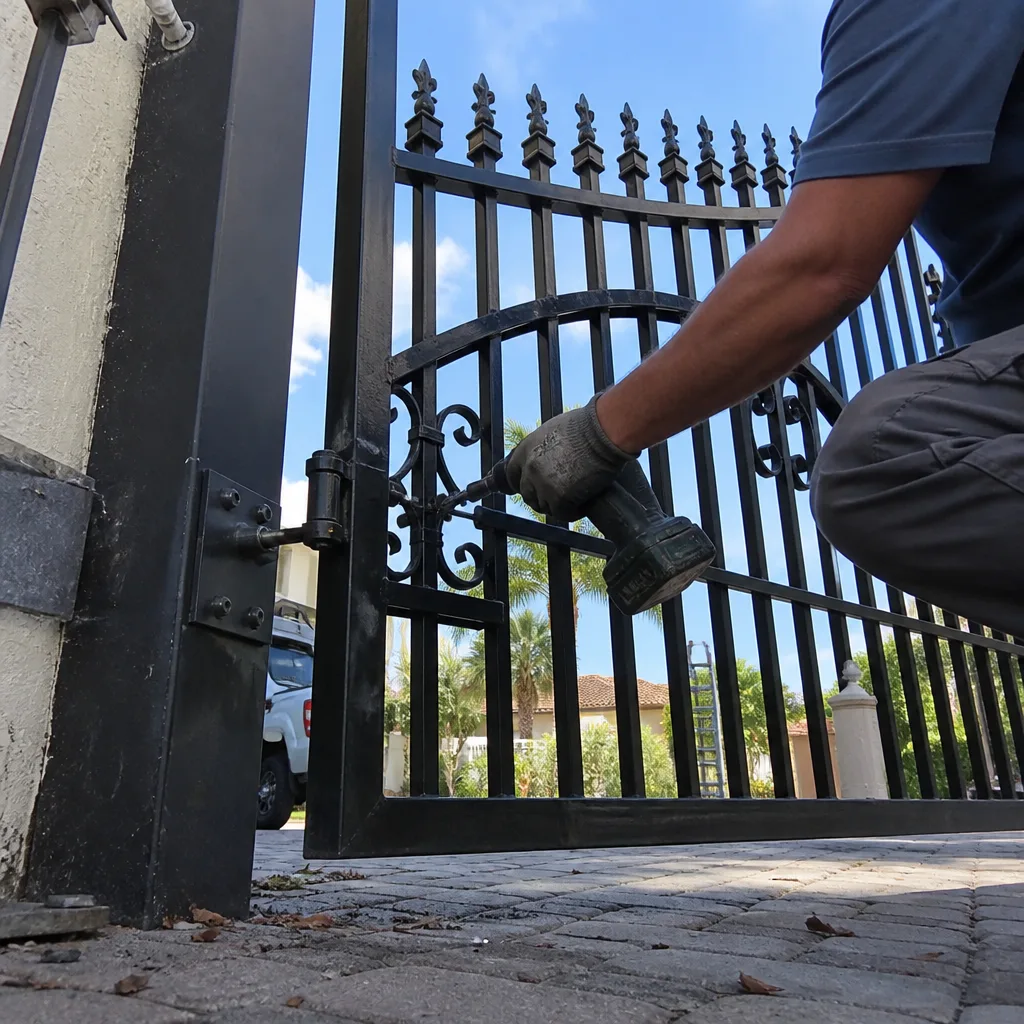
A Hollywood homeowner who wants to handle seasonal maintenance without waiting for a service call should keep a small kit ready. Nothing here is exotic. Everything fits in a medium toolbox or a five-gallon bucket.
- Digital multimeter: $25 to $50. Essential for checking battery voltage and diagnosing basic electrical issues. You don’t need a Fluke. A mid-range meter from Klein or Innova is sufficient for gate work.
- Torx and hex bit set: $15 to $25. Most gate operators use Torx or hex screws on their covers. A set with T10 through T40 covers nearly every residential operator, including LiftMaster and BFT.
- Brass brush: $5 to $10. For cleaning corrosion off terminals and hardware.
- Headlamp: $15 to $30. Gate operator enclosures are dark, and the work is always at an awkward angle. A headlamp frees both hands.
- Phone with a good camera: You already have this. Use it at every interval. The photo record is the most valuable maintenance tool you own.
- Silicone sealant and dielectric grease: Keep both on hand. When you find a gap in August, you want to seal it that day, not after a trip to the hardware store.
For operators on the brands we service, including LiftMaster, FAAC, BFT, and Linear, the manufacturer’s installation manual includes the specific adjustment procedures for limit switches and photo-eyes. Keep the manual in the same toolbox as the rest of the kit. When a seasonal check turns up something you’re not certain about, the manual plus your photo record from the previous interval often resolves the question without a call.
Common Mistakes to Avoid
- Oiling hinges in the wet season: The oil washes off within days in Hollywood’s summer rain, and the residue attracts grit. Lubricate at the start of dry season when it will actually stay in place.
- Using electrical tape as a moisture seal: Tape is an insulator, not a seal. In Hollywood’s wet season, a taped wire nut inside a junction box will become a corroded failure point within months. Strip it, apply dielectric grease, and enclose it in a sealed box.
- Ignoring a blinking photo-eye light because the gate still works: A misaligned photo-eye is a safety system that has silently disarmed itself. The gate will still open and close, but the entrapment protection is gone.
- Recalibrating a limit switch without photographing the original position: If the new setting is worse than the old one, you’ve lost the reference point and now have to find the correct setting from scratch.
- Waiting until a storm is forecast to test the battery backup: The battery needs to be tested early, when there’s time to order a replacement and install it before the power goes out. Testing it when the storm is already offshore means finding the problem at the worst possible moment.
- Assuming a gate that opens manually is fine, so the automation must be broken: Manual operation and automated operation put different loads on different components. A gate that swings freely by hand can still have a failing operator, and a gate that binds under power can still be pushed by a strong shoulder. The two tests tell you different things.
When to Call a Professional
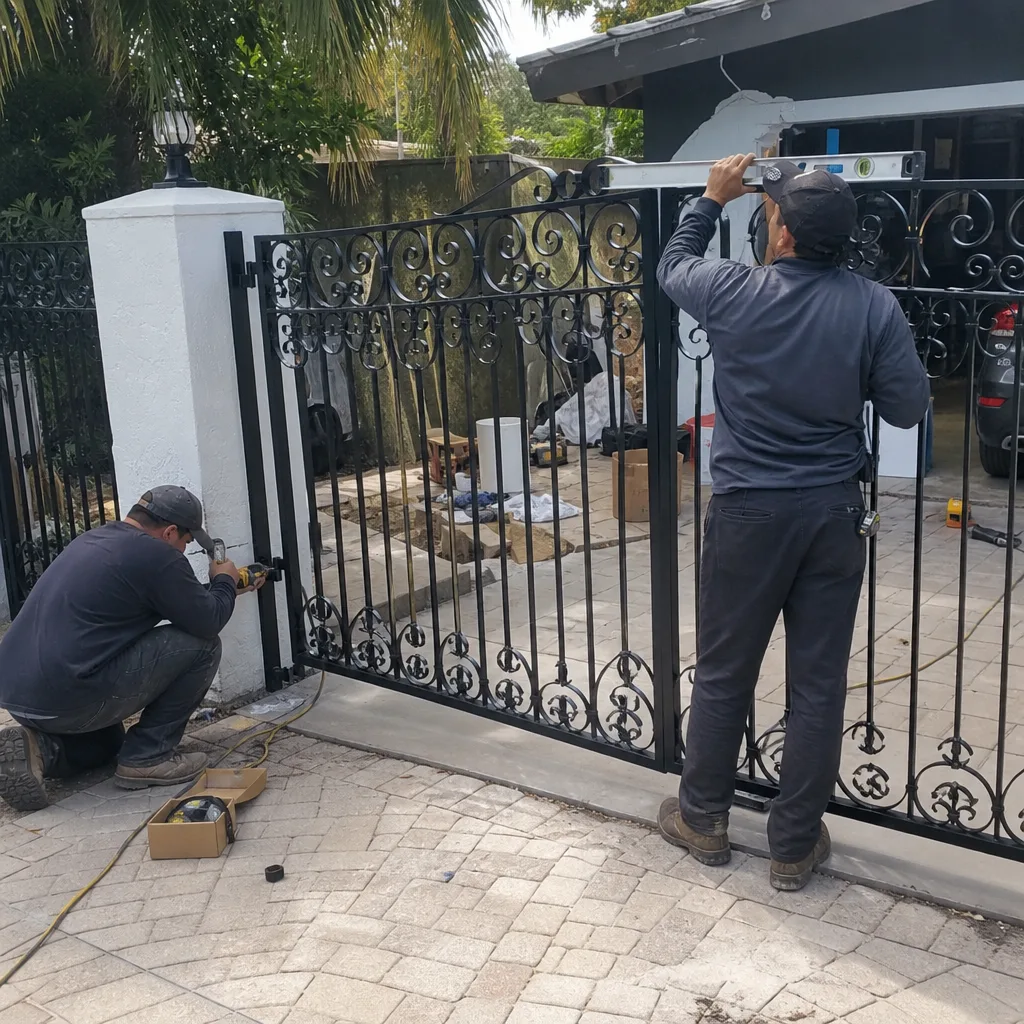
Some gate work is genuinely dangerous, and some is simply beyond what a homeowner should attempt without training. High-tension springs on a counterweighted gate, any work on a gate that has come off its track, and any repair involving exposed line-voltage wiring are all jobs for a professional. The stored energy in a gate spring or a heavy cantilevered gate can cause serious injury if released incorrectly. If you open an operator cover and see line-voltage wiring (black, white, and bare copper, not the low-voltage colored wires that run to the keypad and photo-eyes), close it and call. Vance Gate Repair Hollywood offers free estimates in Hollywood. Call (754) 714-5786 and a live person answers, any hour, any day.
Frequently Asked Questions
Professional seasonal gate maintenance in Hollywood typically costs between $150 and $300 for a full inspection, lubrication, limit-switch verification, and photo-eye alignment on a residential gate. DIY seasonal maintenance supplies, including sealant, grease, and contact cleaner, run about $50 to $80 per year. Call (754) 714-5786 for an exact quote, in writing, before any work begins.
Service your gate twice a year in Hollywood: once in late April or early May, before the wet season starts, and once in October or November, after the wet season ends and before the dry season’s thermal cycling begins. These two cycles match Hollywood’s climate, not a generic four-season calendar.
Yes. Hollywood’s wet season, roughly May through October, drives moisture into every unsealed junction, conduit gap, and enclosure. The result is corrosion on control boards, terminal strips, and photo-eye connections. Pre-wet-season sealing and a mid-season moisture check are the most effective defenses.
This is typically limit-switch drift from thermal cycling. The daily temperature swing in Hollywood’s dry season causes the limit-switch cams and brackets inside the operator to expand and contract slightly. Over months, the switch position drifts enough that the gate behaves differently as temperatures change. Recalibration after the hottest stretch of dry season usually resolves it.
We service nine major automation brands, including LiftMaster, FAAC, BFT, and Linear, plus Viking, Ghost Controls, DoorKing, Elite, and Mighty Mule. We work on the motor that’s already on your property rather than steering you toward a replacement. Call (754) 714-5786 and describe your operator; we’ll tell you over the phone what’s likely going on.
Yes. Every visit includes a photographed record of what was found, what was adjusted, and what was installed. The photo log and a written description are left with you and filed in our job record. This is the same documentation habit that came out of commercial access-control work, and it means no future technician has to guess what was done.
The Bottom Line
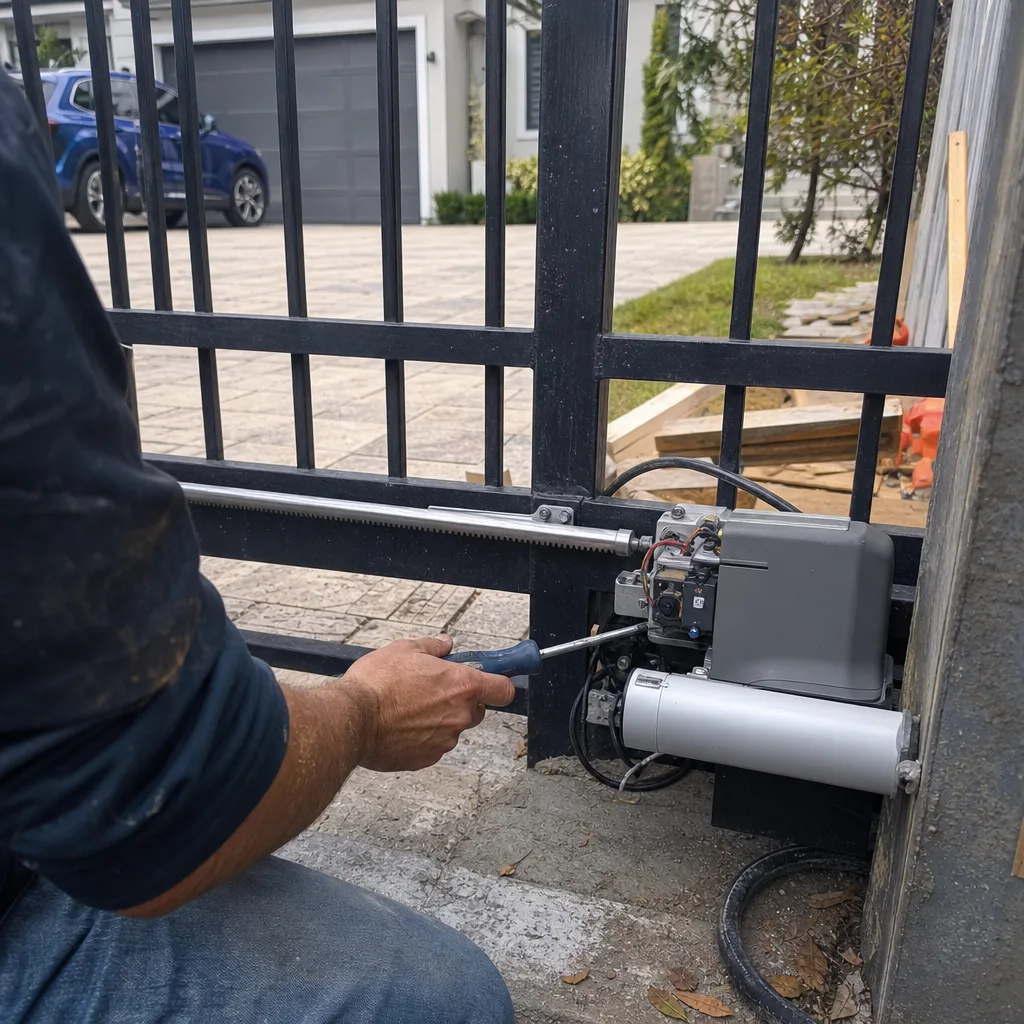
Hollywood’s two-season climate demands two maintenance cycles, not four. Before the wet season, you seal, elevate, and test. After the wet season, you audit, lubricate, and replace. In between, you document everything, because a gate is a mechanical system with a predictable failure curve, and the only way to see the curve is to keep records. The total cost of doing this right is modest, maybe $50 to $80 a year in supplies if you do the work yourself, or a few hundred dollars for a professional seasonal service. For a deeper breakdown of every task and timeline, see The Complete Guide to Gate Repair in Hollywood. The cost of not doing it is a corroded control board, a failed battery, or a gate that closes through an obstruction, discovered at the exact moment you needed the gate to work. In Hollywood, the weather is going to do what it does. The gate doesn’t have to fail because of it.
Written by Adrian Vance, Owner at Vance Gate Repair Hollywood, serving Hollywood since 2014.