
Last updated September 21, 2026
Free on-site gate assessment - hinges, posts, and your LiftMaster or Nice gate operator checked before anything is quoted
The assessment is free and the quote is the invoice.
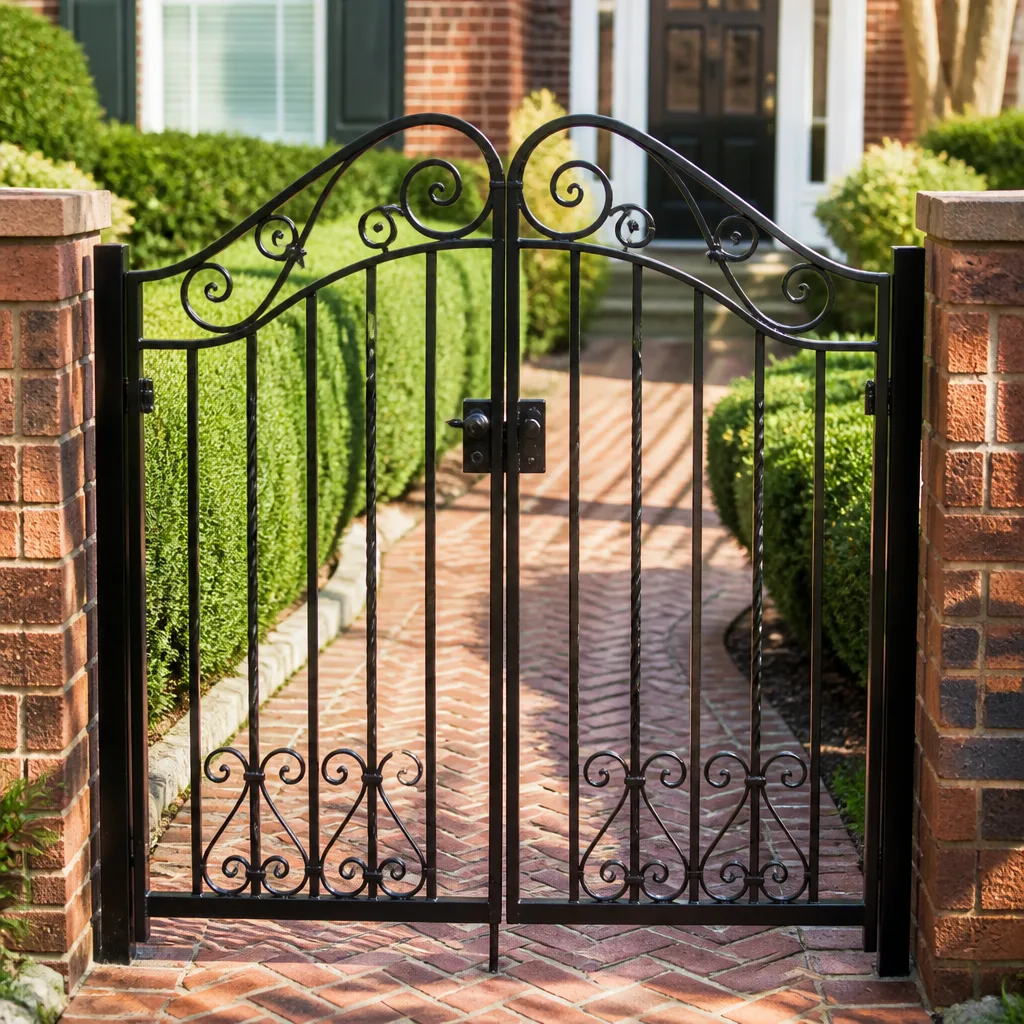
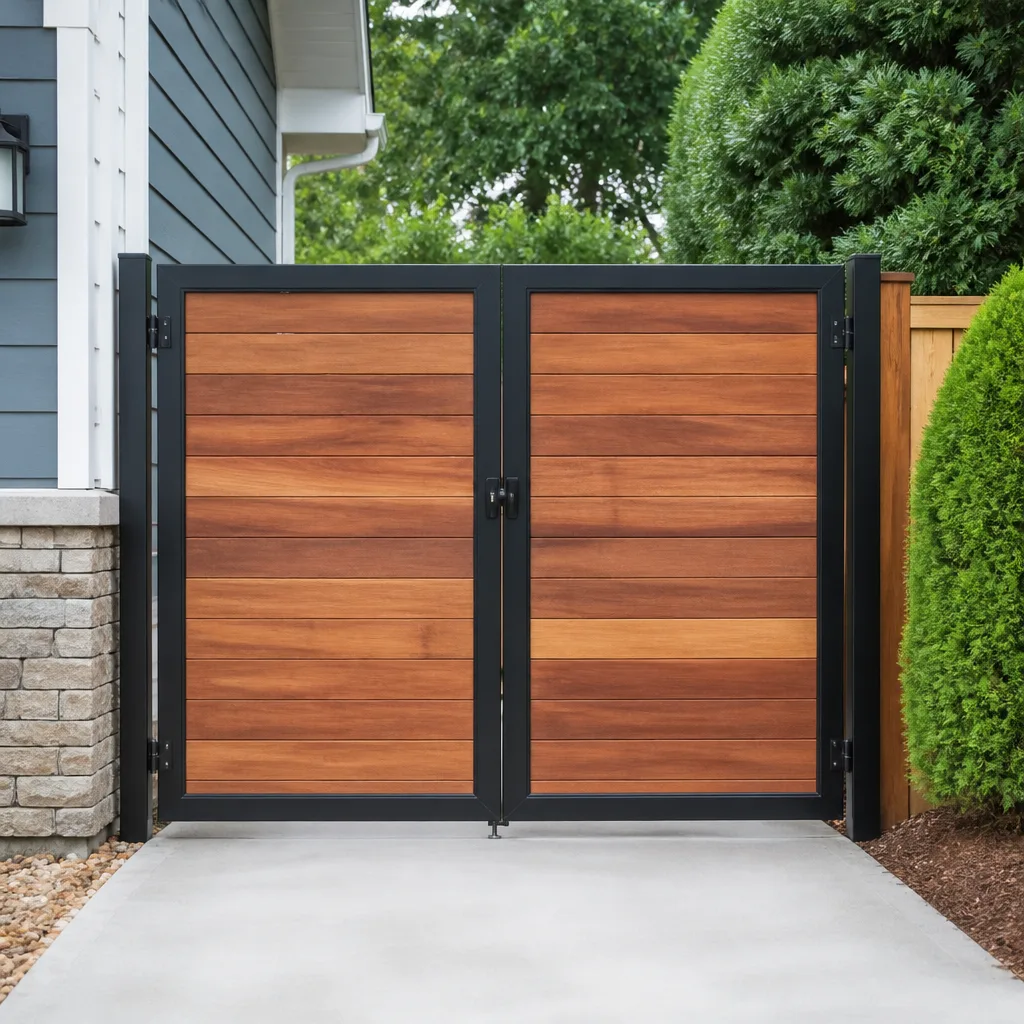
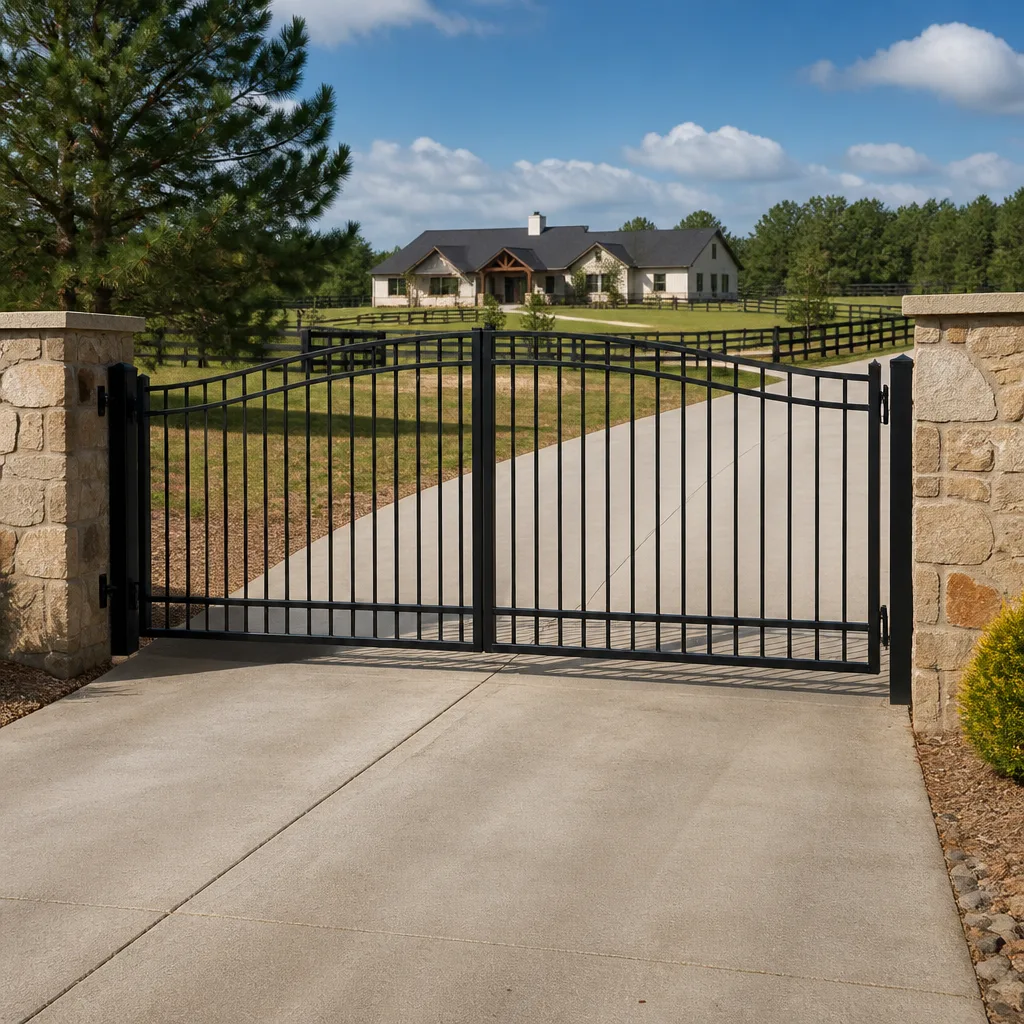
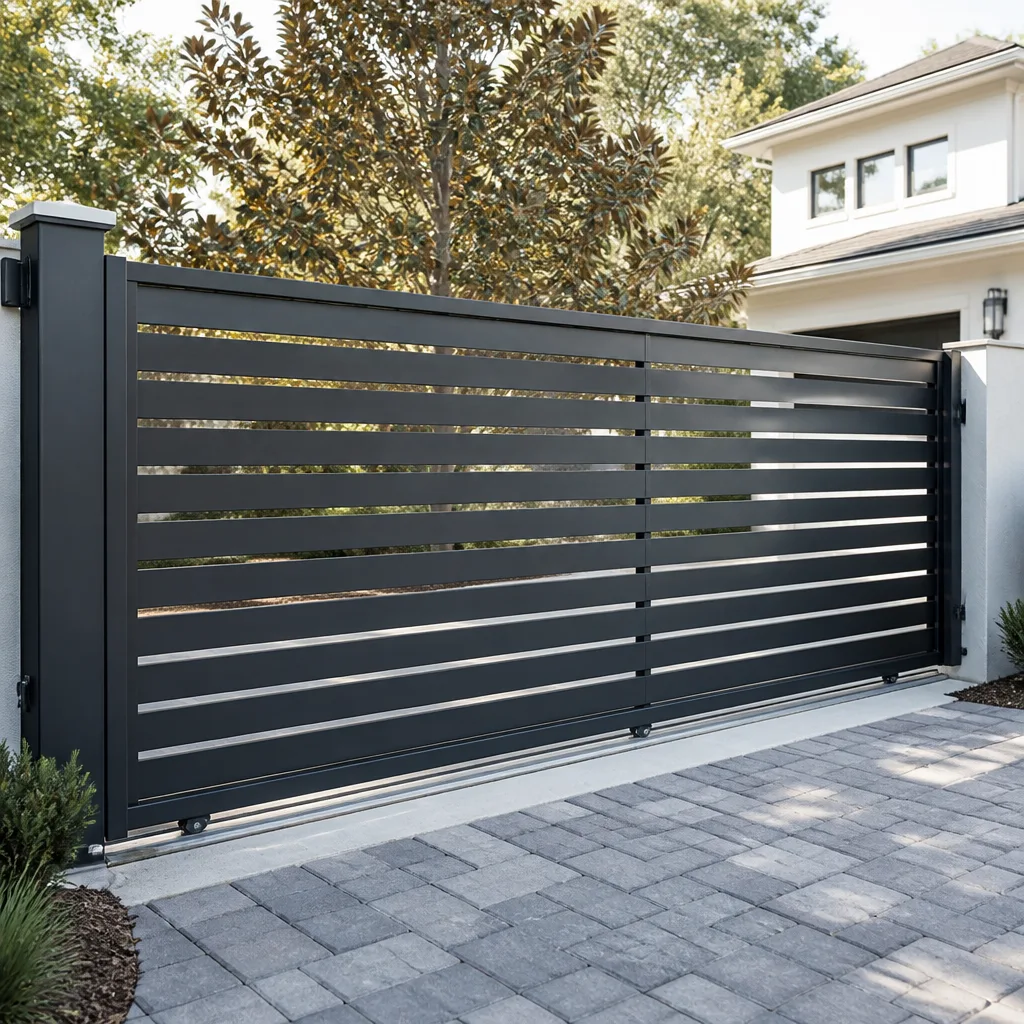
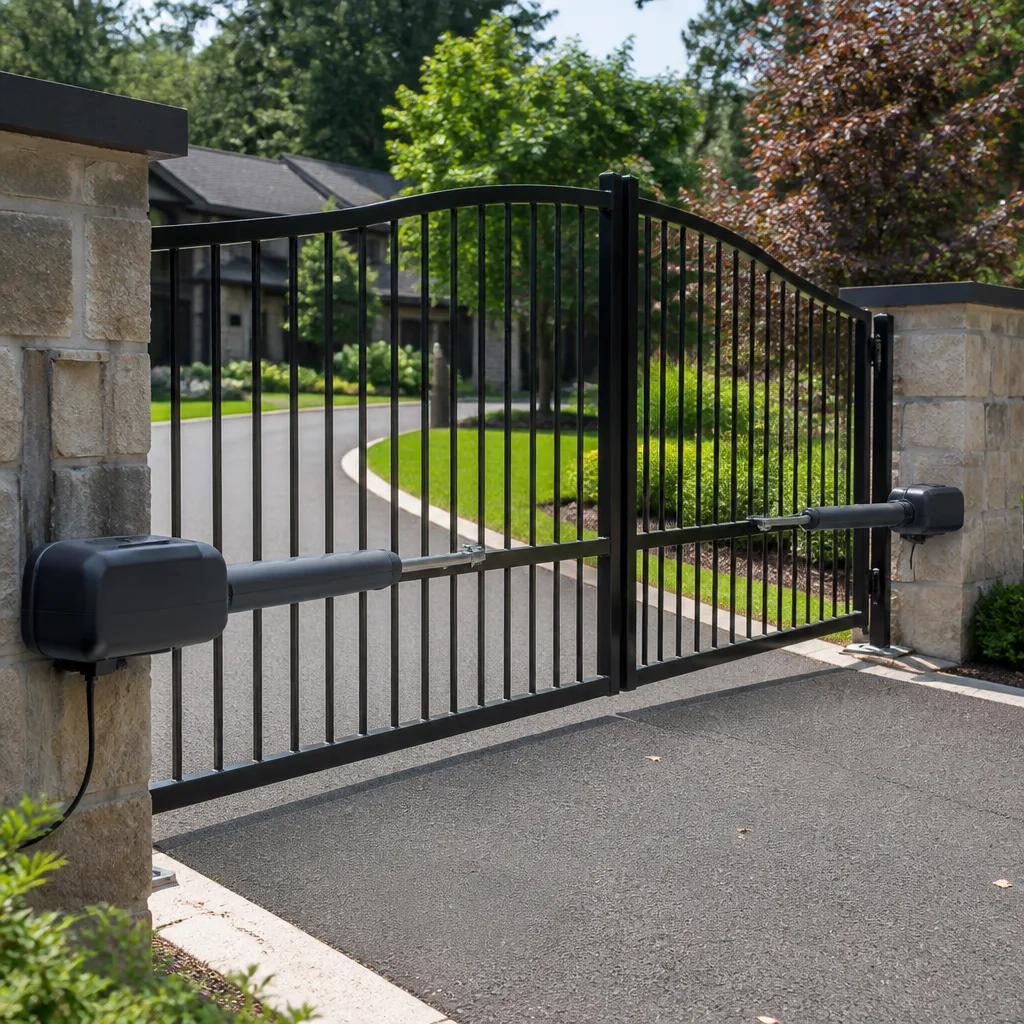
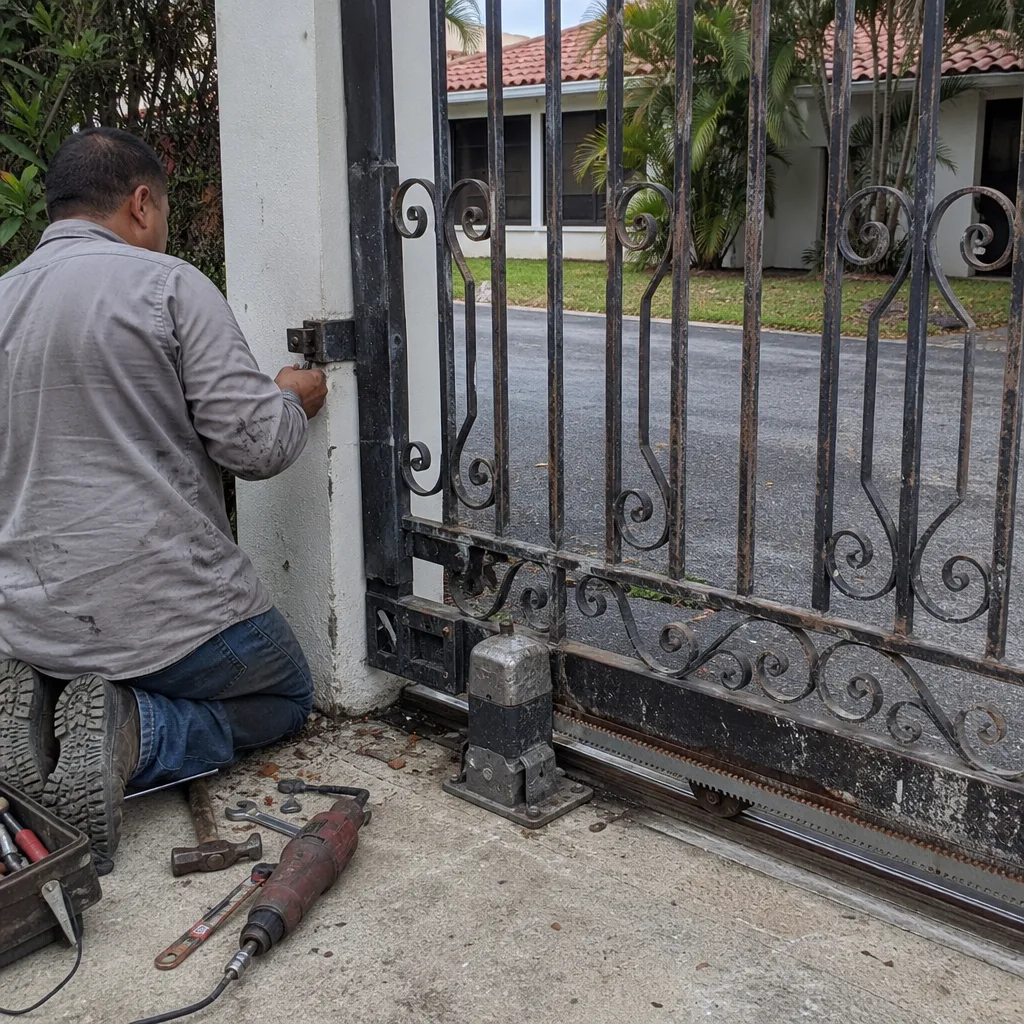 Before
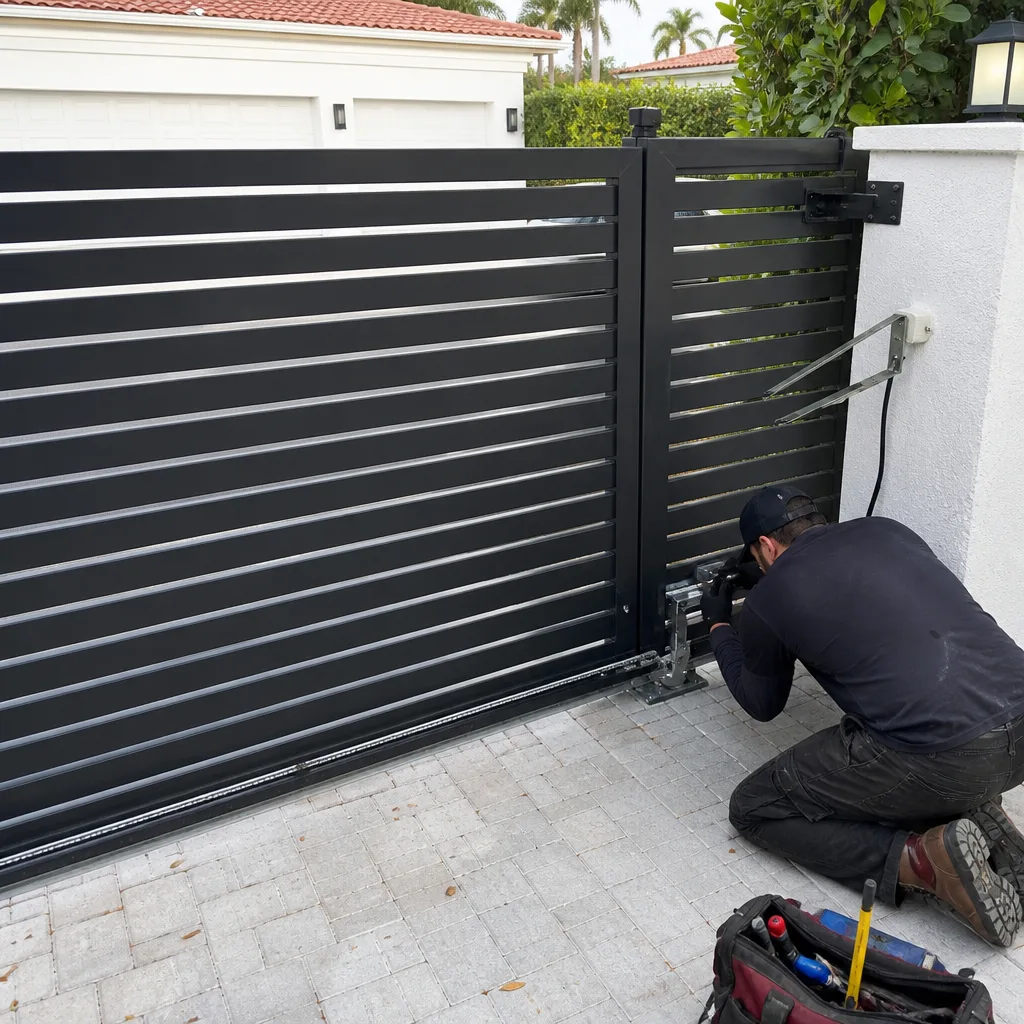 After
After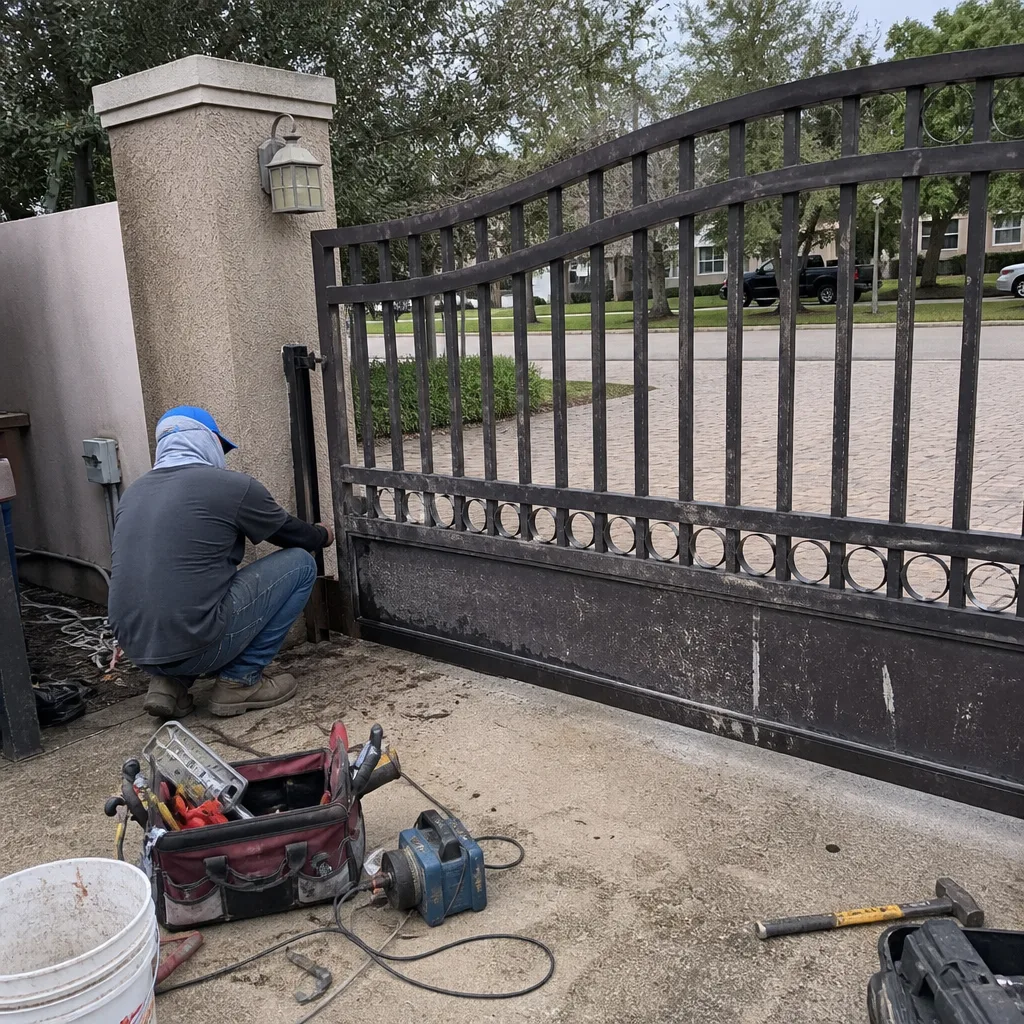 Before
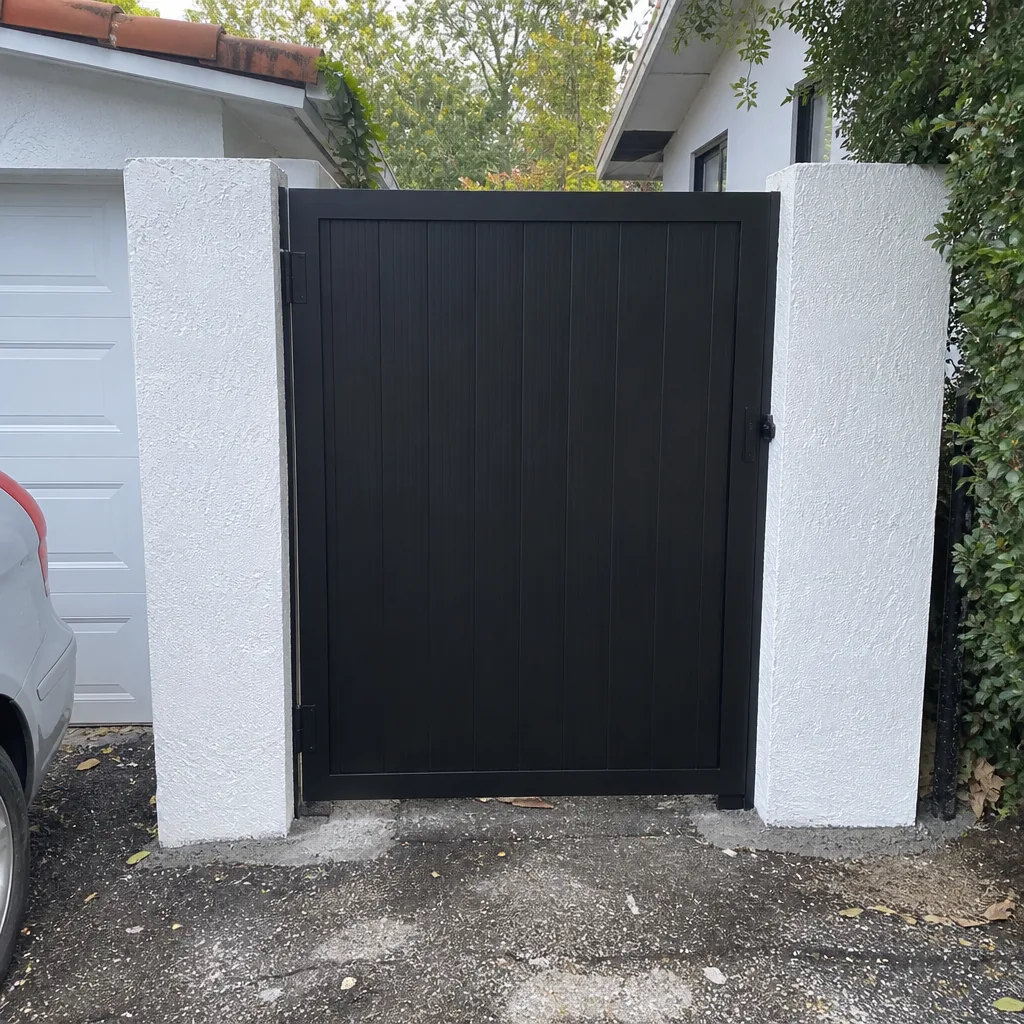 After
After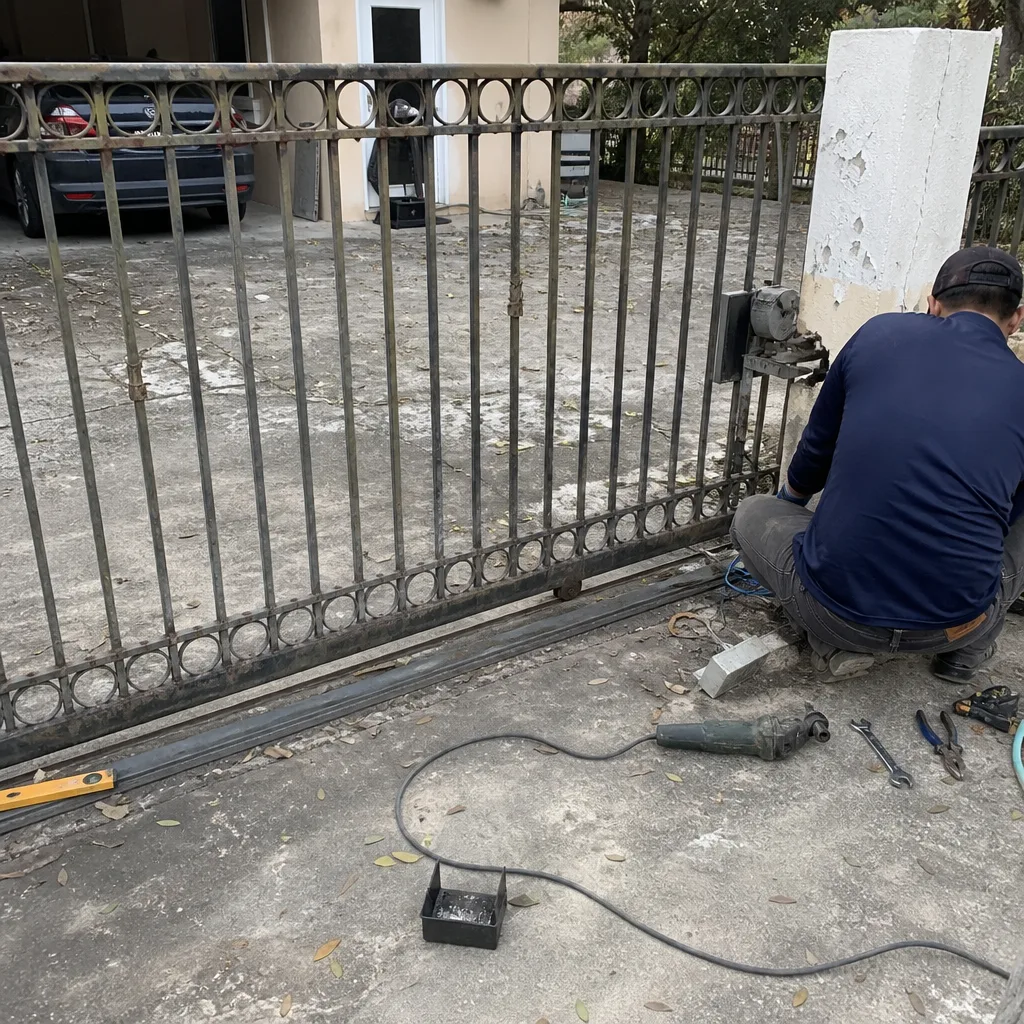 Before
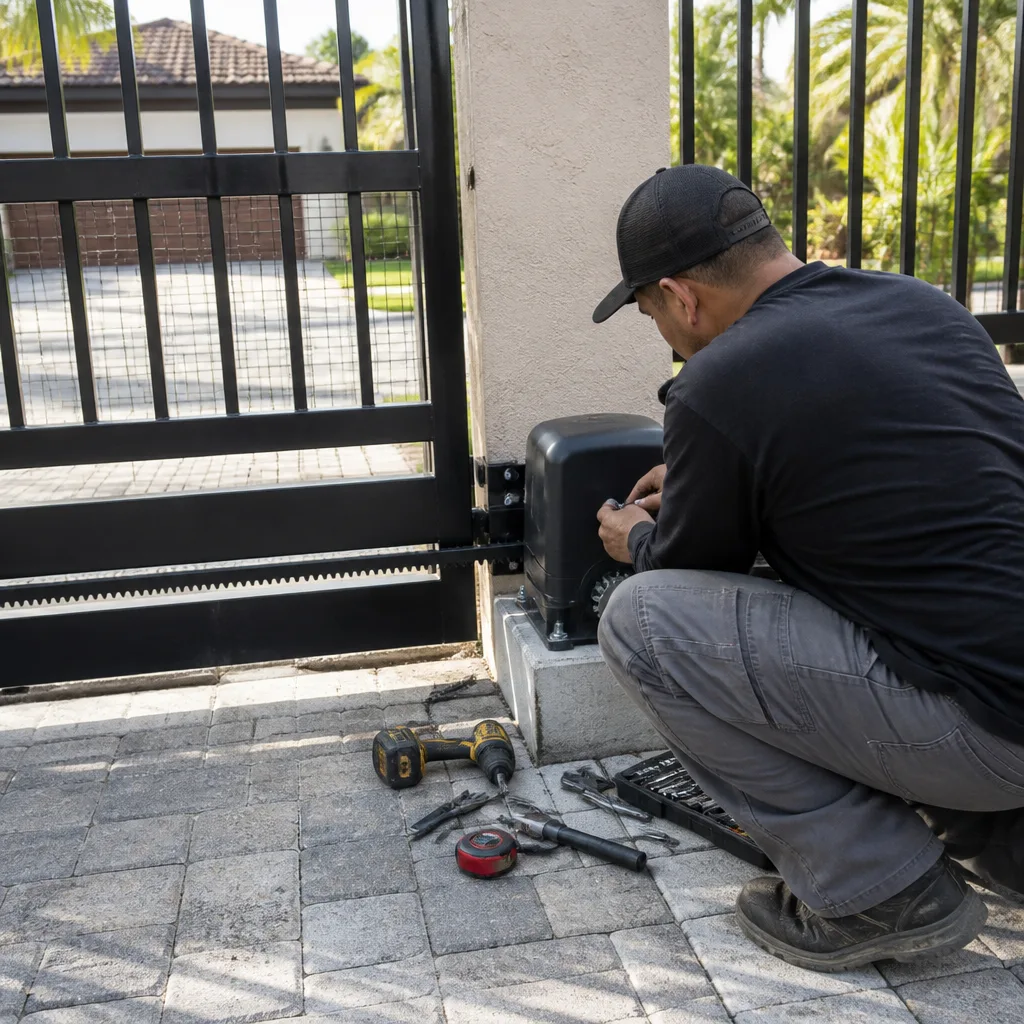 After
AfterDIY vs Professional Gate Repair: The Hollywood Homeowner’s Decision Guide
The line between a Saturday-morning fix and a liability problem runs straight through Florida Building Code and UL 325. Most Hollywood homeowners don’t realize that the moment a gate operator enters the picture, they’re no longer working on a piece of metal on hinges. They’re working on a regulated safety device. This guide maps that line precisely: which gate repairs you can own, which ones create legal exposure the moment you touch them, and how documentation changes everything. We’ve repaired thousands of gates across Hollywood and South Florida since 2014, and the single most expensive pattern we see is a homeowner who made a reasonable repair on top of an undocumented one. For a deeper look at what professional Gate Repair should include, see our service overview.
Quick Answer
DIY gate repair is reasonable for tasks that don’t involve line voltage, entrapment-sensing devices, or load-bearing structure: programming remotes, clearing debris from tracks, lubricating hinges, and replacing batteries. Professional gate repair is non-negotiable for anything that touches the operator’s force settings, photo-eyes, edge sensors, or the gate’s structural welds and bearings. In Hollywood, the operator itself is where Florida law and UL 325 stop treating you like a homeowner and start treating you like a responsible party. Any damage from an improperly adjusted gate is yours.
Table of Contents
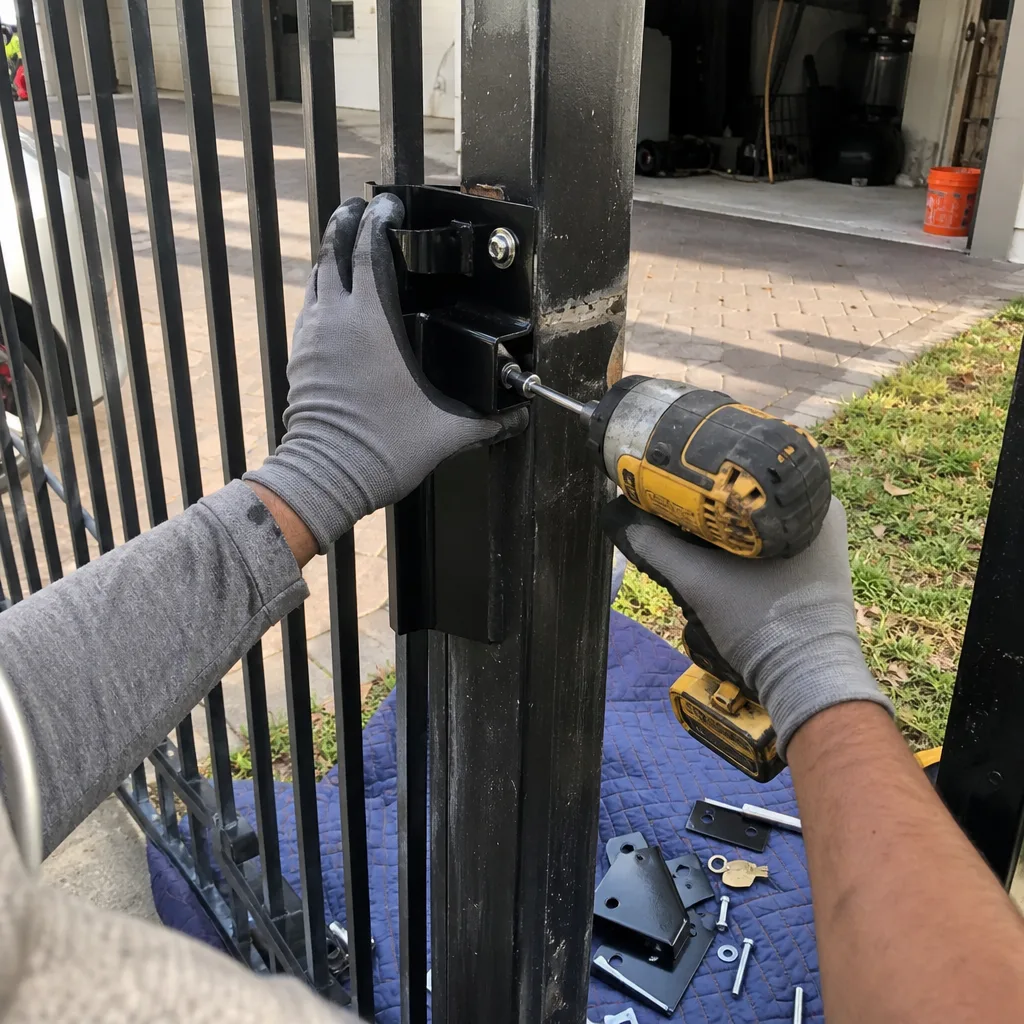
- The UL 325 Line: What Florida Actually Prohibits
- DIY-Safe Tasks: What You Can Honestly Do Yourself
- The Voltage Boundary: 12V, 24V, 120V, and the One That Can Kill You
- How Hollywood Weather Changes Gate Repair Decisions
- Documentation: The Difference Between a Repair and a Liability Gap
- When DIY Voids Warranties: The Fine Print
- What DIY Actually Costs vs. What a Pro Costs in Hollywood
- Common Mistakes to Avoid
- When to Call a Professional
- Frequently Asked Questions
- The Bottom Line
 Before
 After
AfterThe UL 325 Line: What Florida Actually Prohibits
UL 325 is the national safety standard governing automatic gate operators. It sets the rules for entrapment protection: the photo-eyes, edge sensors, and force settings that must be present and correctly configured on any automated gate. Florida Building Code incorporates UL 325 directly, which means compliance isn’t optional and the responsibility for an injury isn’t discharged by saying “I didn’t know.”
Here’s what that means for a Hollywood homeowner with a screwdriver:
- Force settings are off-limits. The open-force and close-force adjustments on a gate operator control how much pressure the gate applies before it reverses when it hits something. Setting this too high to compensate for a dragging gate is how entrapment injuries happen. A child, a dog, or an adult caught between the gate and a post should be able to stop the gate by resistance alone. If you’ve increased force because the gate was struggling, you’ve moved the gate outside UL 325 compliance and assumed personal liability for whatever happens next.
- Photo-eye alignment is a safety setting, not a convenience. The photo-eye (the infrared beam across the gate opening) must be installed at the correct height, aligned, and functional whenever the gate operates. Bypassing a photo-eye because it’s “annoying” or “keeps tripping” is not a repair. It’s disabling a federally mandated safety device. The gate will continue to work normally, right up until it closes on something the eye was supposed to detect.
- Edge sensors are not optional accessories. On gates with a closing edge, the edge sensor is the last line of defense. If yours is cracked, worn, or disconnected, the gate is not “basically fine.” It’s an operator running without its required entrapment protection.
We’ve seen gates in Hollywood neighborhoods, from Emerald Hills to Hollywood Lakes, where the previous owner or a handyman had jumped the photo-eye terminals because the gate kept reversing. The gate worked. The safety system did not. That’s the definition of a repair that creates more risk than the original problem, and it’s the primary reason we document every adjustment we make on a job site.
DIY-Safe Tasks: What You Can Honestly Do Yourself
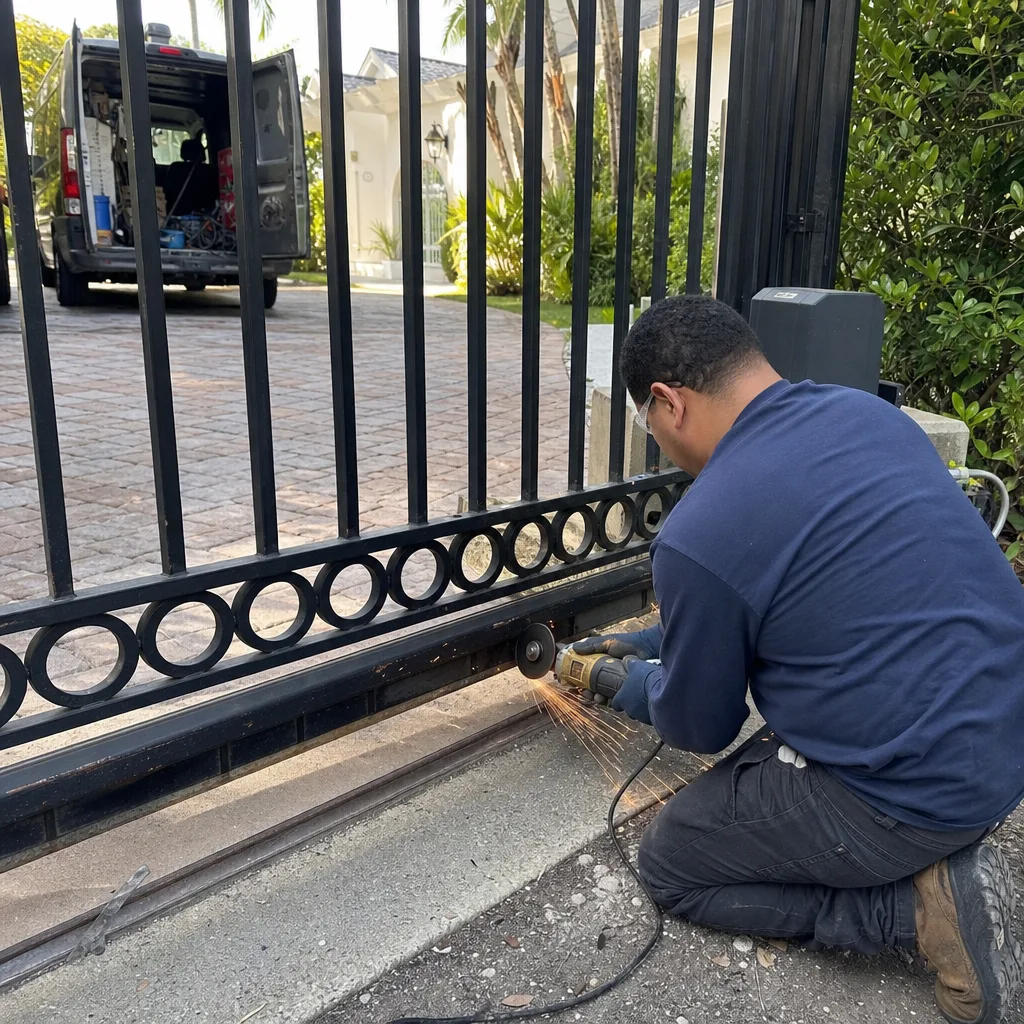
Not everything requires a service call. Some gate tasks are genuinely homeowner territory. Here’s the exact list of what we consider DIY-safe, with the decision criteria we use:
- Remote programming and battery replacement. If your remote stopped working and the gate still opens from the keypad or wall button, the problem is the remote, not the operator. Programming a new remote involves pressing the learn button on the operator and the new remote within a few seconds. This is documented in every operator manual and involves no access to force, limits, or safety devices. Batteries are a five-minute fix with no gate interaction at all.
- Track and debris clearing. Slide gates in Hollywood collect sand, leaves, palm debris, and the occasional iguana. Clearing the track is safe, necessary maintenance. Use a broom or leaf blower. Don’t use a pressure washer, which forces water into the rollers and bearings and accelerates corrosion in our salt air. Check the V-groove wheels for cracks while you’re down there, but don’t try to replace them yourself.
- Lubrication of hinges and pivots. A swing gate with dry hinges groans, and the lube points are accessible. Use a lithium-based grease on pivot points and a light machine oil on chain drives. Never lubricate a belt drive. The belt is designed to run dry, and lubricant will cause the belt to slip and degrade. Check your manual to confirm your drive type before picking up a can.
- Battery backup replacement. Many operators have a DC battery bank inside the control box. If your gate works on AC power but dies during an outage, and the batteries are more than 3 years old, replacing them with identical units from the operator manufacturer is a parts swap. You’re not adjusting any settings. You’re not touching the board or wiring beyond the battery terminals. It’s the electrical equivalent of changing a flashlight battery.
The common thread: each of these tasks is external to the safety loop. You’re not changing how the gate behaves. You’re not altering force, limits, or sensitivity. You’re not putting yourself between the gate and its power source. If a task requires you to change behavior, you’ve crossed the line.
The Voltage Boundary: 12V, 24V, 120V, and the One That Can Kill You
Gate systems run on multiple voltage levels simultaneously, and understanding which is which is the single clearest determinant of whether a repair is safe to attempt:
- 12V and 24V DC: This is the low-voltage control and accessory rail. Photo-eyes, keypads, loop detectors, and edge sensors all live here. It’s safe to touch and measure with a basic multimeter. A dead keypad or a photo-eye with a bad connection is diagnosable at this level.
- 120V AC line voltage: This powers the operator’s transformer, which converts wall current to the low-voltage DC the board runs on. Any repair that requires accessing the transformer, terminal block, or incoming power line is line-voltage work. In Florida, this requires a licensed electrical contractor. More practically, it requires treating the panel like a live circuit. This is not a “flip the breaker and wing it” situation.
- The truly dangerous part: stored mechanical energy. This doesn’t involve electricity at all. The torsion springs and tension hardware on swing and slide gates are under constant, potentially fatal, mechanical load. A gate that’s fully open has its springs compressed or its tension rods loaded. Removing a bolt without controlling that load is how people lose fingers and break bones. We’ve responded to repair calls in Hollywood where a homeowner removed a hinge pin from a loaded gate and the entire gate frame moved six inches into the post. No electricity involved.
The rule we teach our own technicians: electricity you can see and turn off. Mechanical load you cannot see until it releases. Never work on any component that holds the gate’s weight or tension without a controlled process for releasing and re-establishing that load. Here in Hollywood, with gates that have been exposed to salt air and hurricane-season humidity for years, hardware is often more brittle than it looks. A fitting that would have loosened cleanly when the gate was new may now be rusted solid or structurally compromised. Treat every bolt as if it’s load-bearing.
How Hollywood Weather Changes Gate Repair Decisions
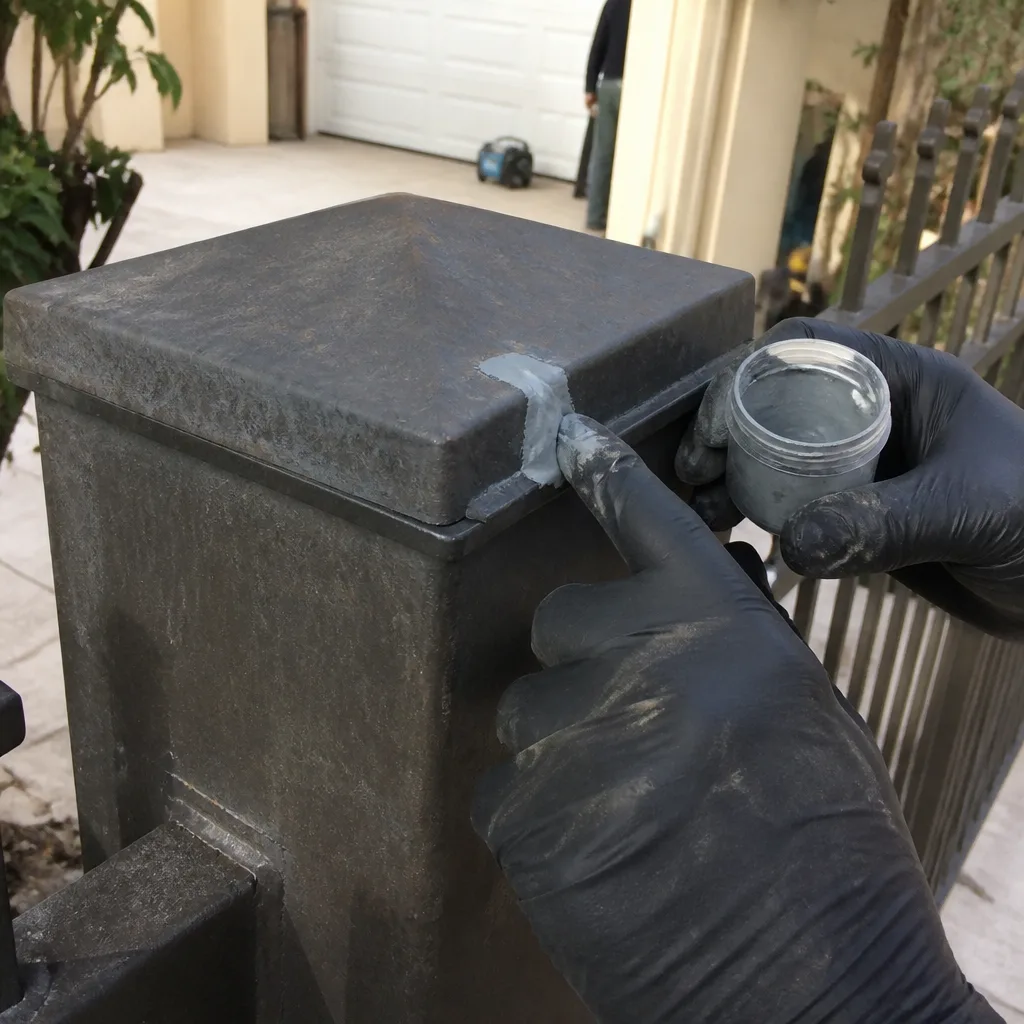
Hollywood, Florida has a marine environment that punishes gate hardware in ways that inland climates never see. The salt air corrodes zinc-plated hardware in months. The afternoon thunderstorms blow fine, salt-laden rain into motor housings and control boxes. The hurricane-season humidity keeps everything slightly damp year-round, and the intense UV exposure embrittles plastic sensor housings and cable insulation.
What this means in practice:
- Sealed bearings are not optional in Hollywood. We regularly see original-equipment bearings on otherwise healthy gates fail within five years of coastal installation. A homeowner can hear the failure starting: a dry, grinding sound from the wheel or pivot. What a homeowner typically cannot do is identify whether the bearing is sealed or serviceable, or source the correct replacement for the specific gate model. Installing a generic bearing of the wrong internal clearance creates a gate that’s quieter for three months and then seizes entirely.
- Control boards corrode even inside enclosures. In Hollywood’s humidity, the conformal coating on circuit boards breaks down. Boards fail intermittently: the gate works in the morning and refuses to close at night, or vice versa. Intermittent failures are the hardest to diagnose because the gate behaves perfectly while the technician is standing there. We deal with this by documenting the board’s condition with photos at every visit, so when the failure recurs, there’s a record of exactly what was and wasn’t replaced.
- Salt corrosion on terminals causes ghost faults. A photo-eye that “randomly” trips, a keypad that intermittently stops accepting codes, a gate that reverses for no reason. These are the classic symptoms of corrosion on low-voltage connectors. Cleaning terminals is DIY-safe. Re-terminating wires and replacing corroded connectors is skilled work that requires knowing the correct connector style and crimping standard for the specific operator brand. Done wrong, it creates a high-resistance connection that fails again within months.
There’s a pattern here for Hollywood homeowners. The environmental damage is usually detectable and partially DIY-addressable. The correct repair, using marine-grade hardware and properly sealed connections, is a specialist task, because the parts and techniques that hold up in coastal Florida are not the ones sold at general hardware stores. For detailed pricing on coastal-grade solutions, see our Gate Repair Cost Breakdown: The Hollywood Homeowner’s Reference for 2026.
Documentation: The Difference Between a Repair and a Liability Gap
Here’s a scenario we see repeatedly in Hollywood. A homeowner replaces their own gate board. It works. Six months later, the gate starts acting up, and they call us. We open the control box and find that the board was installed incorrectly: a wire routed under heat, a loose auxiliary terminal, a jumper left in the wrong position. The homeowner did a real repair but produced no record of what was done, which wire went where, or what the original configuration was. Now we’re working blind, and the diagnosis takes twice as long because we have to reverse-engineer the wiring from scratch.
Documentation is not bureaucracy. It’s diagnosis. If you do any DIY work on your gate, you should create a record that would allow a future technician (or future you) to understand exactly what was changed. Our Gate Repair Maintenance Checklist for Hollywood Homeowners includes a documentation template you can use:
- Photograph every connection before you touch it. Your phone camera is the single most valuable diagnostic tool you own. Take clear, well-lit photos of the control board wiring, limit switch positions, and any accessory connections before you disconnect a single wire.
- Label every wire as you remove it. Masking tape and a Sharpie. “Motor 1,” “Motor 2,” “Photo-eye NC,” “24V.” Future you will not remember. No technician will feel confident inferring.
- Write down the settings before changing them. If you adjust a limit, a force pot, or a DIP switch, record the original position. We cannot overstate how often a gate problem traces back to a setting that was changed weeks or months earlier and forgotten.
- Keep the invoice or screenshot of every part you buy. The part number is the link to the manual, the wiring diagram, and the compatibility matrix. Without a part number, a future repair involves identification work that adds hours.
- Leave the record in the control box. Print your photos, fold them, and place them inside the enclosure with the wires and settings noted. The next person to open that box is the person who will thank you.
When DIY Voids Warranties: The Fine Print
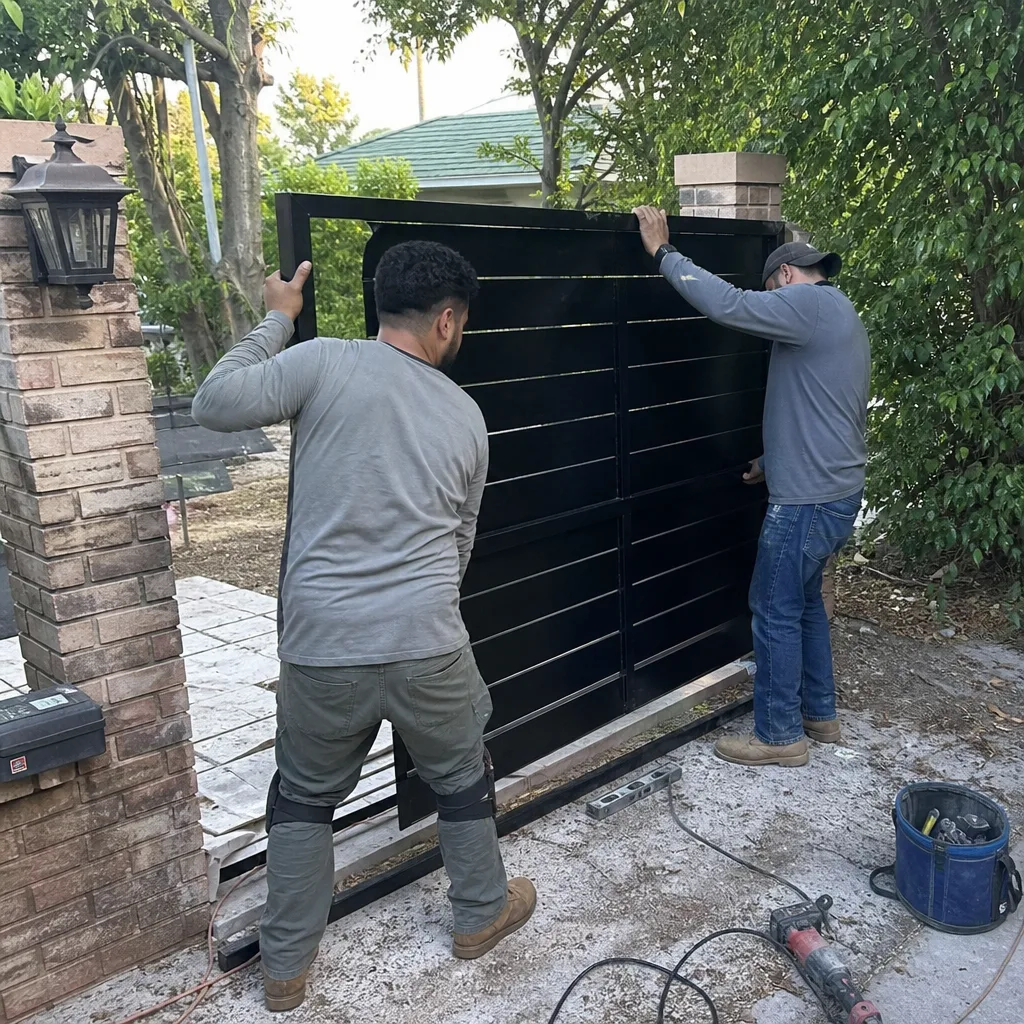
Most gate operator manufacturers, including the brands we service most often in Hollywood, include language in their warranty terms that conditions coverage on installation and service by “qualified personnel.” DoorKing, Elite, Ghost Controls, and Mighty Mule all publish warranty documentation with some version of this provision. What that means in practice:
- Opening the control board housing is usually fine. Looking at the board does not void anything. Adjusting DIP switches, replacing wires, or removing the board often does, if the manufacturer can tie a subsequent failure to the work.
- Damage from improper installation is excluded by default. If an operator fails a month after a homeowner replaced a board, and the manufacturer’s technician inspects the failed unit and finds evidence of incorrect wiring or improper torque on terminals, the warranty is dead. The homeowner owns the replacement cost.
- Warranty claims require documentation of service history. This is the part no one reads. Some manufacturer warranties require that the unit was serviced and adjusted by “qualified personnel” to remain valid. If you’ve done all the work yourself and the unit fails, you may be fighting a warranty claim with no paper trail.
The practical takeaway for a homeowner in Hollywood: if your operator is still under warranty, call the installing company or a qualified gate service like Gate Repair in Hollywood before doing anything beyond remote programming and battery replacement. A warranty repair is free. A voided warranty is not.
For operators out of warranty, the risk calculus shifts. An older Mighty Mule or Ghost Controls unit with a simple control board is a reasonable DIY project for a homeowner who is methodical, documents their work, and respects the voltage boundary. The specific brand matters less than the age and complexity of the unit, and your own willingness to create the photo and wiring record we described above.
What DIY Actually Costs vs. What a Pro Costs in Hollywood
Every “DIY saves money” claim assumes the first repair attempt succeeds. The honest math includes the failed attempts. Here’s what we actually see in Hollywood:
- Remote replacement: DIY cost is $15-$40 for a compatible remote plus 10 minutes. Professional cost includes a service call fee plus the remote. DIY wins, every time, assuming you buy the correct remote for your specific brand.
- Photo-eye replacement: The part is $40-$90. The DIY diagnosis might take an afternoon, and if you’ve misidentified the failed component (common with intermittent faults), you’ve spent the money without fixing the problem. A professional diagnosis typically identifies the fault in under an hour and the replacement includes alignment and testing. This is a case where DIY frequently costs more in time and frustration than it saves.
- Control board replacement: Boards run $150-$450 depending on the brand and whether the transformer is included. A DIY install on a board with 20+ terminals is doable, with careful documentation. A professional install includes the board, bench-testing, setting the limits and force to UL 325 compliance, and a photo record of every connection. If the board was the wrong diagnosis, the professional eats the misdiagnosis. If the homeowner was wrong, the board is now a used part and generally non-returnable.
- Gate structural repair (welding, bearing replacement, hinge rebuild): These are professional-only in our view. The equipment, controlled process, and safety risks are simply not in homeowner territory. Costs in Hollywood generally run from a few hundred dollars for a minor weld repair to several thousand for a full hinge rebuild and gate re-hang.
One more cost element that no one factors in: the cost of being wrong. A homeowner who bypasses a photo-eye or over-torques a force setting and then has an entrapment incident is not facing a repair bill. They’re facing liability. In that math, every professional gate service in Hollywood is underpriced.
Common Mistakes to Avoid
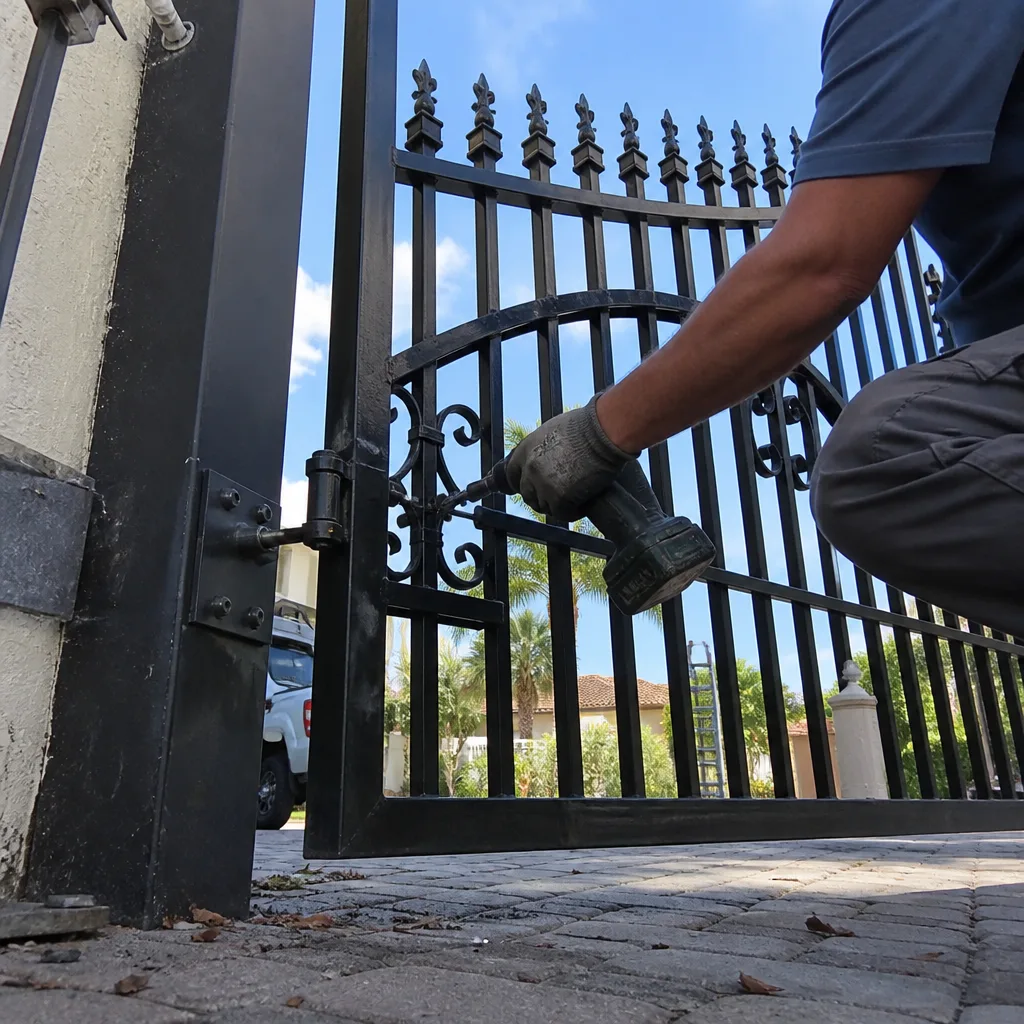
- Force-setting compensation. If the gate is struggling, don’t crank the force. Find the mechanical binding and fix it. Force adjustment is a safety setting, not a performance knob, and exceeding the UL 325 limit turns the gate into a hazard.
- The wrong lubricant on the wrong surface. We see belt drives destroyed by spray grease at least once a month in Hollywood. Also, WD-40 is a water displacer, not a lubricant. It will strip existing lubrication and accelerate wear on bearings.
- Ignoring a photo-eye that keeps “tripping.” That photo-eye is doing its job. The obstruction is real, even if you can’t see it from the house: a leaf, a lizard, a misaligned bracket after a storm. Find the obstruction. Don’t bypass the safety device.
- Skipping the documentation “because it worked.” The moment a DIY repair succeeds is the moment documentation matters most. Six months from now, when the gate has a new symptom, the record of what you changed is the difference between a quick diagnosis and starting over.
- Working on a gate under tension. If the gate is in any position other than fully open or fully closed (for most swing gates) or fully at a limit stop (for slide gates), hardware may be under load. Removing a bolt under load releases that energy into whatever is in the way. Your fingers are in the way.
- Buying parts by photo-match instead of part number. Many gate operator components look alike across brands and generations but are electrically incompatible. A board or photo-eye that “looks identical” is not necessarily a replacement. Use the part number stamped on the old component.
When to Call a Professional
Call a professional gate technician if the problem involves the operator’s force settings, limit switches, photo-eyes, edge sensors, or any wiring connected to the main control board. For more guides & resources on when to DIY and when to call a pro, explore our blog. Call if the gate is making a new grinding, popping, or cracking sound from a hinge, wheel, or track. Call if the gate has been struck by a vehicle, even if it still works, because frame damage is not always visible and develops into a much more expensive failure. Call if the operator is still under warranty. In our experience, these are the five categories that represent the highest percentage of DIY misdiagnoses we correct. Vance Gate Repair Hollywood offers free estimates in Hollywood, and we’ll give you a written price before any work begins. Call (754) 714-5786.
Frequently Asked Questions
No. Force settings on automatic gate operators are UL 325-regulated safety settings. Adjusting them beyond the tested limit creates an entrapment hazard and exposes you to liability for any resulting injury. Leave force, sensitivity, and reverse settings to a trained gate technician.
Programming remotes, replacing remote batteries, clearing debris from slide gate tracks, and lubricating accessible hinges and pivots are the tasks we consider safe for a careful homeowner. None of these involve line voltage, entrapment sensors, or load-bearing components.
Potentially yes, depending on the brand and the work performed. Manufacturers including DoorKing, Elite, Ghost Controls, and Mighty Mule condition warranty coverage on service by qualified personnel, and damage traceable to homeowner work typically voids the warranty. Check your specific operator’s warranty language before opening the control board.
Service call fees in Hollywood typically run $75-$125, with most common repairs falling between $150 and $500 for parts and labor. Major failures like control board replacement or structural hinge rebuilds can run higher. Always get a written quote before work begins so the price is firm.
After a South Florida thunderstorm, the most common causes of persistent gate reversal are debris in the track or photo-eye path, a photo-eye knocked out of alignment by wind, or corroded low-voltage connections. Clear debris and check the photo-eye alignment first. If the problem persists, the issue is likely electrical and warrants a diagnostic call.
Most gate repairs, including operator replacement and component swaps, do not require a permit. Structural modifications, new gate installations, and certain electrical work may require permitting through the City of Hollywood Building Division. When in doubt, a qualified gate company can advise on what’s required for your specific repair. Call us at (754) 714-5786 and we’ll tell you what your project involves.
The Bottom Line
You own the remotes, the batteries, the track debris, and the hinge grease. You do not own the force settings, the photo-eyes, the edge sensors, the line voltage, or anything under mechanical tension. That’s the line, and it’s not about skill. It’s about the legal reality that a gate operator is a regulated safety device, and the practical reality that Hollywood’s salt air and humidity turn small mistakes into recurring failures. Document what you do, respect the boundaries, and when the job crosses into regulated territory, call someone who will leave you a written record of every adjustment they made. That’s what we do on every job in Hollywood: Vance Gate Repair Hollywood home provides gate repair, Gate Installation in Hollywood, and Gate Motor & Opener in Hollywood service with a written price before work begins and a photo record when we leave.
Written by Adrian Vance, Owner at Vance Gate Repair Hollywood, serving Hollywood since 2014.