
Last updated September 21, 2026
Free on-site gate assessment - hinges, posts, and your LiftMaster or Nice gate operator checked before anything is quoted
The assessment is free and the quote is the invoice.
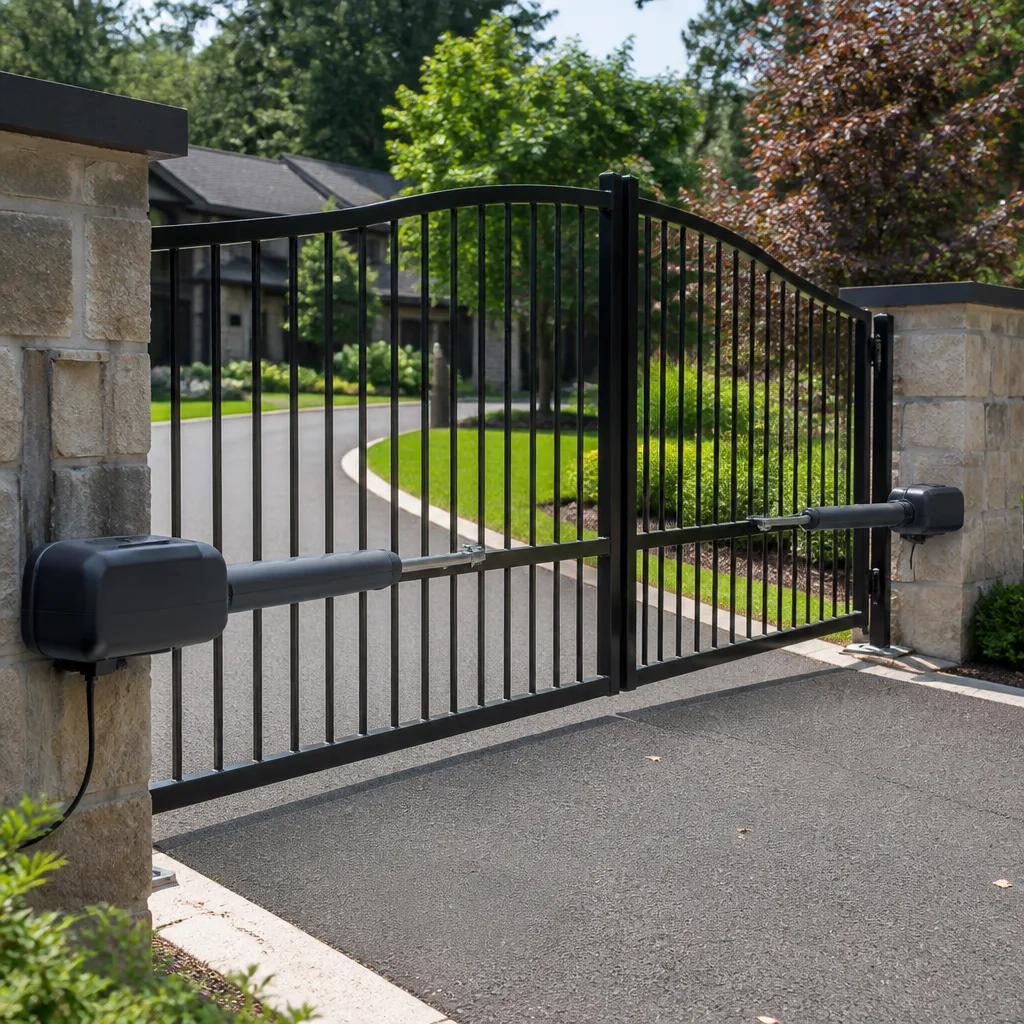
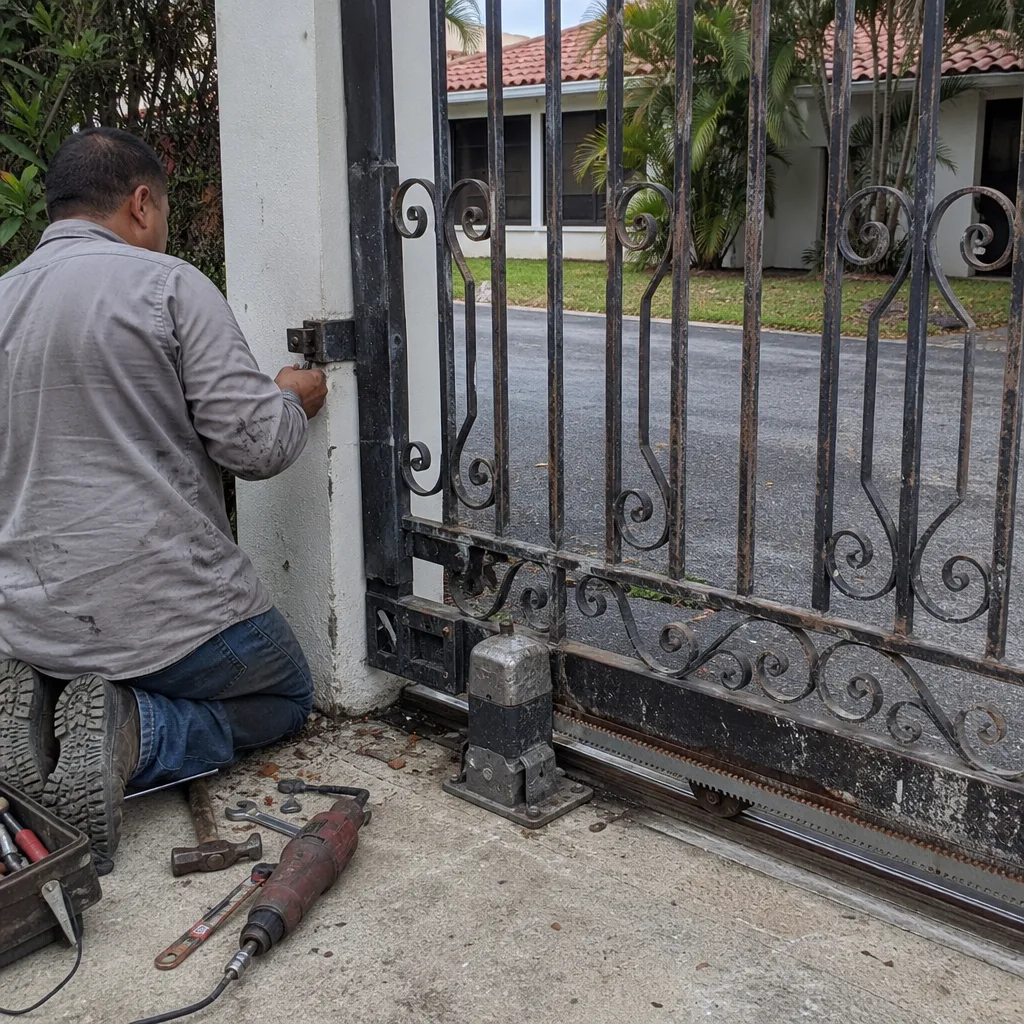 Before
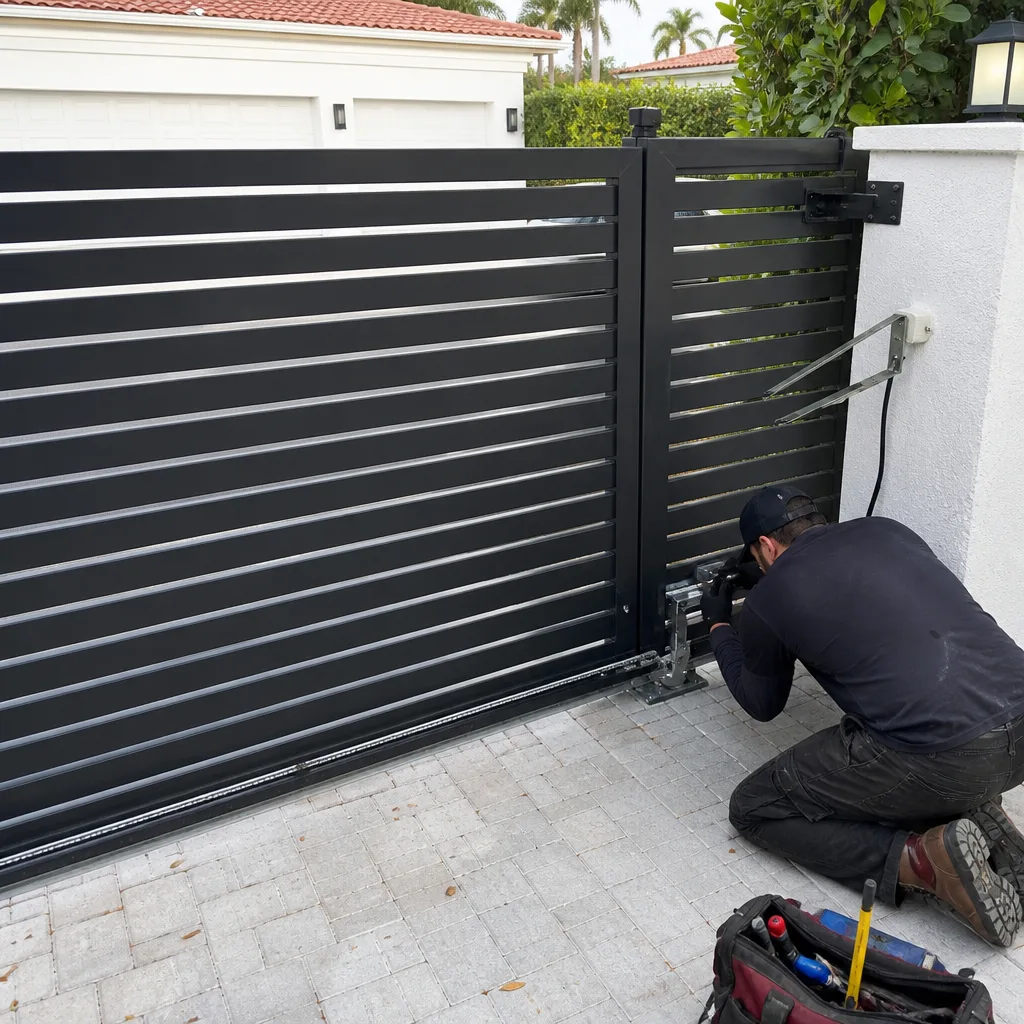 After
After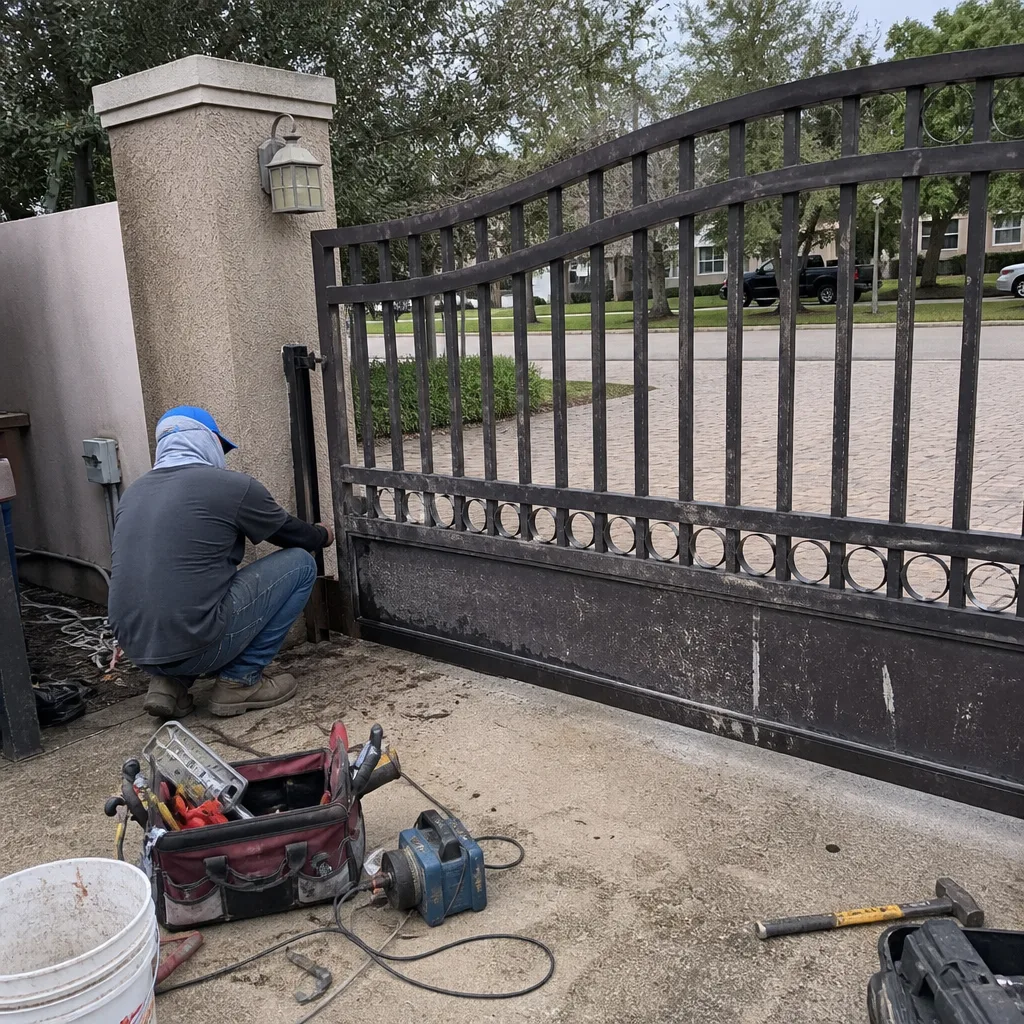 Before
 After
After Before
 After
AfterThe Complete Guide to Gate Repair in Hollywood
A gate that “just stopped working” is not a diagnosis, it’s a starting point. Hollywood’s coastal air, afternoon storms, and slab-on-grade driveways create a specific failure fingerprint that generic gate guides never account for. This guide maps every Gate Repair category to its physical evidence so you can describe the problem precisely instead of saying “it stopped working.” By the time you finish reading, you’ll know what to look at, what to write down, and what a fair repair should cost in Hollywood, Florida.
Quick Answer
Gate repair in Hollywood, FL typically costs between $180 and $1,400 depending on the failure point: limit switch resets and photo-eye alignments run $180 to $320, while full swing-gate motor replacements range from $850 to $1,400. For a detailed breakdown, see our Gate Repair Cost Breakdown: The Hollywood Homeowner’s Reference for 2026. Most Hollywood gate failures trace to four documented root causes: salt-air corrosion, voltage drop from undersized wire runs, limit-switch drift, and hinge wear from uneven asphalt settlement. A competent Hollywood gate technician can diagnose the exact cause in under 45 minutes, and the written scope of work you receive before any labor begins should name the specific component, the evidence for the diagnosis, and the flat price.
Table of Contents
- The Four Hollywood-Specific Failure Modes
- How to Read Your Gate Operator’s Error Code
- Salt-Air Corrosion: What It Looks Like and What It Costs
- Voltage Drop: The Undersized Wire Problem
- Limit-Switch Drift and Why It Happens
- Hinge Wear from Asphalt Settlement
- Repair vs. Replace: A Decision Tree
- What a Written Scope of Work Should Include
- Common Mistakes to Avoid
- When to Call a Professional
- Frequently Asked Questions
- The Bottom Line
 Before
 After
AfterThe Four Hollywood-Specific Failure Modes
After repairing gates across Hollywood for over a decade, we can tell you this with confidence: nearly every residential gate failure we’re called to falls into one of four categories. The symptoms are different enough that you can often identify the category before a technician arrives. Knowing which one you have changes the conversation completely.
Here are the four documented root causes we see in Hollywood, in order of frequency:
- Salt-air corrosion – The Atlantic is roughly four miles from most Hollywood driveways. Salt-laden air settles on aluminum welds, steel hinges, and exposed wiring connections. We see this on gates of every age, but it accelerates sharply after five years.
- Voltage drop from undersized wire runs – Builders in the 1990s and early 2000s ran 16-gauge low-voltage wire to gate operators, often buried shallow in Miami oolite substrate. After 15 to 20 years, the insulation degrades, resistance climbs, and the motor browns out. The operator isn’t dead; it’s starving.
- Limit-switch drift – A limit switch tells the motor where “open” and “closed” are. Vibration, humidity, and the thermal expansion of a black steel gate in the Florida sun gradually shift that setting. We’ve documented switches that drifted 12 degrees past travel on a swing gate. The gate isn’t broken; it’s confused.
- Hinge wear from uneven asphalt settlement – Hollywood driveways sit on shallow tropical soil. Asphalt expands and settles unevenly, which slowly torques gate hinges out of alignment. The tell is a gate that rubs the driveway at one point in its arc but swings freely everywhere else.
Each of these has a distinct visual signature, which we’ll cover in the sections below. Understanding the failure mode matters because the fix is radically different, and so is the price. A homeowner who can say “I think the limit switch drifted because the gate stops six inches short of closed and the error light blinks four times” is a homeowner who won’t pay for a new motor when a $220 adjustment fixes it.
How to Read Your Gate Operator’s Error Code
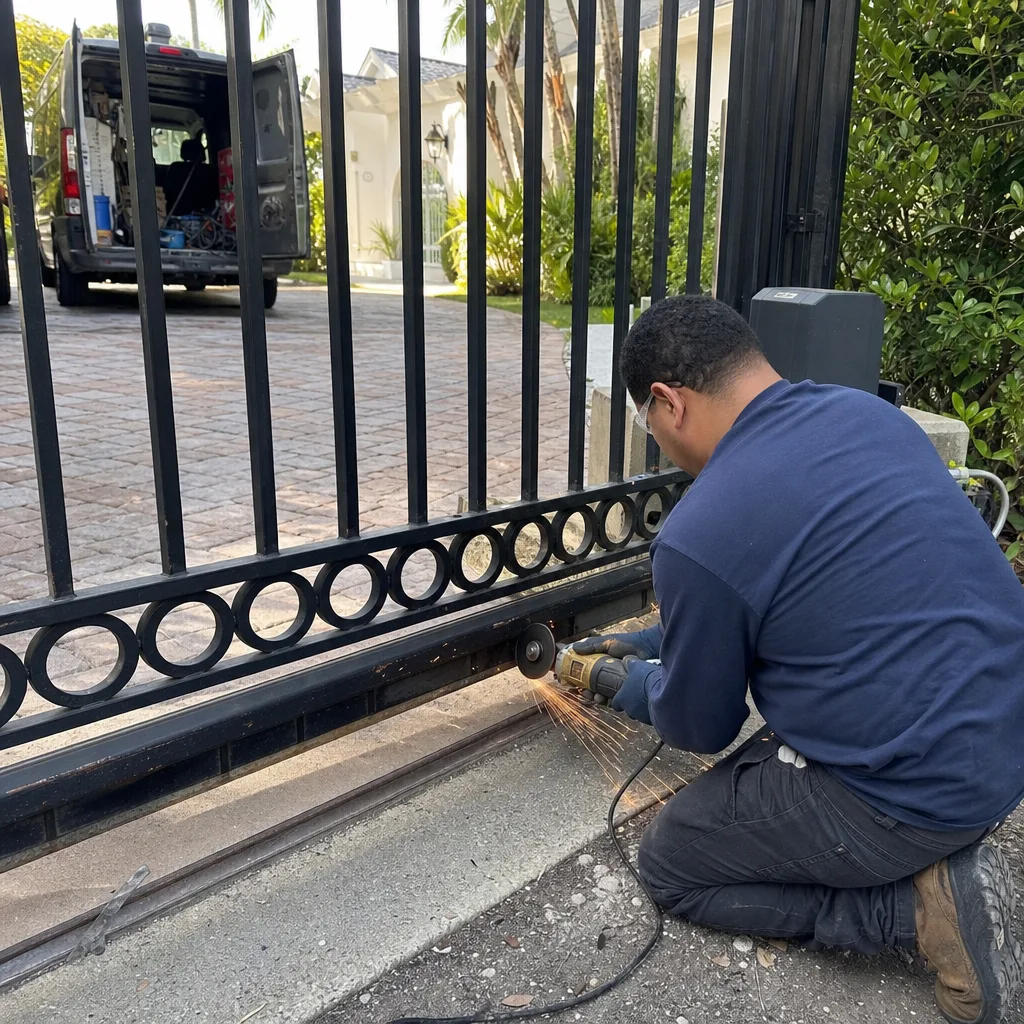
Before you call anyone, walk to the gate operator and look at it. Most residential operators made after 2010 have some form of diagnostic feedback: a blinking LED, a numeric display, or a fault-light sequence. The pattern you see tells you where to point the technician.
Here’s a simple process we teach every Hollywood homeowner:
- Stand to the side of the gate, not in its path. You’re observing, not testing the barrier’s motion.
- Count the blinks. Two blinks, pause, two blinks, pause, repeat. Write that number down.
- Compare against the operator’s manual, if you still have it. If you don’t have the paper manual, the model number is on a sticker on the side of the motor housing. Most manufacturers publish fault-code tables online.
- Note the state of the “Force” light, if present. Operators from LiftMaster, DoorKing, and Elite typically have a force-setting indicator. A gate that draws abnormal current will trip the force sensor, and that’s a different code than a photo-eye obstruction.
- Photograph the display. A clear photo of the fault code is solid evidence. It’s the first page of your repair record.
Common fault codes we see on Hollywood gates:
- Photo-eye obstruction (usually a solid or double-blink pattern) – Something is in the beam path, the beam is misaligned, or the lens is caked with salt film.
- Force-reversal trip (often a triple or quadruple blink) – The gate hit resistance it didn’t expect, either from a bound hinge or a warped track.
- Limit-switch fault (varies by manufacturer) – The gate traveled past its expected stopping point and the operator no longer trusts its own position.
- Battery or backup failure (some models show a solid light instead of a blink) – Common after Hollywood’s summer thunderstorm season when power interruptions cycle the gate repeatedly.
When you call Gate Repair in Hollywood, lead with the fault code. It saves you a second trip and it tells the technician you’ve already done the first diagnostic pass. We bring a printed fault-code reference for nine automation brands when we arrive.
Salt-Air Corrosion: What It Looks Like and What It Costs
Hollywood is not Miami Beach, but the onshore breeze carries enough salt to matter. We measure it in the field: aluminum gates within two miles of the Intracoastal will show white oxide pitting at the weld joints within three to five years, while identical gates ten miles west may look clean for a decade. Salt is not a cosmetic problem. It is a structural one, and it attacks different materials differently.
Aluminum welds fail where the welding rod mixed with the base metal during fabrication. Salt water creeps into the microscopic pores at the weld boundary and eats the alloy from the inside. What you see from the outside is a chalky white crust and a crack line that follows the weld bead. In our experience, when an aluminum gate drops off its hinges in Hollywood, the failure point is almost always a salt-weakened weld.
Steel hinges and brackets fail differently. They rust from the outside in, flaking off sheets of oxide. The hinge still looks solid until you tap it with a hammer and it crumbles. We’ve found steel hinge pins corroded down to a quarter of their original diameter while the gate still swung. It’s not safe, and it’s not something you want to discover when the gate falls.
What salt-air corrosion repair costs in Hollywood:
- Weld touch-up on an aluminum gate (grind, TIG weld, grind, repaint): $280 to $520 depending on the number of joints and whether the gate needs to come off its posts.
- Hinge replacement on a swing gate (steel to steel, with new bushings): $190 to $400 per hinge set, including cutting out the old hinge plates and welding in new ones.
- Full gate repaint with corrosion passivation (sandblast, alodine or zinc primer, industrial enamel): $900 to $1,800 depending on gate size. This is not the same as a rattle-can job; it should come with a written surface-prep record.
Here’s the Hollywood-specific advice: if your gate is aluminum and within two miles of salt water, spend the money on a marine-grade zinc chromate primer whenever any welding is done on it. A plain enamel topcoat without the primer will fail again in 18 to 24 months. We photograph every weld repair before the topcoat goes on, so you have a record of what’s underneath the paint.
Voltage Drop: The Undersized Wire Problem
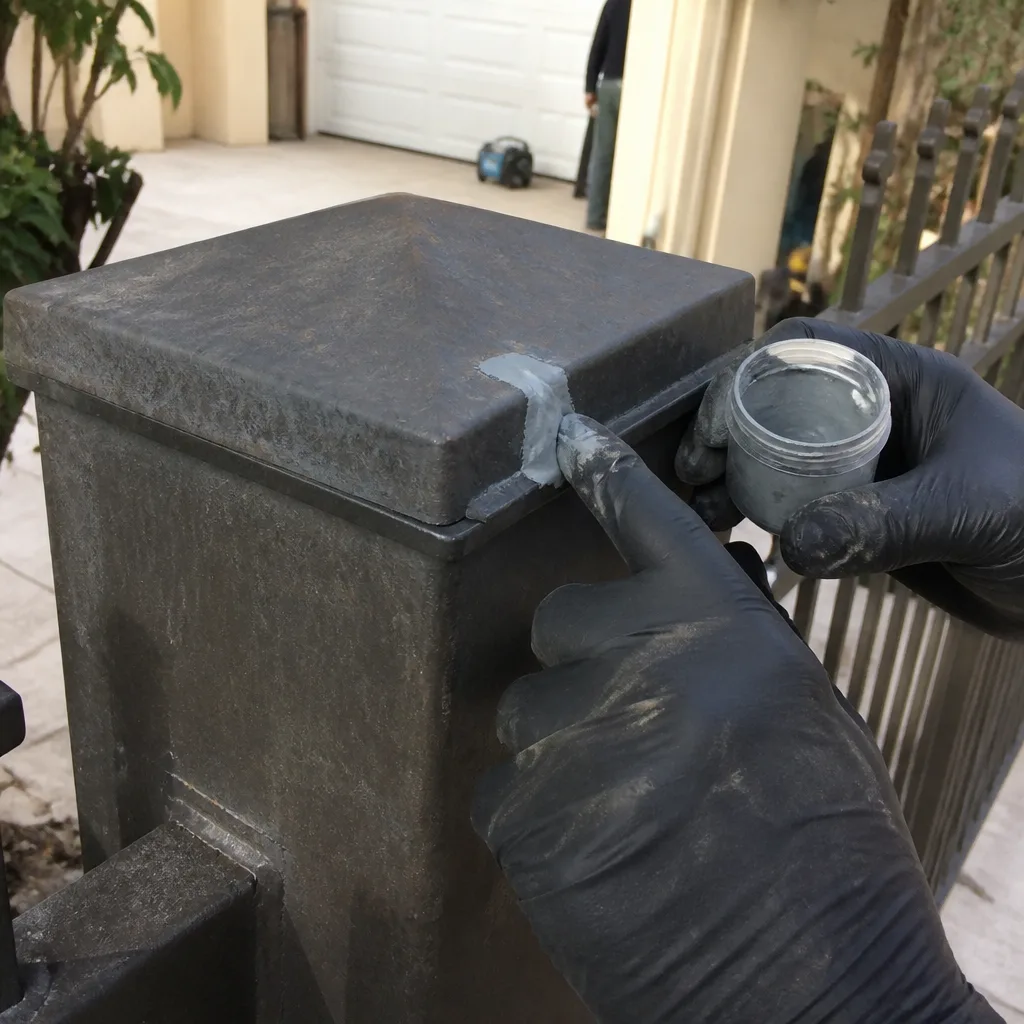
The most misdiagnosed gate failure in Hollywood has nothing to do with the gate itself. It’s the wire in the ground. A gate operator’s motor needs a certain minimum voltage under load to run. If the wire feeding it is too small, too old, or too corroded, the voltage at the motor drops when the gate tries to move, and the operator behaves erratically: it starts, stalls, reverses, or shuts down entirely.
We see this constantly on properties built between 1995 and 2005. The original wiring run was 16-gauge stranded copper, buried in acidic Miami oolite without conduit in many cases. Two decades of ground moisture have degraded the insulation. The copper is still there, but the resistance has climbed. The operator, which has printed specifications for the minimum voltage drop it will tolerate, sees a brownout and faults out.
Symptoms that point to voltage drop rather than a dead motor:
- The gate runs fine in the morning, then stalls in the afternoon heat. Heat raises conductor resistance. We see this pattern repeat week after week on Hollywood gates whose wire runs are marginal.
- The gate functions normally when you press a manual override, but automation control is unreliable. The control board is sensitive to line noise from degraded insulation; the motor can tolerate it better.
- The operator resets itself periodically, losing its limit settings. A power-starved board corrupts its memory. That requires a rewrite and a diagnosis, not a new board.
- You hear a click and a hum when the gate tries to move, but nothing happens. That’s the classic sound of a relay engaging and a motor that never gets enough current to start.
Fixing this properly means replacing the underground feeder with correctly sized wire, usually 12-gauge or 10-gauge depending on the run length from the panel to the operator. The job requires pulling new conductors, often through new conduit, and verifying voltage at the motor under full load. The wire and labor for a typical 50 to 80 foot Hollywood run costs between $600 and $1,100. That’s several times the price of a new motor, which is exactly why most companies skip the diagnosis and sell the motor. The gate will still fail afterward, because the wire is still wrong.
We document every voltage measurement on every visit. It takes five minutes and it prevents a $1,400 misdiagnosis. Ask any technician, including us, to show you the voltage reading before they conclude the motor is dead.
Limit-Switch Drift and Why It Happens
A limit switch is a mechanical or magnetic device that tells the operator when the gate has reached the end of its travel. On many Hollywood gates, that switch is a small cam or flag riding on the drive arm. The operator counts the arm’s rotation and stops the motor at the correct point. The problem: the cam can slip, the magnet can weaken, and the whole mechanism shifts a few degrees every few hundred cycles.
We document drift with photographs. A recent Hollywood job came to us because a swing gate would stop ten inches short of the closed position and then reverse, which is the operator’s safe response to an unexpected obstruction. We found the limit cam had moved six degrees from its factory setting. The gate had been “repaired” twice before, once with a new control board and once with a new battery. Neither addressed the cam. The fix took forty minutes and cost under $200.
What limit-switch drift looks like from the driveway:
- The gate stops short of the post by a few inches, or it slams into the post and bounces back. Both are drift, just in opposite directions.
- The gate repeatedly reverses after reaching the closed position. It thinks something is in the way because its learned position no longer matches physical reality.
- One leaf of a dual swing gate is consistently off-sync with the other. Each leaf has its own limit setting, and one has drifted.
- The operator’s diagnostic light shows a “limit error” or “travel error” code, even though nothing appears to be blocking the gate.
Resetting a limit switch properly requires a technician who knows the operator’s brand-specific procedure. A LiftMaster resets differently from a DoorKing, and an Elite has its own calibration steps. When we leave a limit-switch job, we photograph the new limit positions and write the setting values on the invoice. That’s the evidence you need if the gate drifts again two years later; the tech can compare the new reading against the written record instead of starting from scratch.
Hinge Wear from Asphalt Settlement
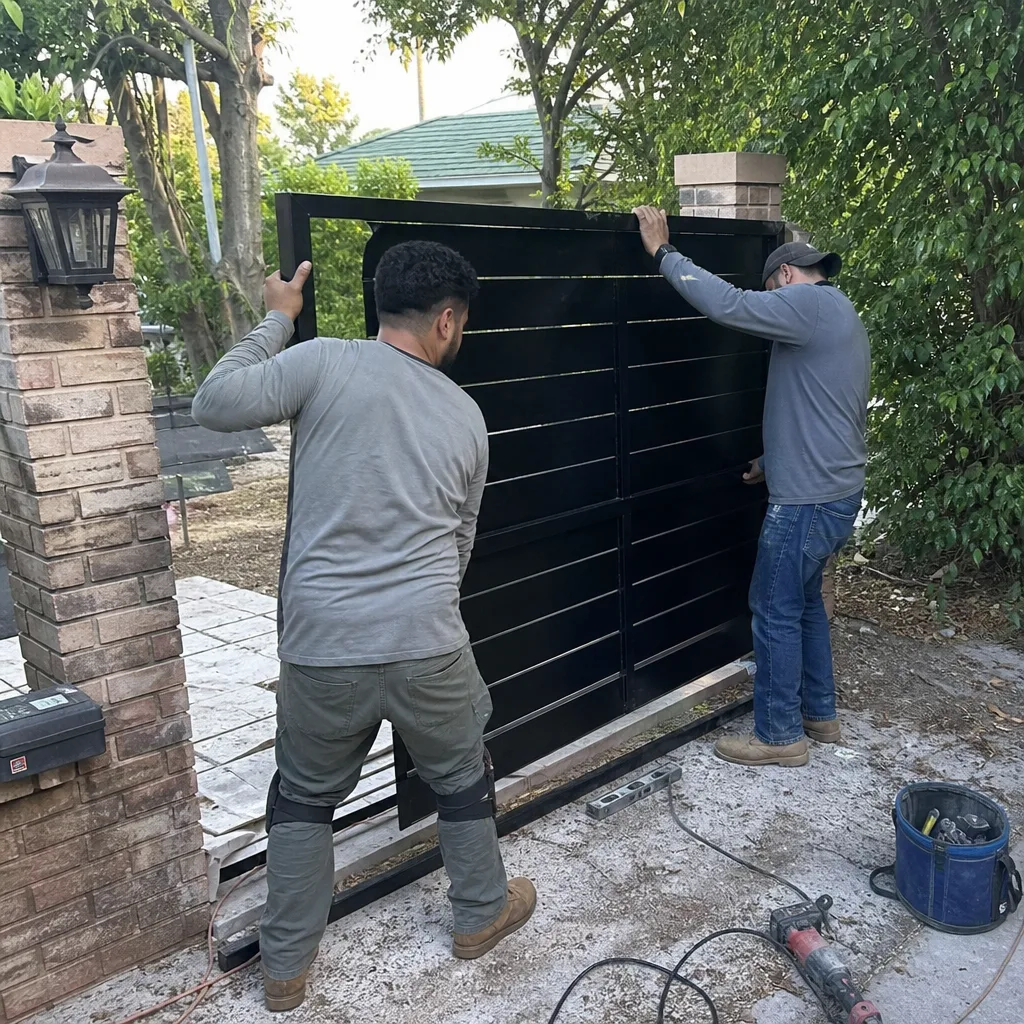
Hollywood’s driveways are not stable surfaces. Shallow subgrade, seasonal moisture cycling, and the weight of Florida’s afternoon rain on asphalt all cause the surface to heave and settle unevenly. A swing gate bolted to posts at the edge of that surface inherits every movement. The result is a hinge pin that loads unevenly, a gate that scrapes the ground at one point in its arc, and wear that accelerates with every cycle.
The physical evidence is easy to read. Look for these signs on your own gate:
- Wear marks on the driveway surface – A crescent-shaped scrape or a clean line where the gate’s bottom rail has been grinding asphalt. The position of the mark tells you which hinge is out of plane.
- Pivot play – Grab the gate at its free end and lift. If you can feel vertical movement or hear a knock, the hinge bushings are worn. This is the most common Hollywood hinge fault we encounter.
- Gap asymmetry – The gap between the gate and the post is wider at the top or bottom. That means the post itself has moved, or the hinge plates have twisted.
- Rust dust below the hinge – Red-oxide powder under the pivot point is ground metal shedding from the bushing. It’s the hinge equivalent of a “check engine” light.
Hinge replacement is the most common repair we perform on Hollywood gates. The procedure is straightforward: unbolt the hinge plates, cut out the old bushings, press in new ones, rehang the gate, and drive the bottom rail clear of its old scrape point. If the post itself has shifted, the fix is more involved, sometimes requiring a new concrete footer and a re-set post. A basic hinge re-bush and rehang runs $190 to $340 per gate leaf in Hollywood. A full post reset with new concrete and re-alignment can reach $1,200, but it’s rare on gates under 12 years old.
If your gate has been dragging for more than a season, call before the hinge fails entirely. A broken hinge pin on a weighted gate is a safety incident waiting to happen. We treat a dragging gate as the structural warning it is.
Repair vs. Replace: A Decision Tree
At some point during any gate troubleshooting conversation, the question turns to whether the gate should be repaired or replaced-our DIY vs Professional Gate Repair: The Hollywood Homeowner’s Decision Guide can help you think through that choice. A responsible answer depends on facts, not product push. Here’s the decision tree we use, and you can use it too on your own property.
- Age of the operator. If your operator is under seven years old and the failure is limited to a switch, sensor, or battery, repair is almost always the right call. These components fail independently of the motor, and replacing them restores full function. If the operator is over twelve years old and the failure is now the second major component in the same year, replacement starts to make financial sense.
- Gate weight relative to operator capacity. A heavy ornamental aluminum gate may exceed the duty rating of a small residential operator. If we measure the force draw and find it near the operator’s limit, no repair will last; the motor is on borrowed time. That’s the point to discuss a properly sized operator.
- Documented repair history. This is where written records pay off. If we can see that the same component was replaced two years ago and is failing again, the problem is upstream from that component: voltage drop, hinge wear, or water intrusion. Fixing the upstream cause is the repair. Replacing the component again without addressing the cause is waste.
- Safety margins. If the gate itself has weld fatigue or corrosion that weakens its structure, cosmetic repainting won’t fix it. Structural repair or gate replacement is the only responsible option.
Our policy is simple: if we can document that repair costs will exceed 60% of replacement cost with an equal lifespan, we’ll say so in writing. We’ll show you the numbers. You decide. This is the same discipline Gate Motor & Opener in Hollywood work requires, and we apply it to every residential gate, every time.
What a Written Scope of Work Should Include
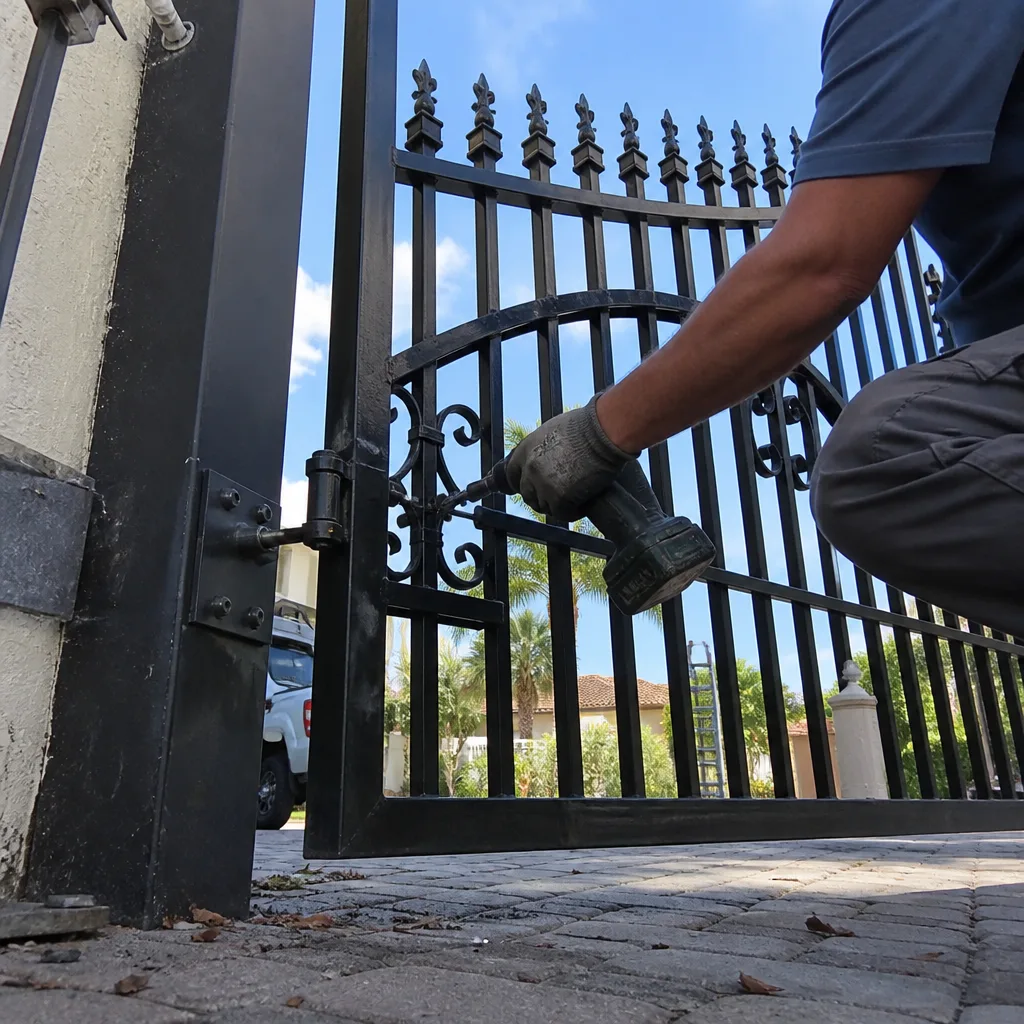
Before any technician starts a gate repair, you should have a document in your hands that answers five questions. If the document doesn’t answer them, you have an estimate, not a scope. The difference matters.
- What exactly is wrong. The diagnosis should name the part and the failure mode. “Limit switch drifted six degrees” is a diagnosis. “Gate isn’t working” is not.
- What exactly will be done. The repair procedure should be described in a way a non-technical homeowner can verify. “Reset limit cam to factory position, torque check on drive arm, verify full open and closed travel” is verifiable.
- What parts will be used. Brand, part number, and whether the part is new or reconditioned. No part number means no accountability.
- What the flat price is. In writing. Not a range, not an estimate, not “we’ll see when we get in there.” The price is the price.
- What the warranty obligation is. What’s covered, for how long, and what the process is if the repair doesn’t hold.
This is what we mean by the Haven Standard, the practice Adrian Vance developed on commercial access-control sites starting in 2014 and carried into every residential gate job since. Clause 1 is simple: have it in writing. Clause 4 is equally simple: evidence on every job, meaning a photographed record of what was found, what was adjusted, and what was installed. You receive that record before we leave.
If a company won’t put the price in writing before starting, that’s not a negotiation tactic; it’s a signal about how the final invoice will be constructed. In our experience on thousands of Hollywood gates, the jobs with the biggest invoice complaints are the ones with the thinnest written scopes. We’ve built our whole operating approach around not having that problem.
Common Mistakes to Avoid
- Replacing the operator before checking the voltage. This is the most expensive mistake we see in Hollywood, and it happens constantly. A voltage test takes five minutes and costs nothing on a diagnostic visit. A new motor costs $850 to $1,400 and does nothing if the wire is bad.
- Ignoring fault codes. The blinking light is not decoration. It’s the operator telling you which subsystem failed. Covering the light with tape and hoping is not a repair strategy.
- Greasing a hinge without tightening the bushing. Grease attracts dust and salt, which accelerates bushing wear. If there’s play in the hinge, grease is a bandage, not a fix.
- Painting over salt corrosion without treating the surface. The aluminum or steel will continue corroding under the paint. Proper surface preparation is the repair, not the topcoat.
- Accepting a verbal quote as a commitment. If the price isn’t written, it didn’t happen. Every legitimate gate repair should come with a written scope and a flat price before any work starts.
- Using a homeowner-grade sensor bypass as a permanent fix. Photo-eye sensors exist to keep people and pets safe. Bypassing one because it’s misaligned is a liability you don’t want to own.
- Delaying hinge repair on a scraping gate. Every cycle grinds material off the hinge pin and the driveway. The longer it runs, the more expensive the eventual fix becomes.
When to Call a Professional
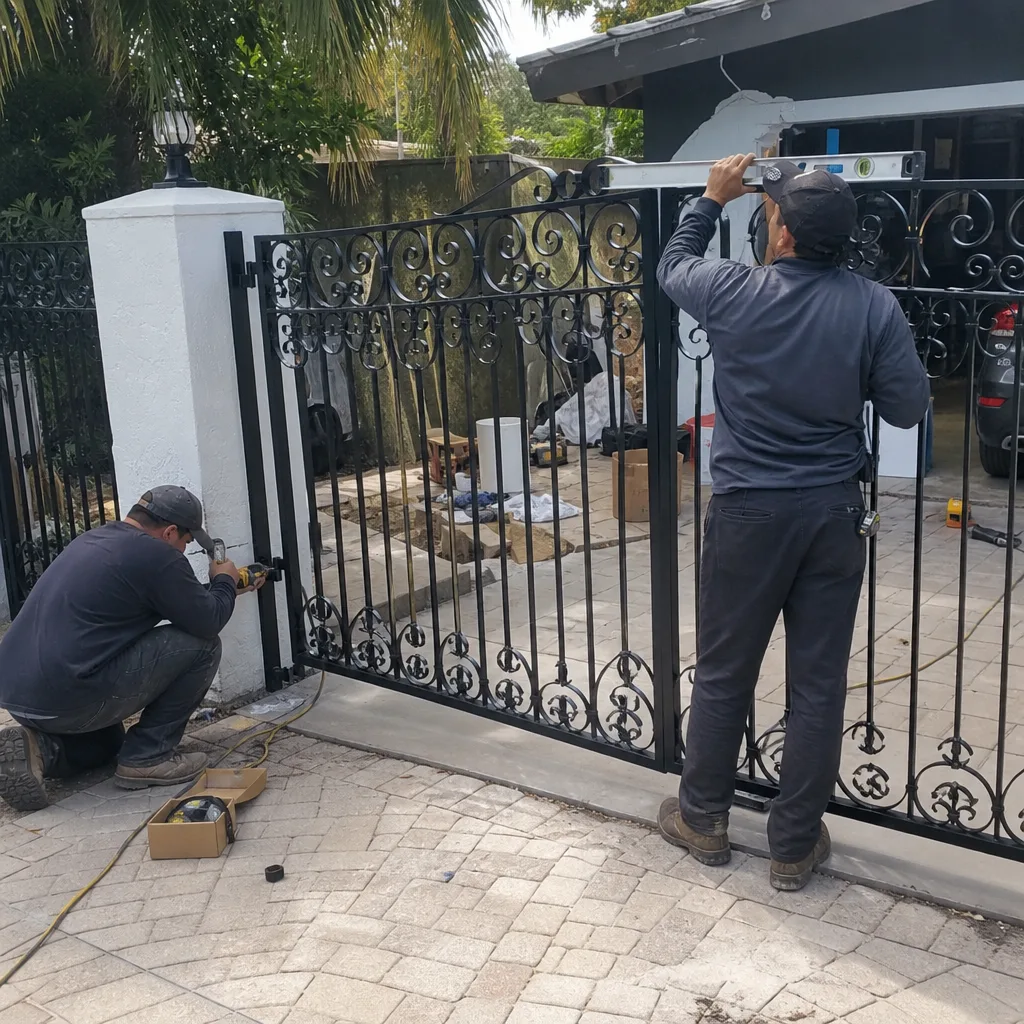
Some gate problems you can describe, some you can reset, and some you should never touch. If you see structural cracks at weld joints, a scraping gate that has been dragging for weeks, a motor that makes a grinding sound, or a photo-eye system that has been bypassed, call a professional. These are not DIY adjustments; they are safety margins that keep a several-hundred-pound gate from falling or closing on someone. Tension mechanisms, heavy leaves, and automated closing cycles carry genuine injury risk.
Vance Gate Repair Hollywood home offers flat, written pricing on every repair and a free estimate in Hollywood. Call (754) 714-5786 and a live person answers, 24 hours a day, no automated attendant.
Frequently Asked Questions
Gate repair in Hollywood typically costs between $180 and $1,400 depending on the failure point. Limit switch resets and photo-eye alignments run $180 to $320, hinge re-bushing runs $190 to $340 per gate leaf, and full swing-gate motor replacement runs $850 to $1,400 depending on the brand and whether the arm bracket is intact. Call (754) 714-5786 for a written quote, we’ll confirm pricing before any work starts.
Yes, for most repair work we can dispatch the same day, and a live person answers the phone 24/7. For installations, new operator packages, or access-control system design, we schedule a free measure at your Hollywood property and provide a written price before any work begins, honestly scheduled rather than rushed.
A full Gate Installation in Hollywood includes the gate fabrication or order, post setting, hinge installation, operator mounting, sensor and safety-edge placement, wiring from the panel to the operator, and full calibration with a documented photo record. The written scope lists every component and labor item before work starts.
Yes. We pull the feeder wire from the panel to the operator, size it for the run length to prevent voltage-drop failures, and install and align photo-eye sensors and safety edges on every automated gate. The power run and the safety circuit are part of the scope, not add-on line items after the fact.
Look at the operator age, the gate weight relative to the motor, and your repair history. Under seven years old with a single failed component, repair is usually right. Over twelve years old with multiple failures in one year, replacement starts to make sense. We’ll put the comparison in writing so you can see the numbers.
Yes, we service all of Hollywood, from the Intracoastal corridor to the neighborhoods west of I-95. Salt-air corrosion is the dominant failure mode we see on coastal properties, and our documentation practice means every weld repair and hinge replacement gets a photo record of what’s under the paint.
The Bottom Line
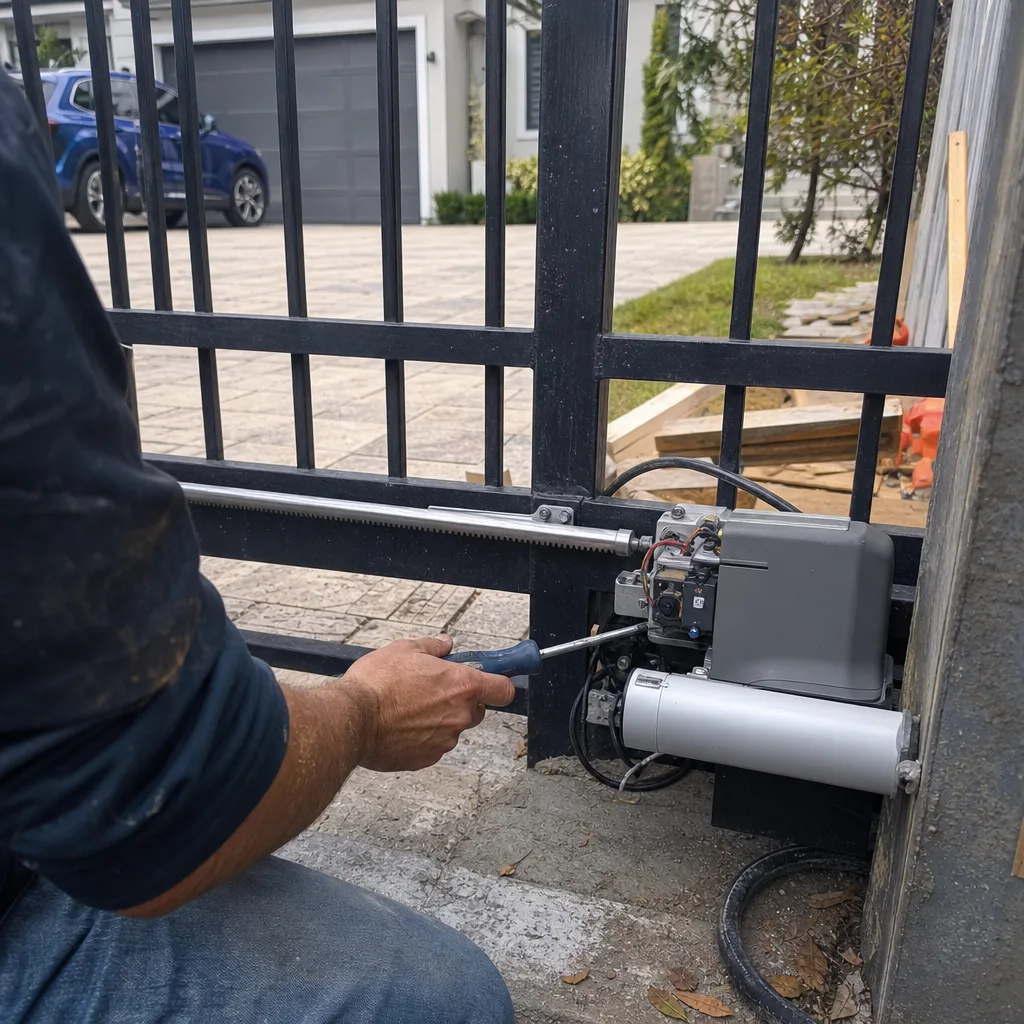
Gate repair in Hollywood is a diagnosis problem more than a parts problem. The gate that “just stopped working” is usually a gate with a specific, observable failure: salt-air corrosion at the welds, voltage drop from old wire, limit-switch drift, or hinge wear from driveway settlement. Each has a signature you can read from the driveway. Each has a different fix and a different honest price. The difference between a $180 fix and a $1,400 misdiagnosis comes down to evidence: voltage readings, fault codes, wear marks, written scopes. Ask for the evidence. Walk away from anyone who won’t provide it. Your gate will be the better for it.
Written by Adrian Vance, Owner at Vance Gate Repair Hollywood, serving Hollywood since 2014.